Coffee Beans & Varieties
From species to roast level, understand the 23 building blocks of every cup.
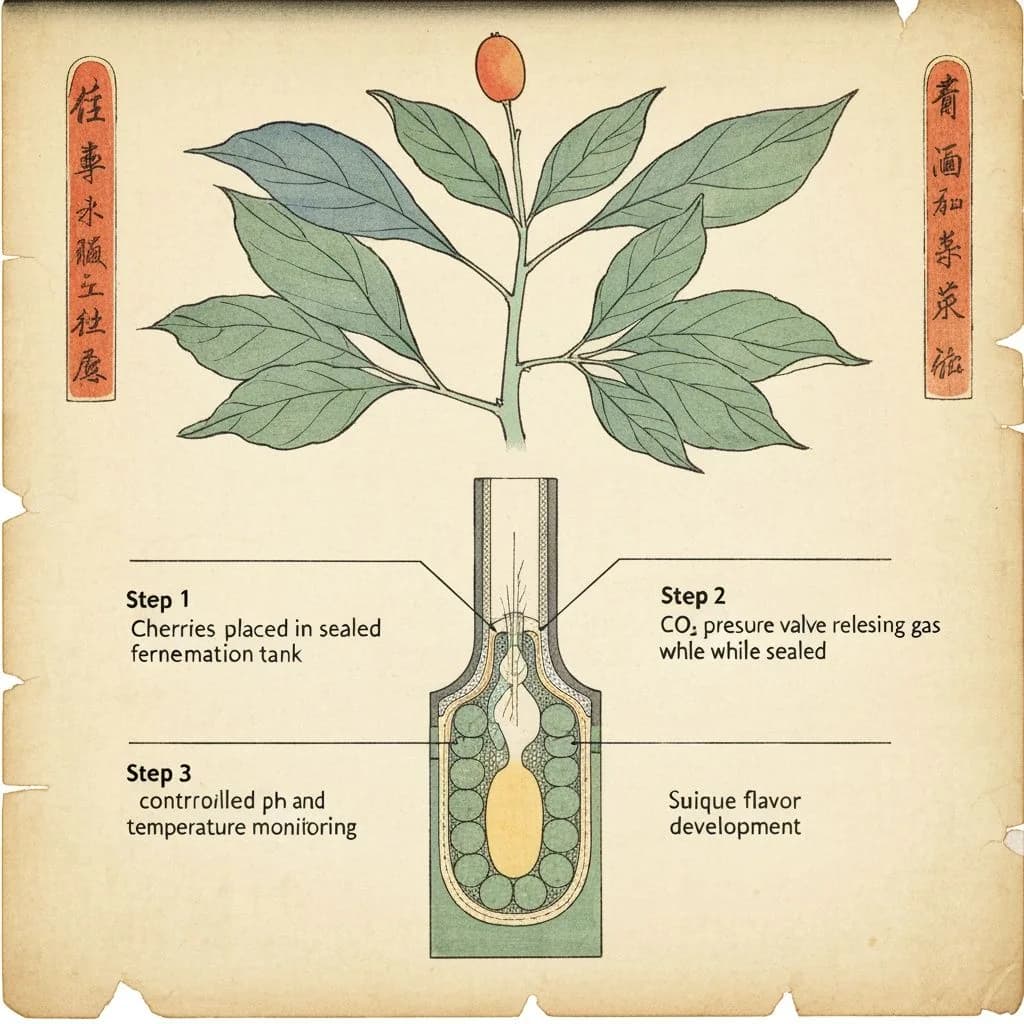
Anaerobic Fermentation
Anaerobic fermentation involves sealing coffee cherries or parchment in airtight tanks or barrels, creating an oxygen-free environment. This controlled fermentation produces unique, intensely flavored coffees with funky, boozy, or tropical notes.
Species
The four main coffee species
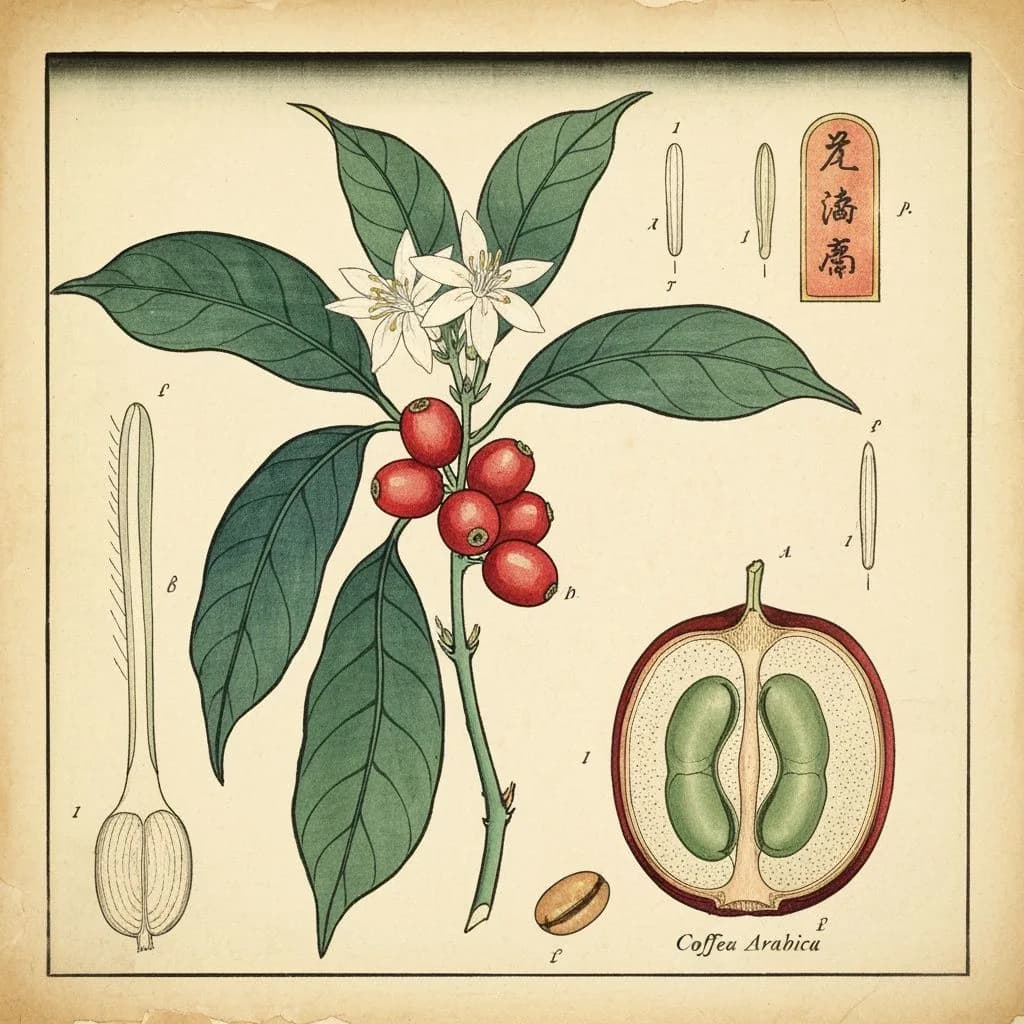
Arabica
Coffea arabica accounts for about 60-70% of global coffee production. Known for its smooth, complex flavor profile and lower caffeine content compared to Robusta. Arabica plants are more delicate, requiring specific altitude and climate conditions to thrive.
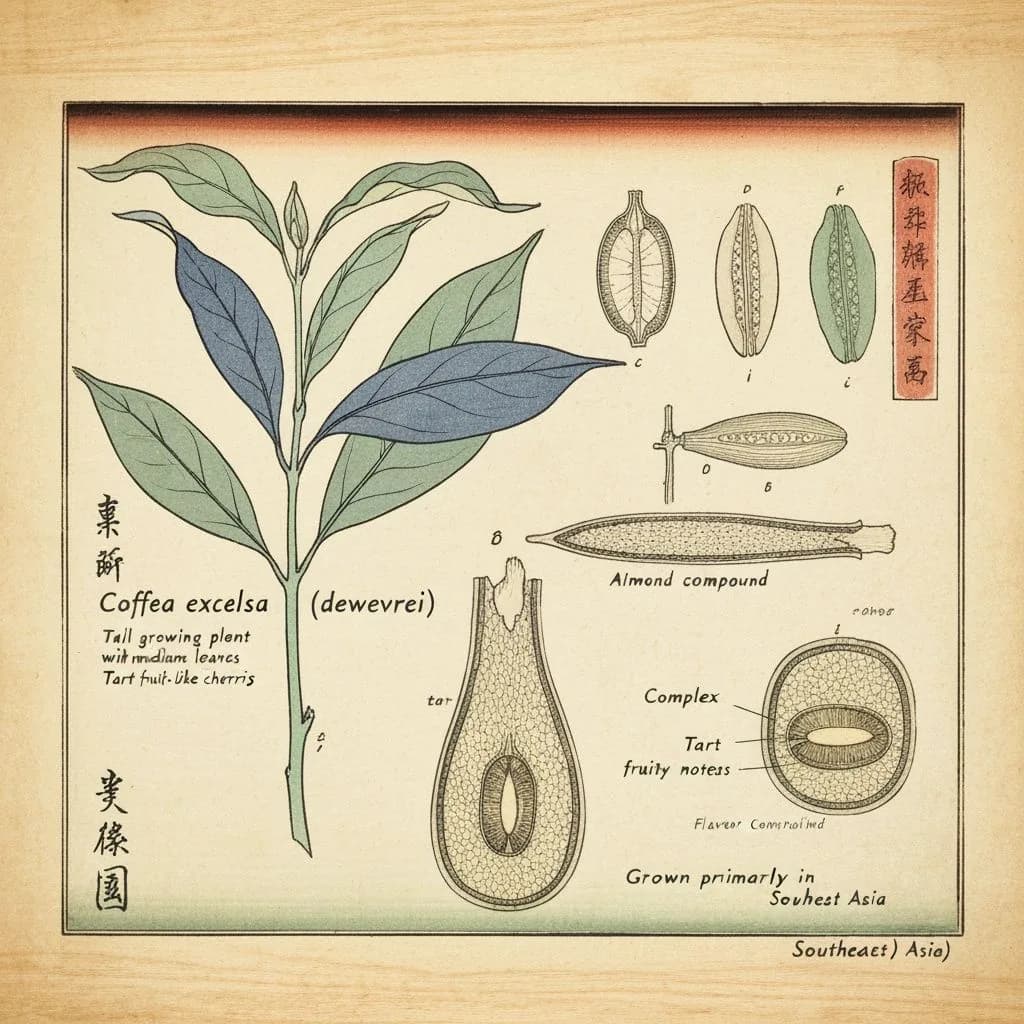
Excelsa
Recently reclassified as a variety of Liberica, Excelsa grows primarily in Southeast Asia and accounts for about 7% of world coffee production. It has a complex, tart flavor profile often used in blends to add depth and complexity.
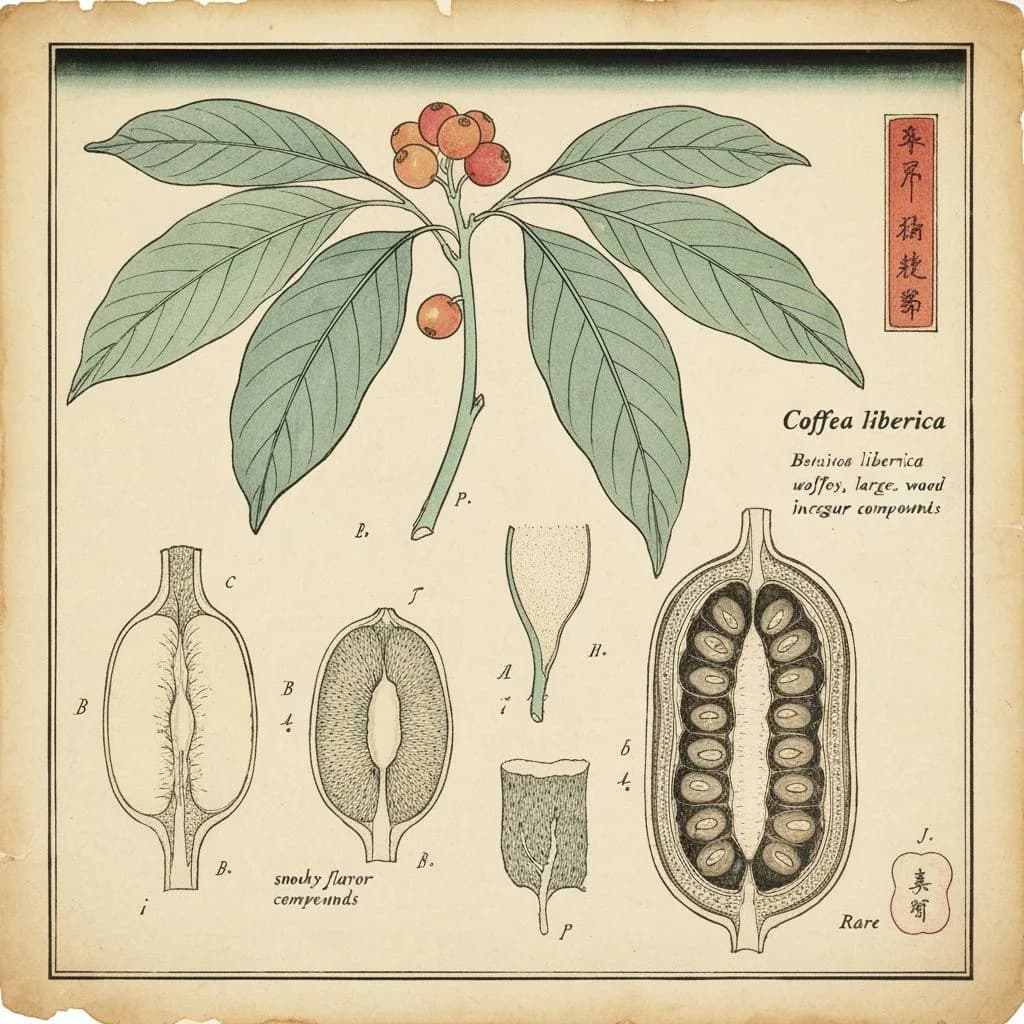
Liberica
Coffea liberica is a rare coffee species with large, asymmetric beans. It has a unique flavor profile that can be polarizing - some describe it as floral and fruity, others as woody and smoky. Liberica accounts for less than 2% of world coffee production.
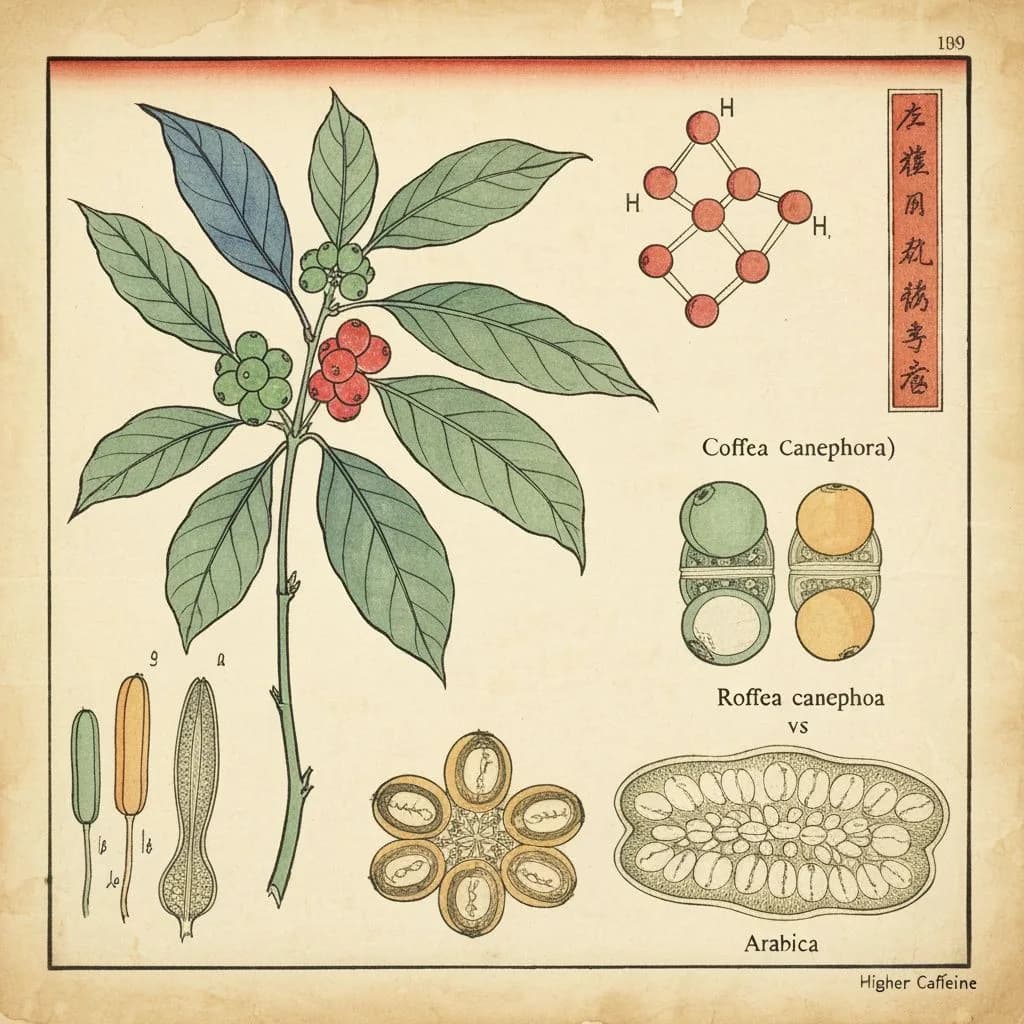
Robusta
Coffea canephora, commonly called Robusta, is the second most popular coffee species. It has nearly double the caffeine of Arabica, a stronger and harsher taste, and is more resistant to pests and diseases. Often used in espresso blends for body and crema.
Arabica Varieties
The cultivars that define specialty coffee
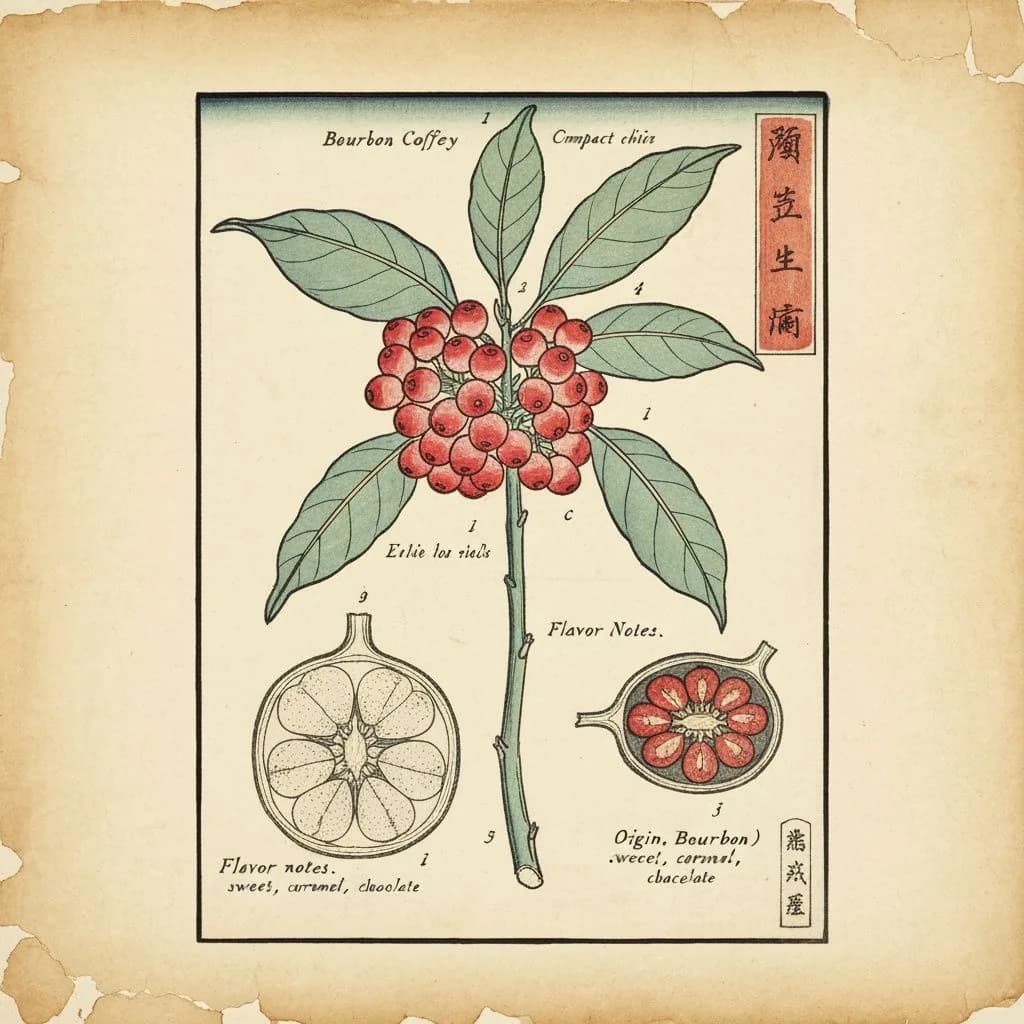
Bourbon
Bourbon is a natural mutation of Typica that originated on the island of Reunion (formerly Bourbon). It produces about 20-30% more fruit than Typica and is known for its sweet, complex flavor. Red and Yellow Bourbon are the most common sub-varieties.
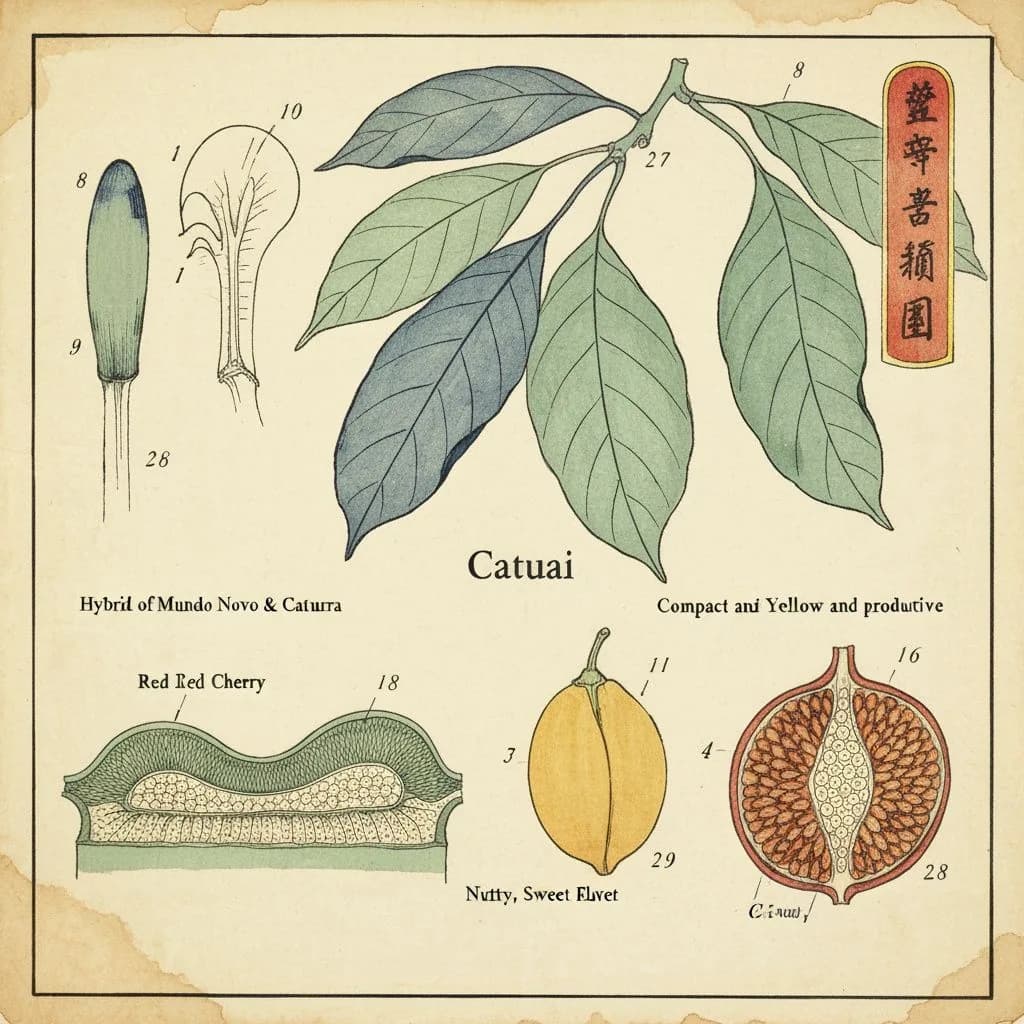
Catuai
Catuai is a hybrid of Mundo Novo and Caturra, developed in Brazil in the 1950s. It is a compact, high-yielding variety resistant to wind and rain. The cup profile tends to be sweet with moderate acidity.
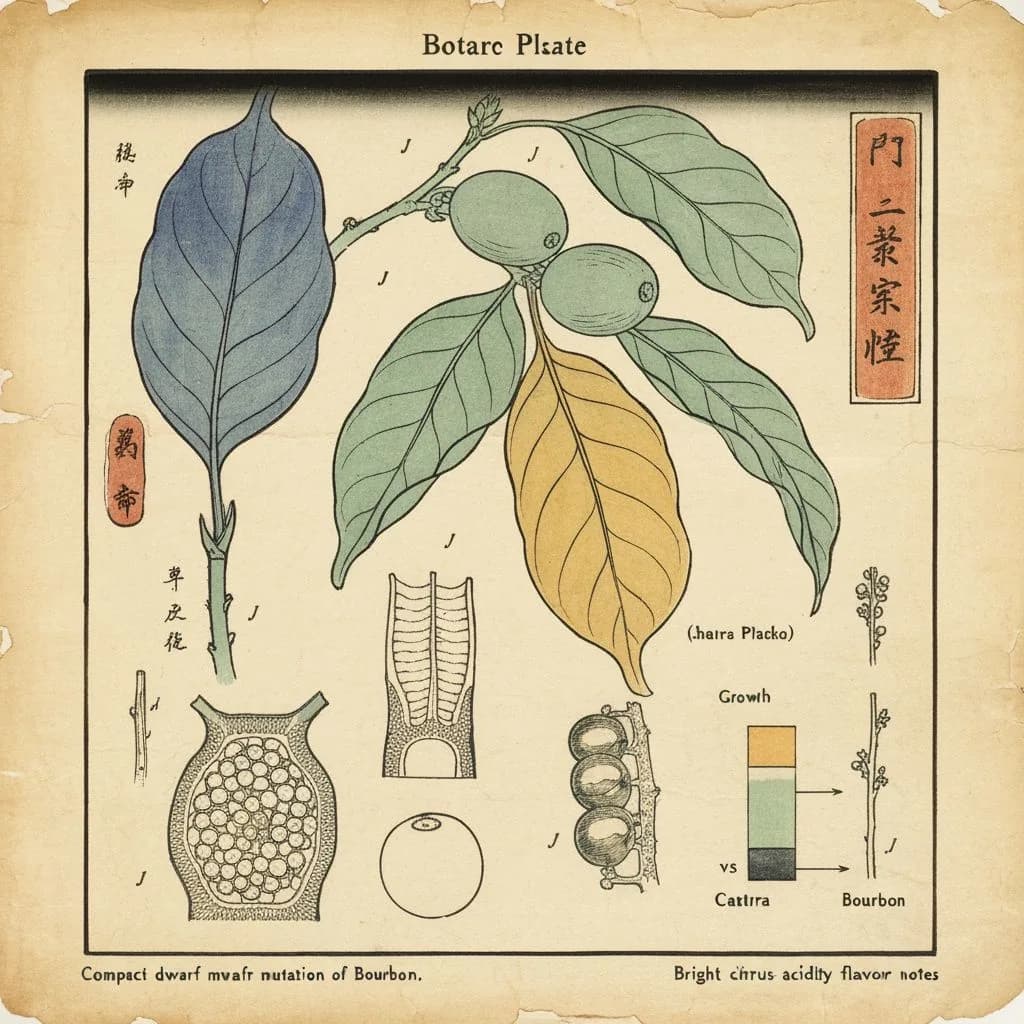
Caturra
Caturra is a natural mutation of Bourbon discovered in Brazil in the 1930s. It is a compact, high-yielding plant that produces bright, lemony cups with light body. Popular in Central and South America.
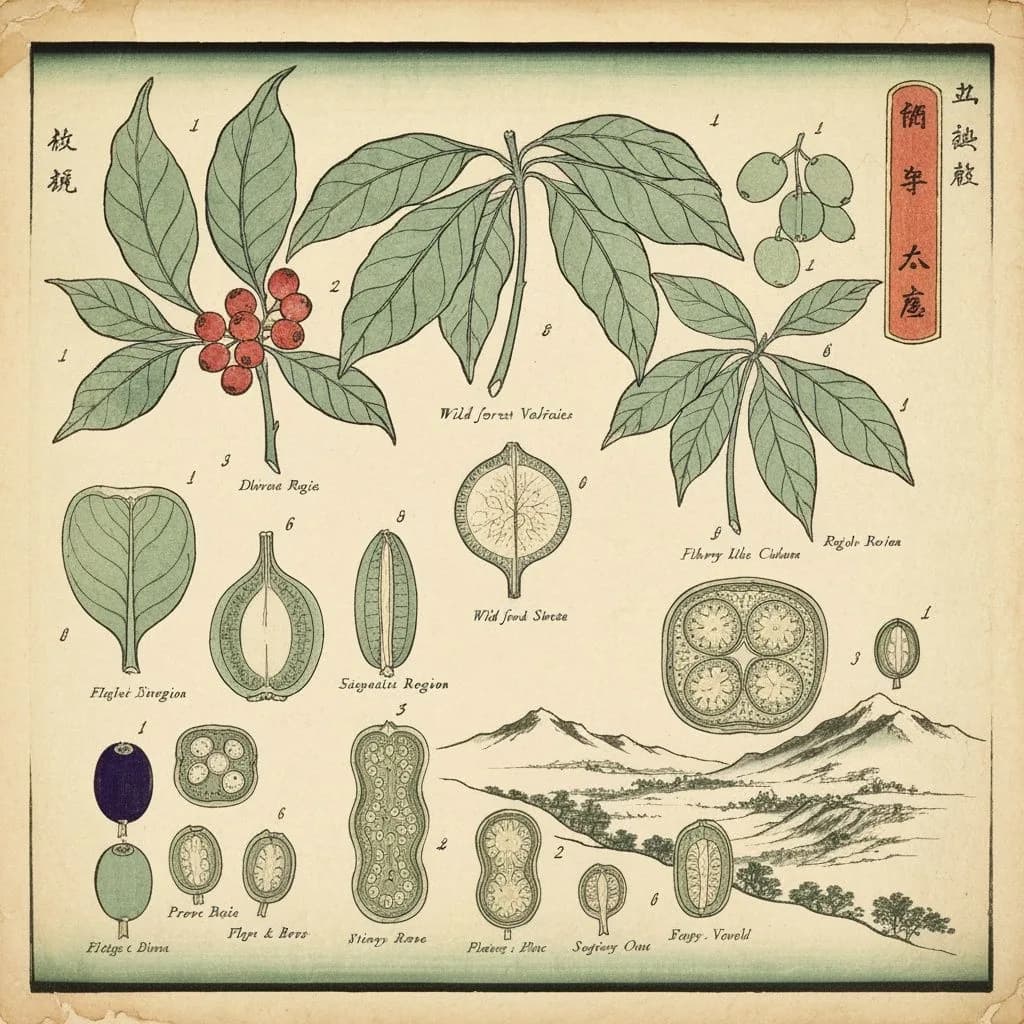
Ethiopian Heirloom
Ethiopian Heirloom is a collective term for the thousands of wild and semi-wild arabica varieties native to Ethiopia. These genetically diverse plants produce some of the most complex and distinctive coffee flavors in the world.
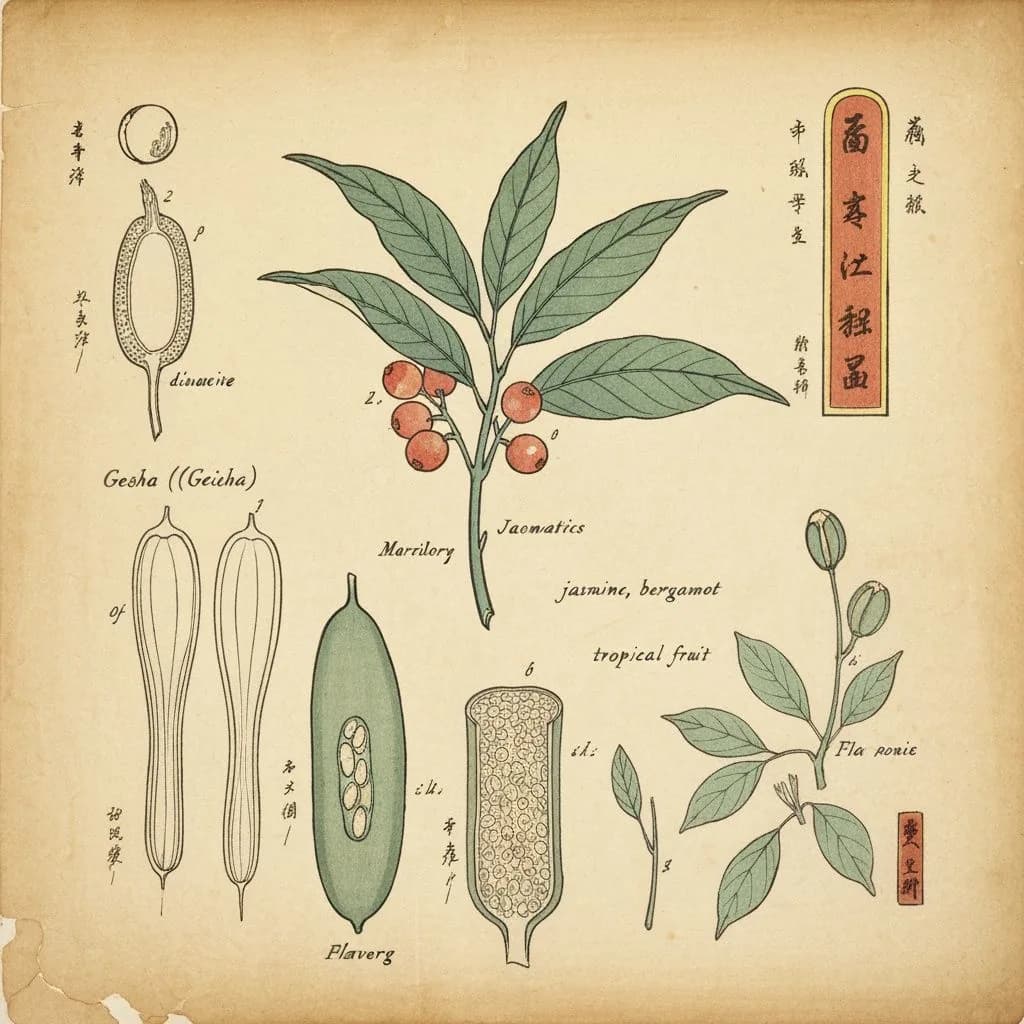
Gesha (Geisha)
Gesha is considered by many to be the finest coffee variety in the world. Originally from the Gesha village in Ethiopia, it gained fame in 2004 when a Panamanian farm's Gesha won a competition with unprecedented scores. Characterized by jasmine-like aromatics and complex fruit flavors.
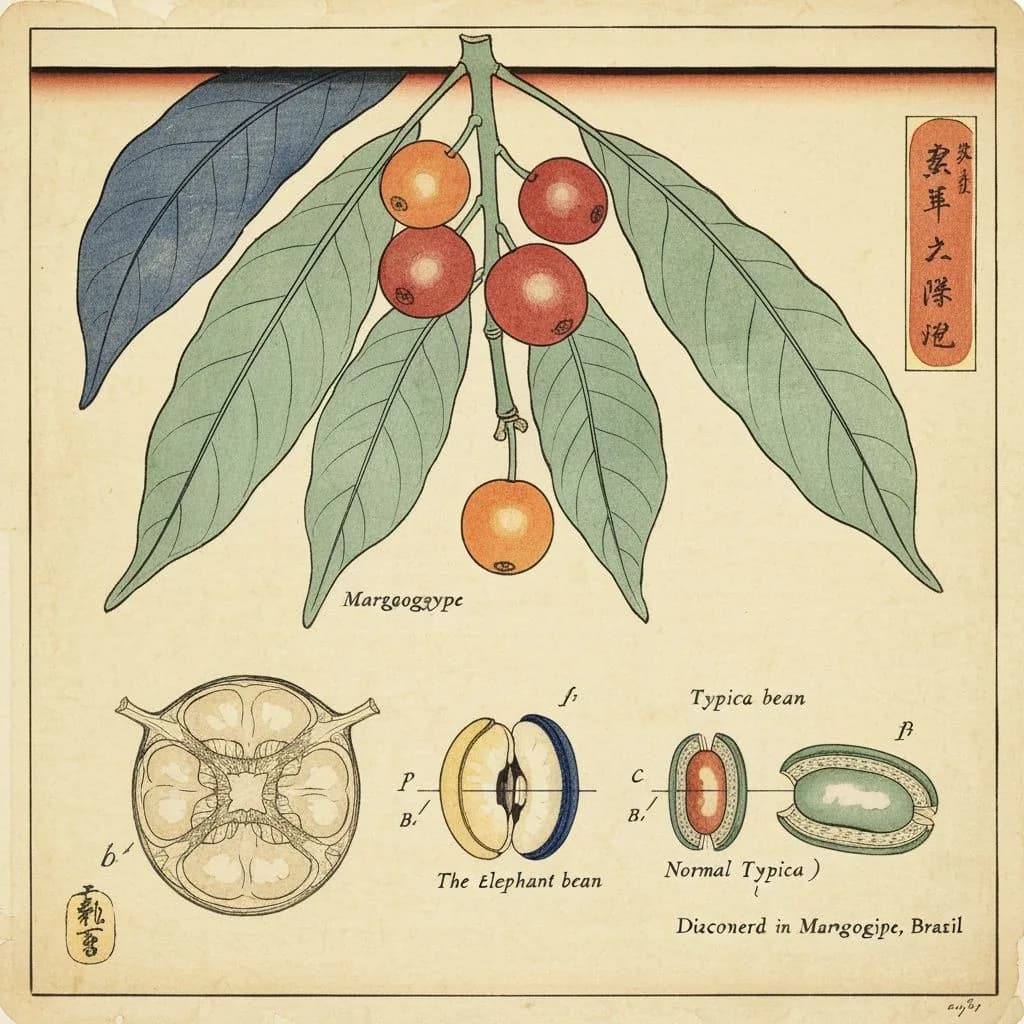
Maragogype
Maragogype (also called Elephant Bean) is a Typica mutation discovered in Maragogipe, Brazil. Known for its exceptionally large beans, it produces a smooth, mild cup with low acidity. Yields are low but beans command premium prices.
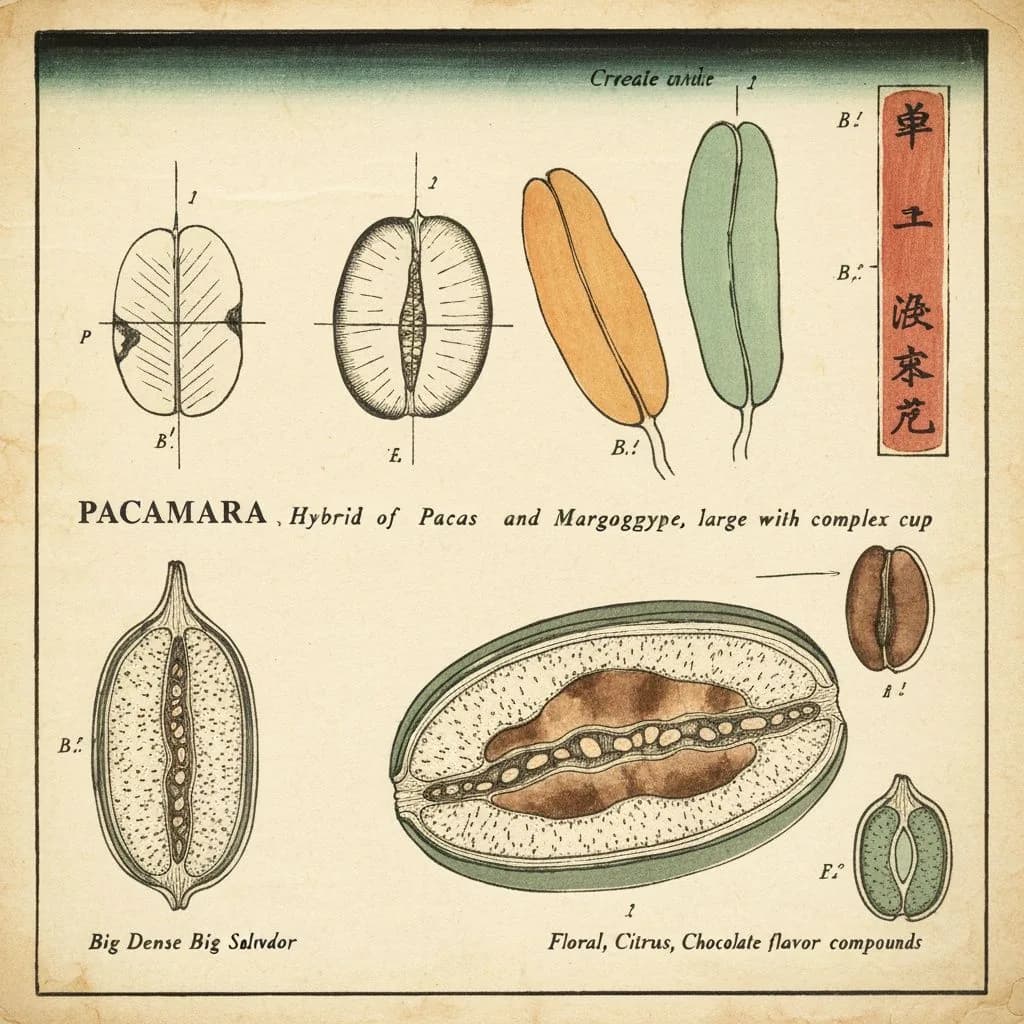
Pacamara
Pacamara is a hybrid of Pacas and Maragogype created in El Salvador in 1958. It has extremely large beans and produces complex cups with floral aromatics, creamy body, and citrus acidity. Considered a specialty variety.
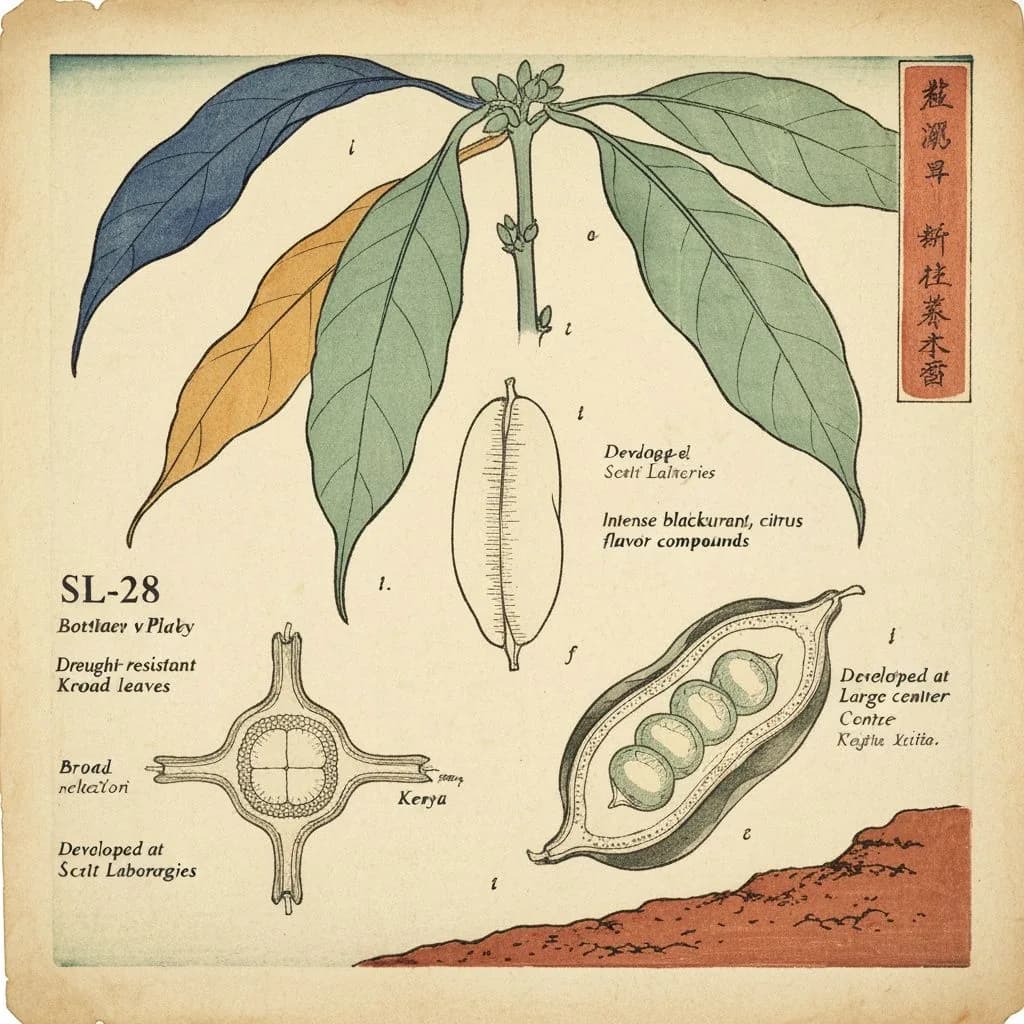
SL-28
SL-28 was developed by Scott Laboratories in Kenya in the 1930s. It is prized for its complex citrus acidity, deep berry and stone fruit flavors, and heavy body. SL-28 is drought-resistant but susceptible to coffee berry disease.
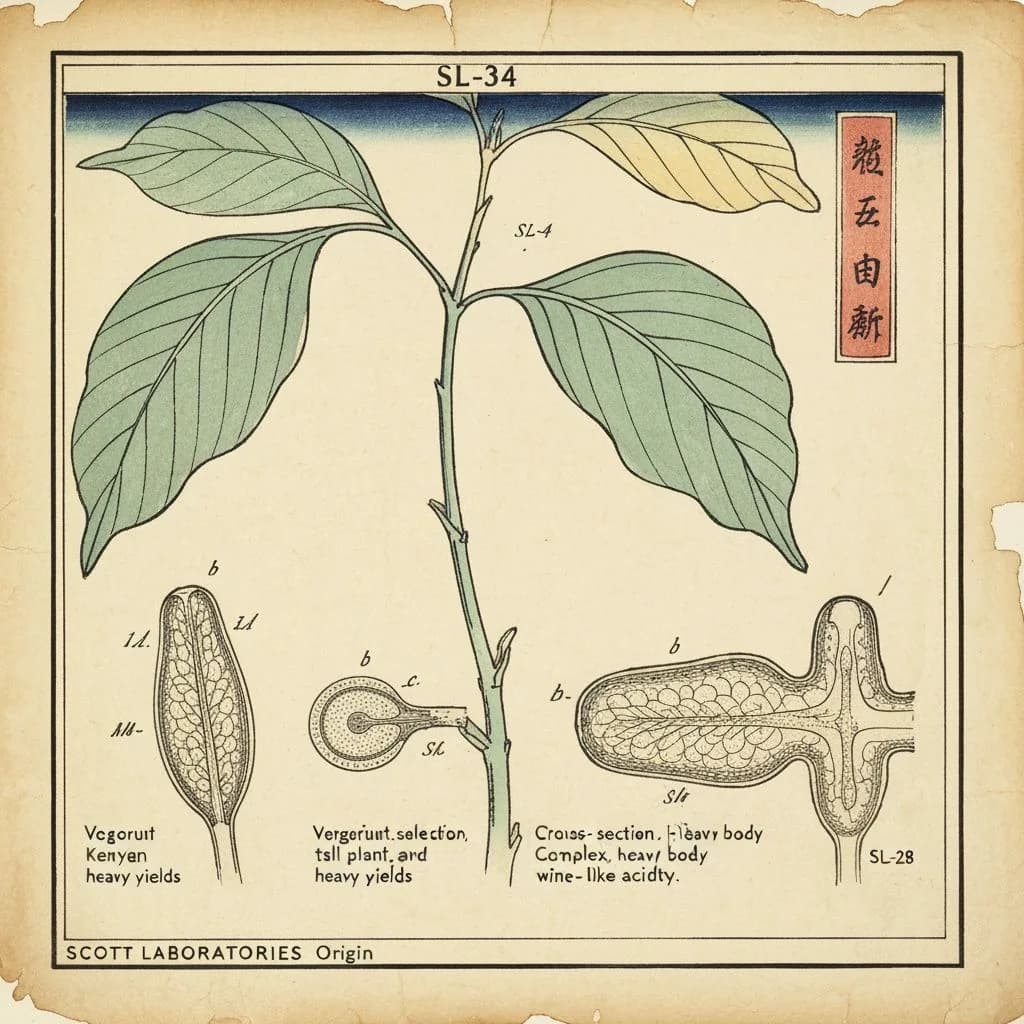
SL-34
SL-34, also developed by Scott Laboratories in Kenya, is a high-yielding variety adapted to high altitudes. It produces a heavy-bodied cup with bright citrus acidity and complex flavors similar to SL-28.
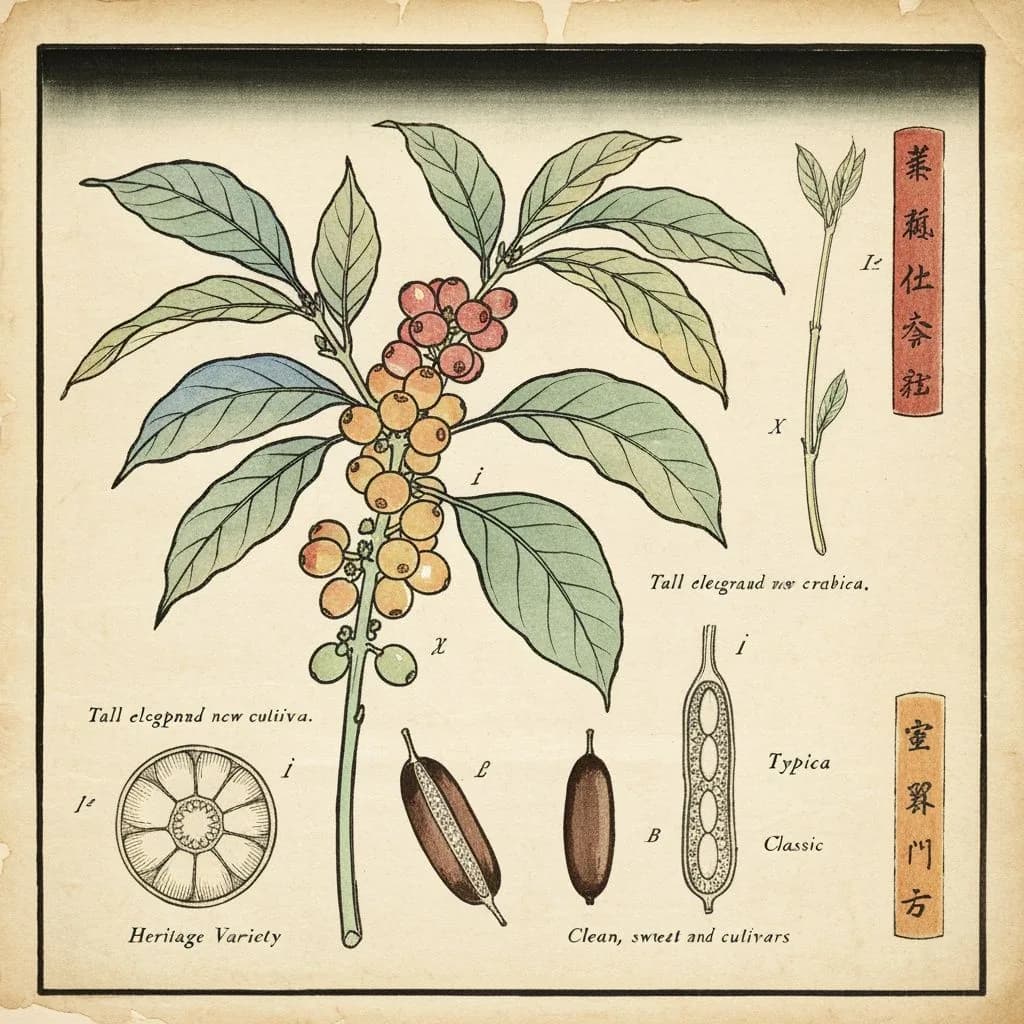
Typica
Typica is one of the most culturally important arabica varieties and the genetic base for many other cultivars. It produces a clean, sweet cup with good acidity. Typica plants have relatively low yields but are prized for quality.
Processing Methods
How the cherry becomes the bean
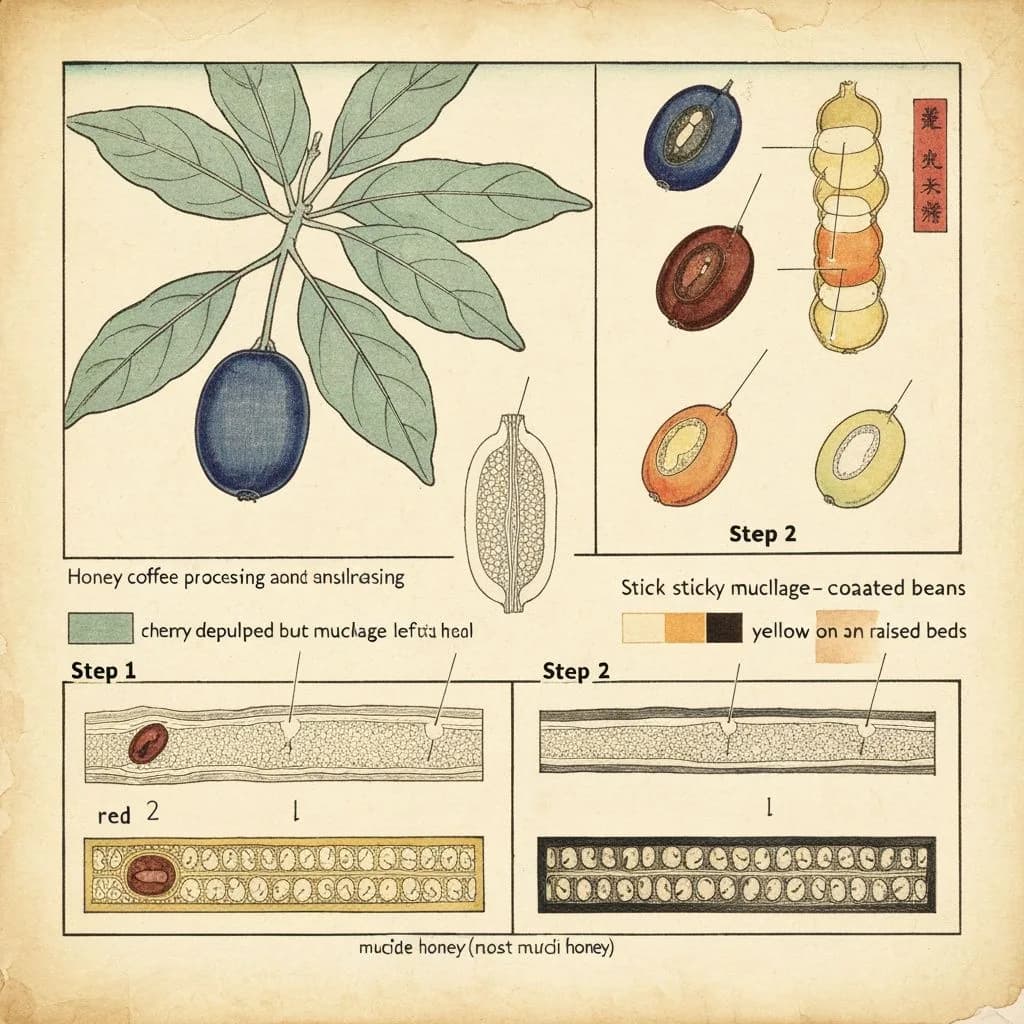
Honey Process
Honey processing is a hybrid method where some or all of the mucilage (honey-like sticky layer) is left on the bean during drying. The amount left determines the color classification: white, yellow, red, or black honey. This produces sweet, complex cups.
Natural (Dry Process)
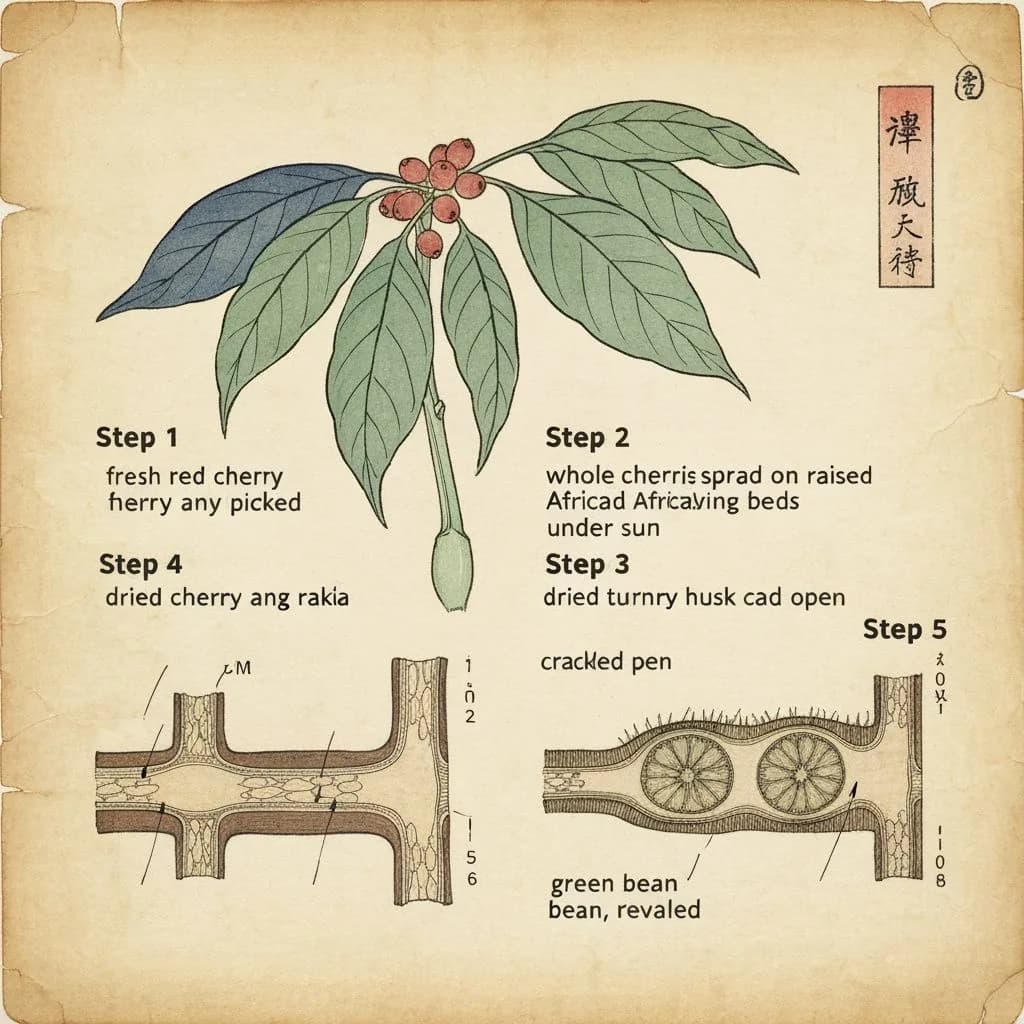
Natural processing is the oldest method - whole coffee cherries are dried in the sun on raised beds or patios. The fruit ferments around the bean during drying, imparting fruity and wine-like flavors. When done well, natural coffees are intensely flavorful.
Washed (Wet Process)
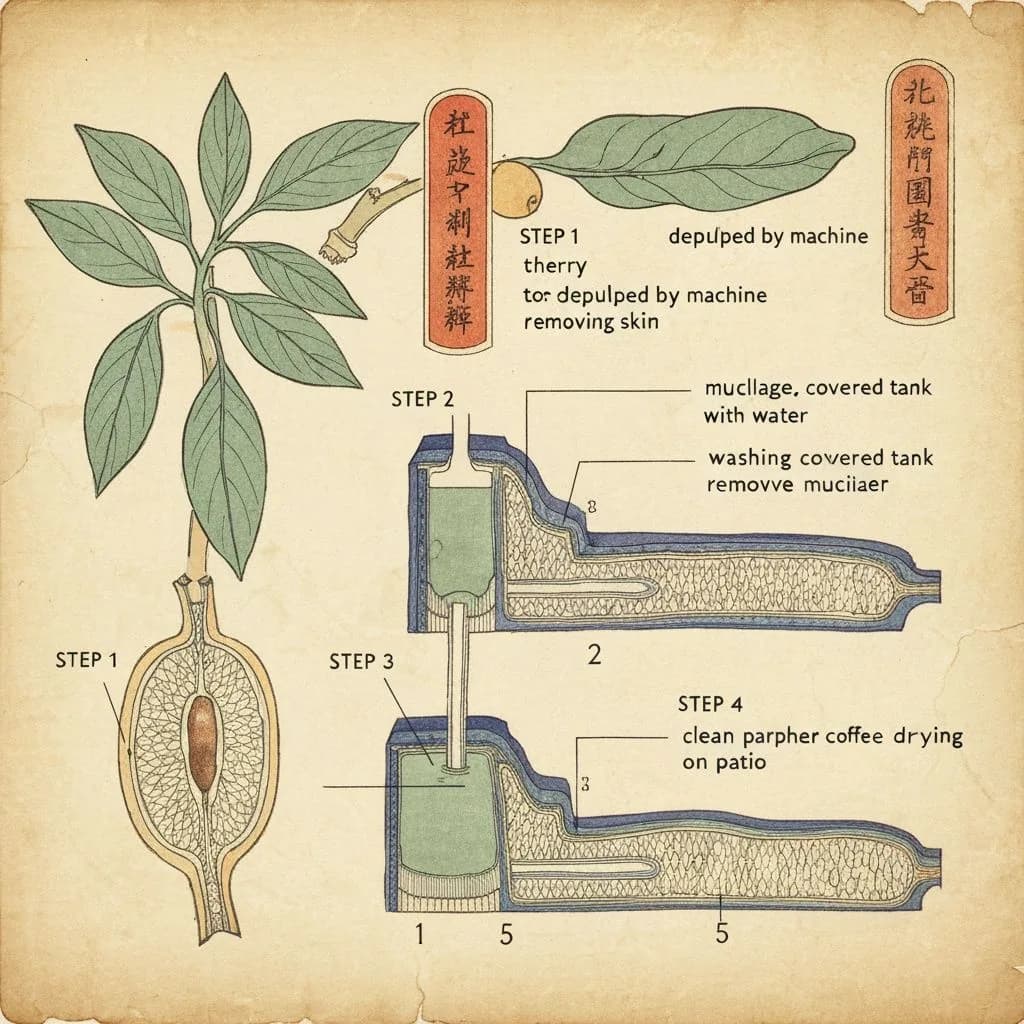
In washed processing, the coffee cherry's fruit is fully removed before drying. The beans are fermented in water tanks to break down the remaining mucilage, then washed clean. This produces the cleanest-tasting coffee with bright acidity and clear origin character.
Wet-Hulled (Giling Basah)
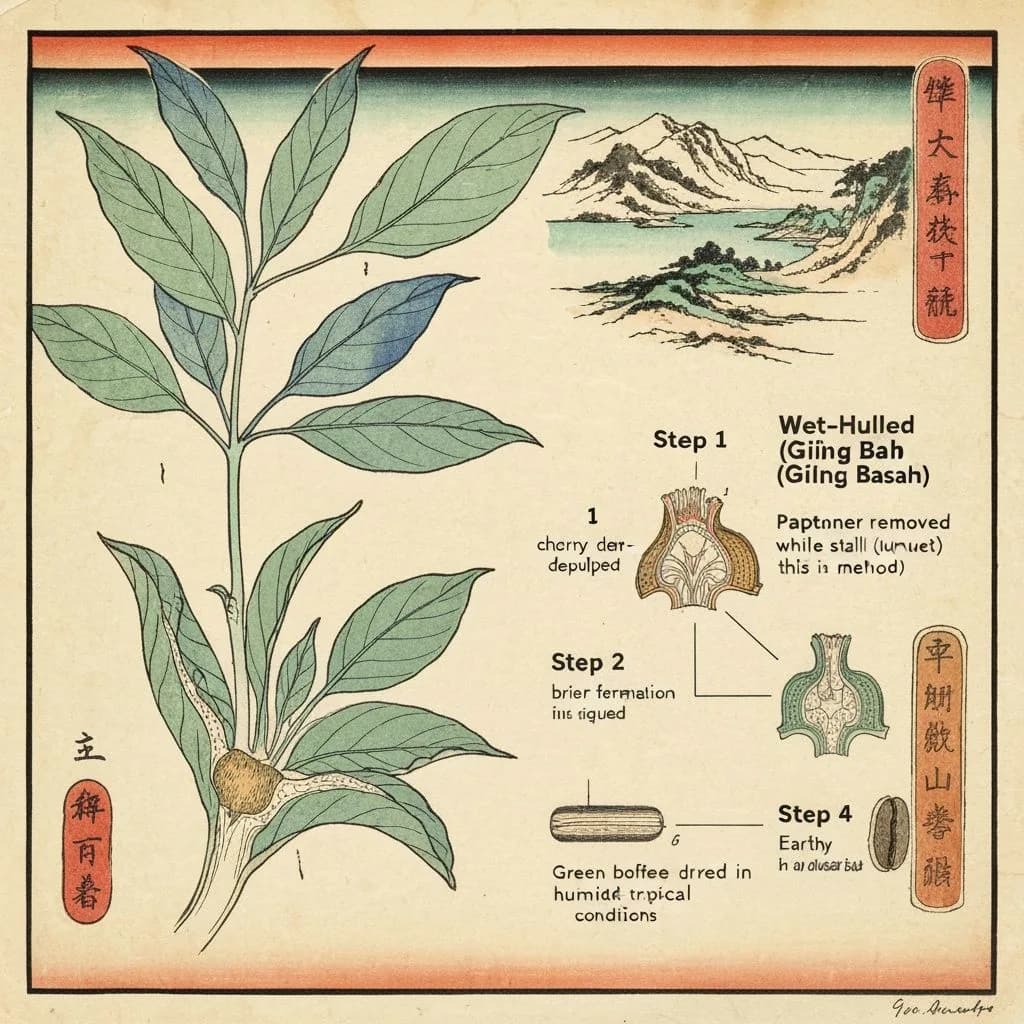
Wet-hulling is a processing method unique to Indonesia. Parchment coffee is hulled while still wet (at ~30-35% moisture), giving the beans their distinctive dark blue-green color and producing heavy-bodied cups with low acidity and earthy, herbal flavors.
Roast Levels
From light to dark, how heat transforms flavor
Dark Roast
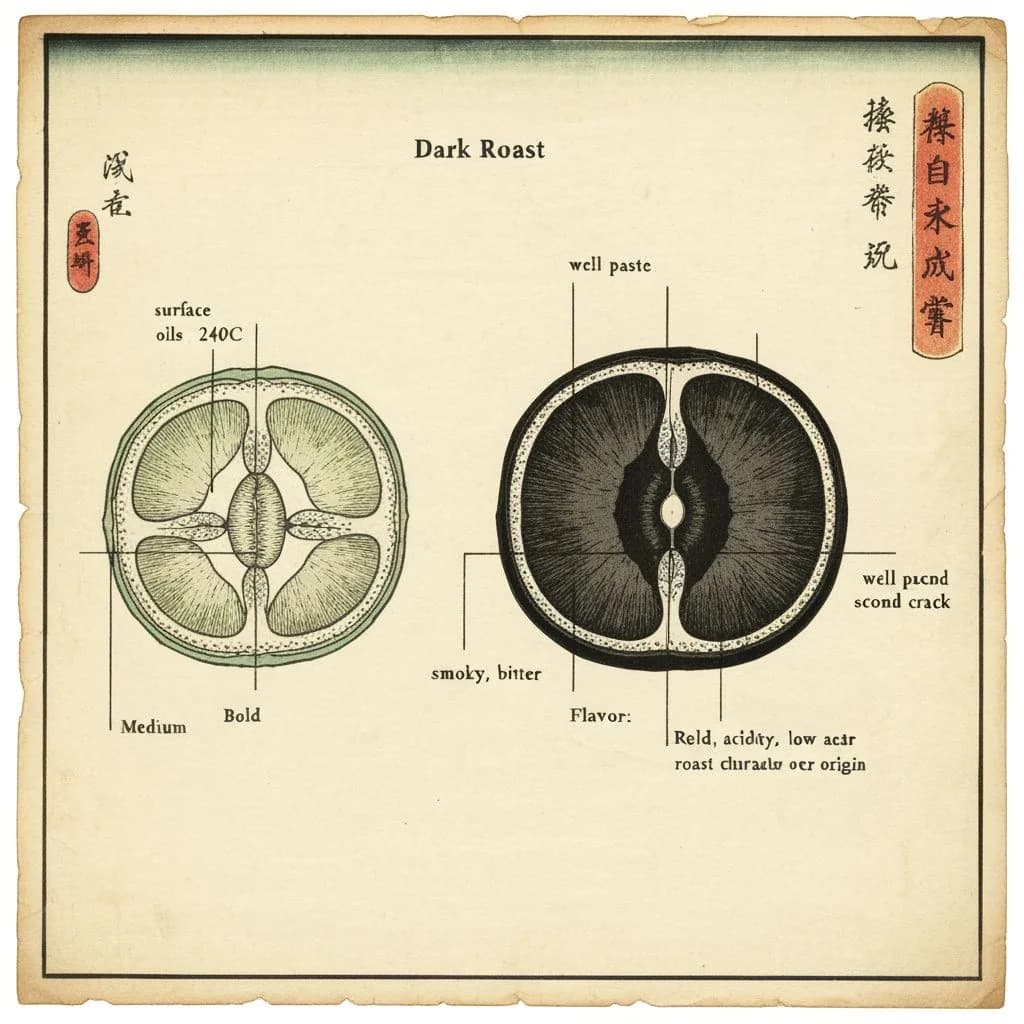
Dark roast coffee is roasted to 464F+ (240C+), well into or past second crack. The beans are oily and dark brown to nearly black. Origin character is replaced by roast character: smoky, bitter, and bold. The sugars are fully caramelized or carbonized.
Light Roast
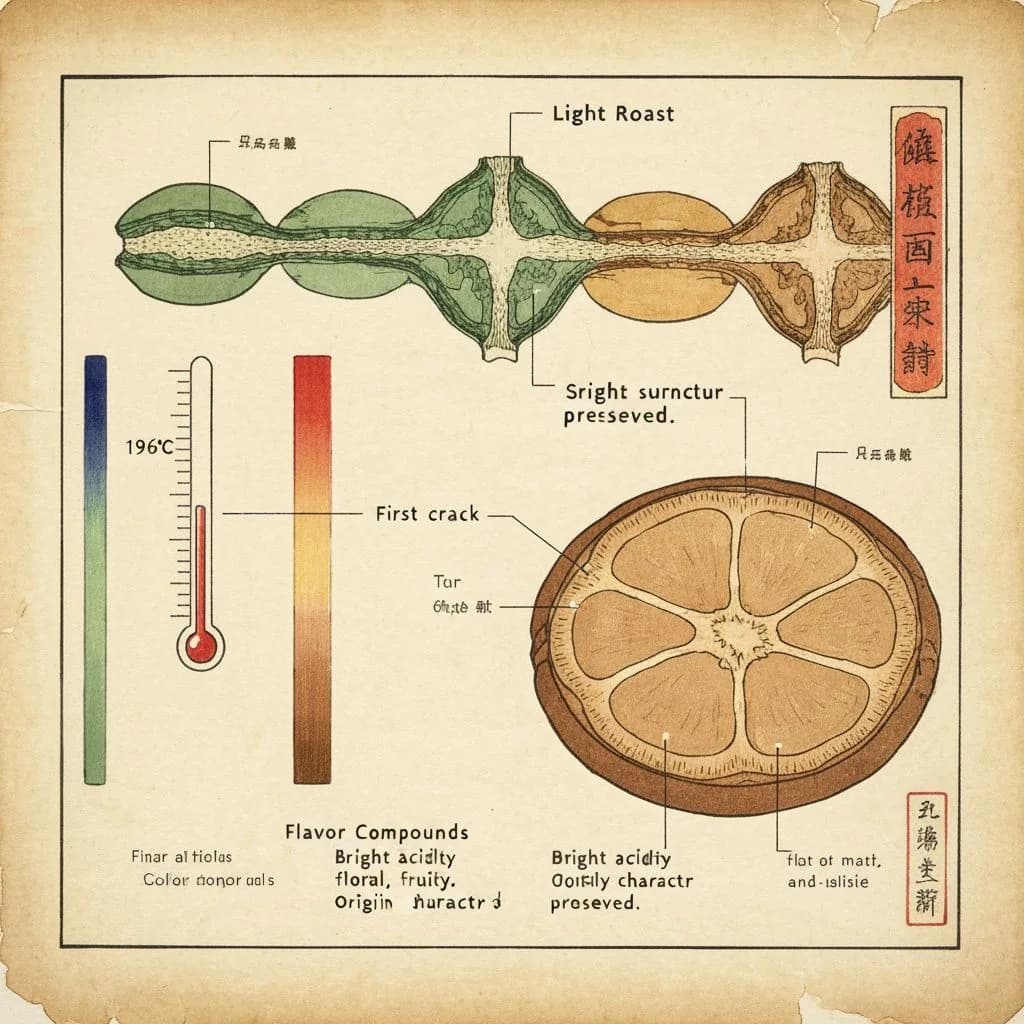
Light roast coffee is roasted to an internal temperature of 356-401F (180-205C), typically stopped at or just after first crack. The beans retain most of their original character, producing bright, acidic cups with distinct origin flavors. The lightest roasts may taste tea-like or grain-like.
Medium Roast
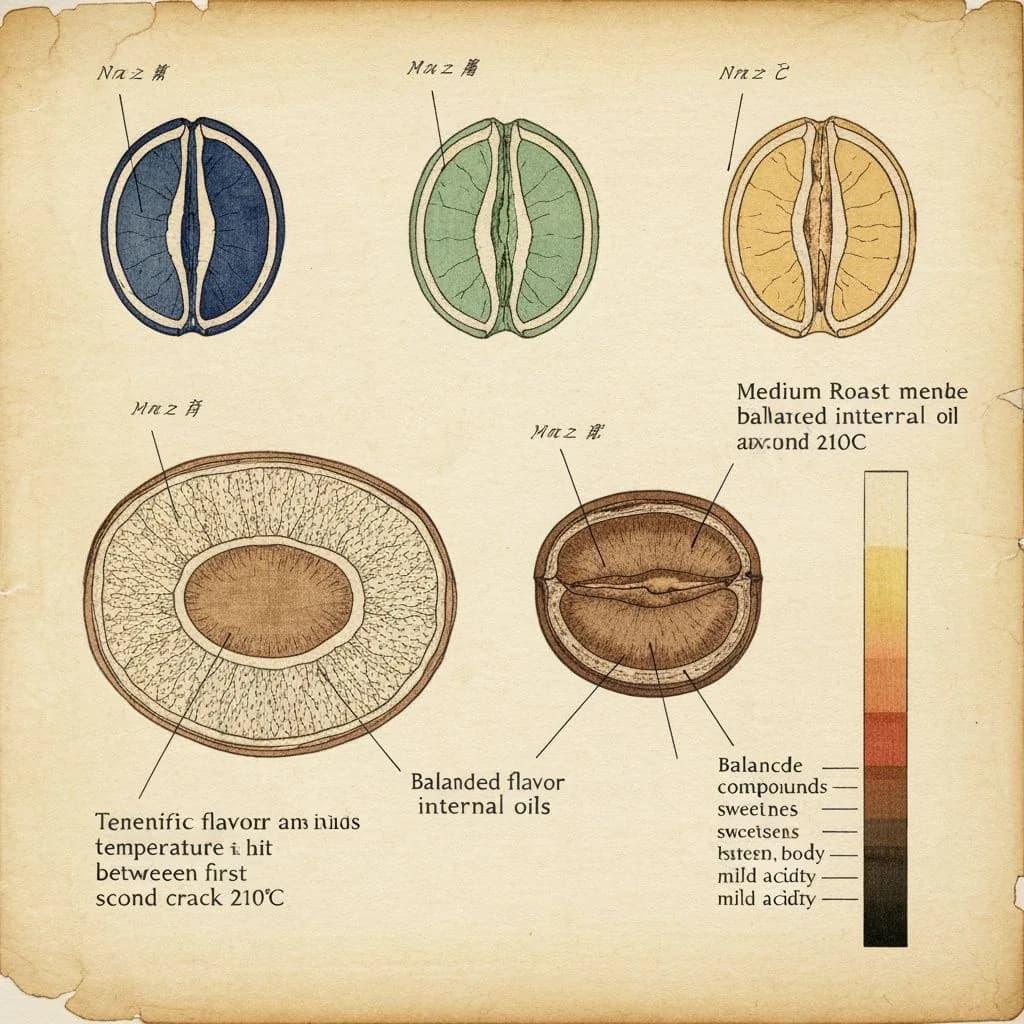
Medium roast coffee reaches 410-428F (210-220C) internally, between first and second crack. This is the most popular roast level worldwide, balancing origin character with roast sweetness. Medium roasts have moderate acidity, fuller body, and caramel notes.
Medium-Dark Roast
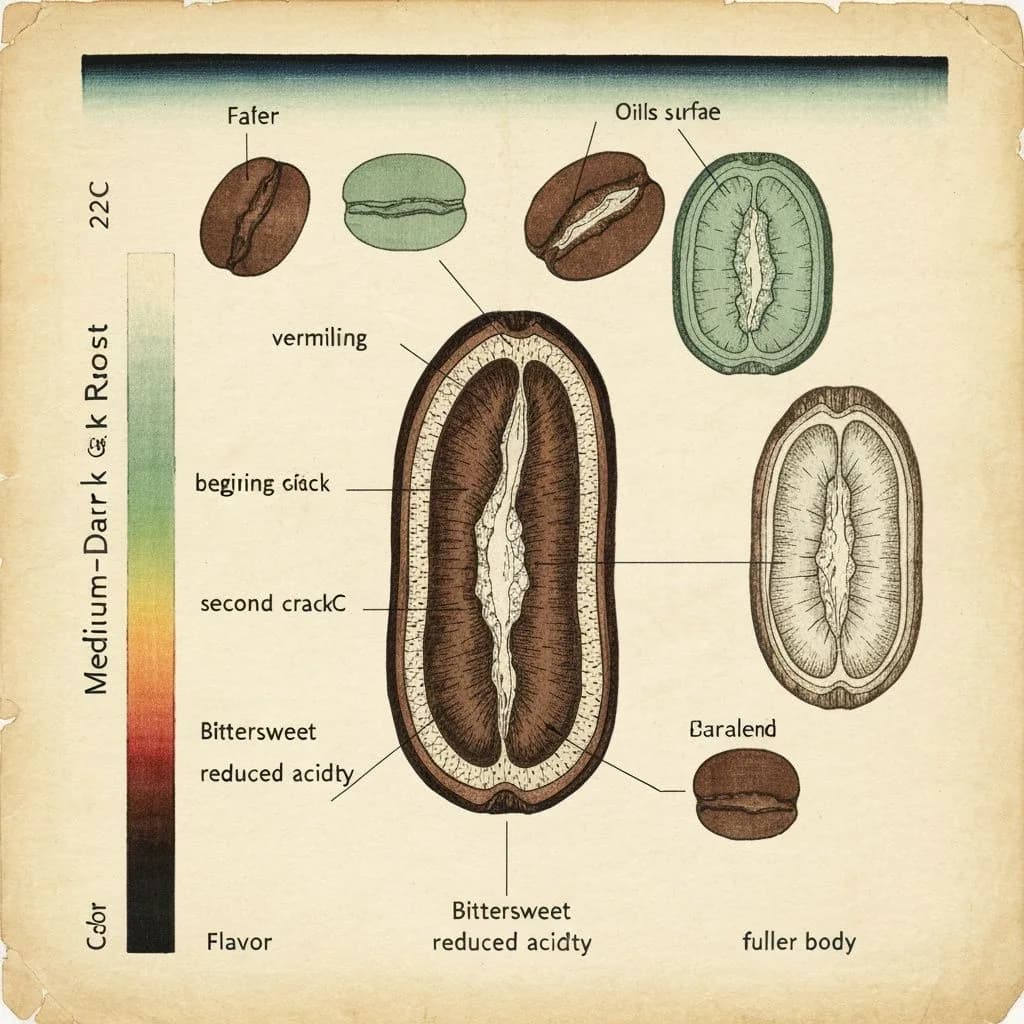
Medium-dark roasts reach 437-446F (225-230C), at or just into second crack. The beans begin to show oil on the surface. These roasts have richer, darker flavors with bittersweet chocolate and spice notes, lower acidity, and heavier body.
Frequently Asked Questions
What is the difference between Arabica and Robusta?▼
What does "single origin" mean?▼
What is coffee processing and why does it matter?▼
What is Gesha coffee and why is it expensive?▼
Does roast level change caffeine content?▼
Researched and compiled by CoffeeTrove. Last updated March 2026.