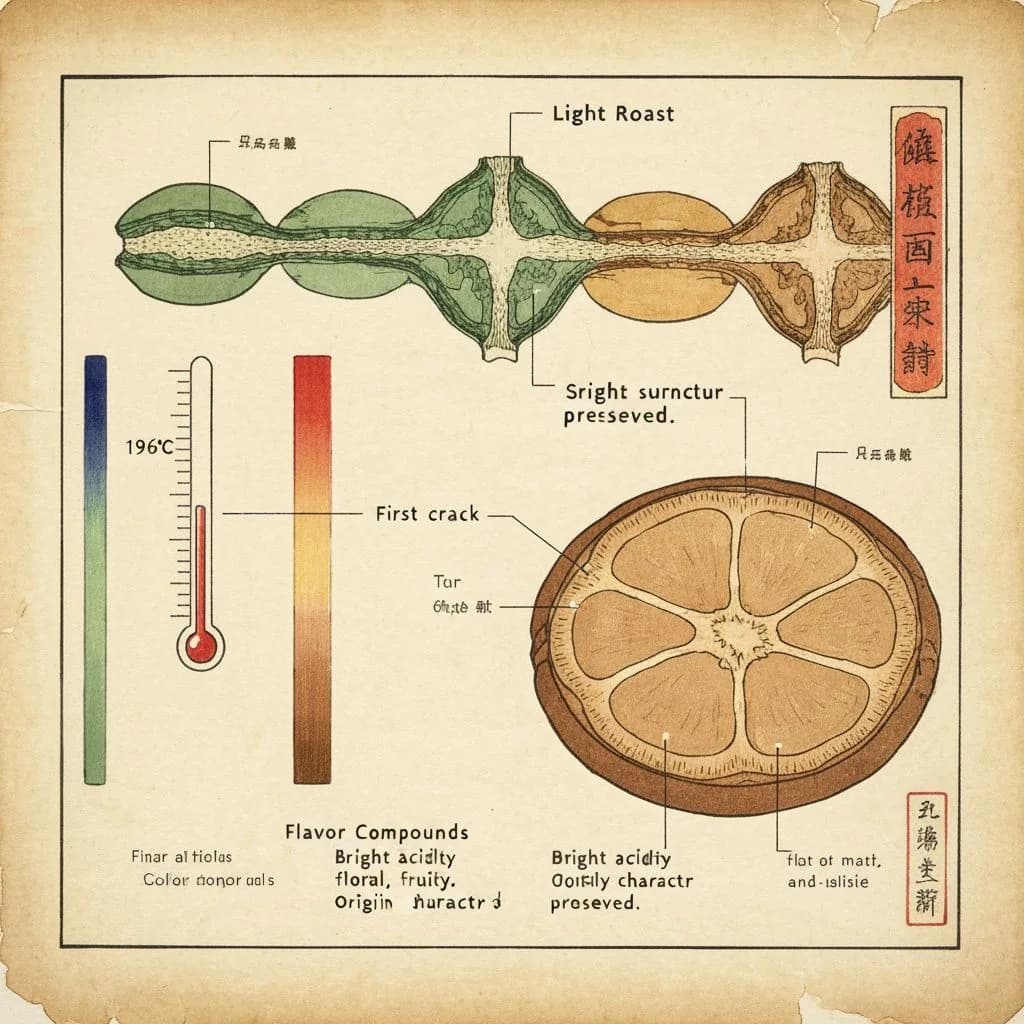
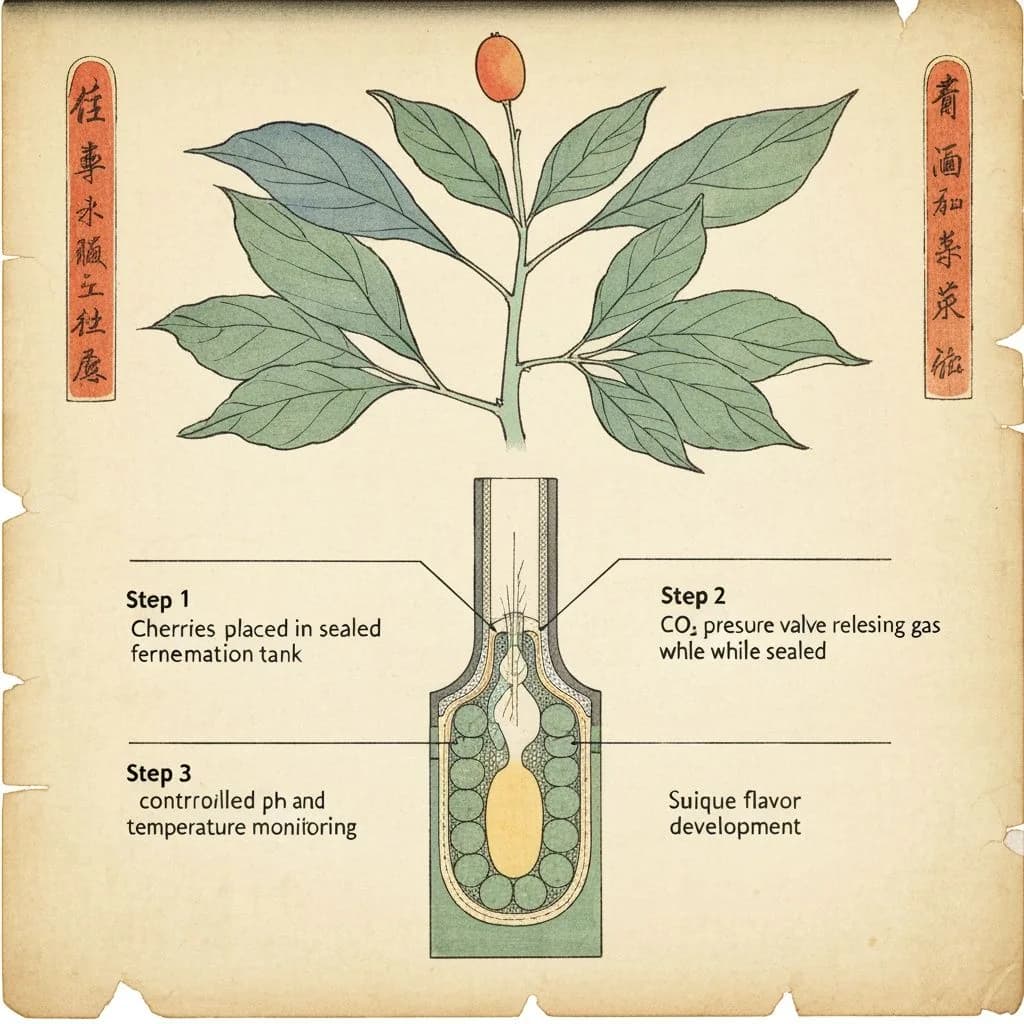
Light Roast - botanical illustration showing roast characteristics

Light Roast

Roast LevelArabicaMedium Caffeine

Light roast coffee is roasted to an internal temperature of 356-401F (180-205C), typically stopped at or just after first crack. The beans retain most of their original character, producing bright, acidic cups with distinct origin flavors. The lightest roasts may taste tea-like or grain-like.

Understanding Light Roast

Light roast coffee is heated to an internal temperature of 180-205°C (356-401°F), reaching or just passing "first crack" - the point where beans audibly pop as moisture escapes and cellular structure expands.

Characteristics

  • Color: Light brown, tan, cinnamon
  • Surface: Dry, no visible oils
  • Density: Highest of any roast level (beans retain more moisture)
  • Caffeine: Slightly higher than darker roasts by volume

Flavor Profile

Light roast preserves the bean's origin character. Expect bright acidity, floral and fruity notes, tea-like body, and complex aromatics. The roast itself contributes minimal flavor - what you taste is the bean's terroir: altitude, soil, variety, and processing.

Best For

  • Pour-over (V60, Chemex) - Clarity and brightness shine through
  • AeroPress - Captures delicate aromatics
  • Single-origin enthusiasts - Origin character is most pronounced at light roast

Common Misconception

Light roast does NOT mean weak coffee. It means the flavor emphasis is on the bean rather than the roast. A light-roasted Ethiopian Gesha can be intensely flavorful - just in a different direction than a dark roast.

Did you know?

Despite common belief, light roasts actually contain slightly MORE caffeine than dark roasts per bean (though the difference is negligible).

Related
Frequently Asked Questions

What does Light Roast taste like?
Light Roast is known for bright, acidic, floral, origin-forward flavor notes. It has a ## understanding light roast light roast coffee is heated to an internal temperature of 180-205°c (356-401°f), reaching or just passing "first crack" - the point where beans audibly pop as moisture escapes and cellular structure expands. ## characteristics - **color**: light brown, tan, cinnamon - **surface**: dry, no visible oils - **density**: highest of any roast level (beans retain more moisture) - **caffeine**: slightly higher than darker roasts by volume ## flavor profile light roast preserves the bean's origin character. expect bright acidity, floral and fruity notes, tea-like body, and complex aromatics. the roast itself contributes minimal flavor - what you taste is the bean's terroir: altitude, soil, variety, and processing. ## best for - **pour-over (v60, chemex)** - clarity and brightness shine through - **aeropress** - captures delicate aromatics - **single-origin enthusiasts** - origin character is most pronounced at light roast ## common misconception light roast does not mean weak coffee. it means the flavor emphasis is on the bean rather than the roast. a light-roasted ethiopian gesha can be intensely flavorful - just in a different direction than a dark roast. body and medium caffeine content.
What is the best way to brew Light Roast?
Light Roast performs best with pour over, chemex, aeropress. These methods complement the bean's natural characteristics and extract the most balanced flavor. Experiment with grind size and water temperature to dial in your preferred taste.
How much caffeine does Light Roast have?
Light Roast has moderate caffeine content, typical of most Arabica varieties and suitable for all-day drinking. Actual caffeine in your cup depends on brewing method, dose, and water temperature more than the bean variety itself.

Researched and compiled by CoffeeTrove. Last updated March 2026.