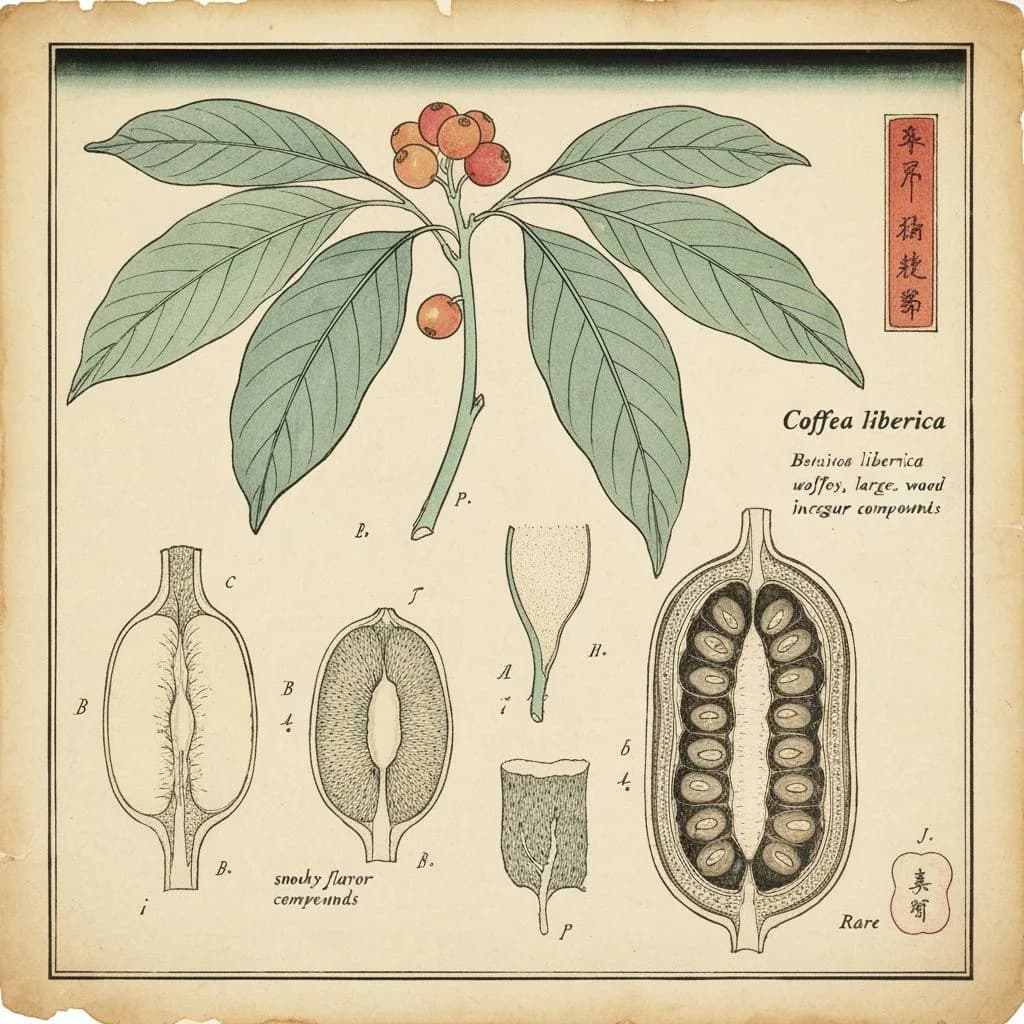
Liberica - botanical illustration showing plant characteristics and bean cross-section

Liberica

SpeciesMedium Caffeine

Coffea liberica is a rare coffee species with large, asymmetric beans. It has a unique flavor profile that can be polarizing - some describe it as floral and fruity, others as woody and smoky. Liberica accounts for less than 2% of world coffee production.

Growing Altitude

200-1500m

About Coffea Liberica

Liberica is a rare coffee species accounting for less than 2% of global production. Native to western and central Africa, it was widely planted in Southeast Asia in the 1890s when a devastating leaf rust epidemic wiped out Arabica plantations.

Characteristics

  • Growing altitude: Low elevation, sea level to 600 meters
  • Temperature: Tolerates tropical heat well
  • Bean size: Dramatically larger and more asymmetric than Arabica or Robusta
  • Flavor profile: Smoky, woody, floral, jackfruit-like, polarizing
  • Tree size: Much larger than other species, reaching up to 20 meters

Where to Find It

  • Philippines (Barako) - The most famous Liberica tradition, where "Barako" coffee is a cultural staple
  • Malaysia - Significant Liberica production in Johor and other states
  • Indonesia - Small amounts grown alongside Robusta

Tasting Liberica

Liberica is an acquired taste. Its bold, smoky, somewhat divisive flavor profile is very different from the clean sweetness of Arabica. Fans describe notes of dark chocolate, smoky wood, and tropical fruit. Critics find it harsh and astringent.

Did you know?

In the Philippines, Liberica is called "Barako" and is considered a symbol of Filipino coffee culture.

Related
Frequently Asked Questions

What does Liberica taste like?
Liberica is known for floral, fruity, woody, smoky flavor notes. It has a ## about coffea liberica liberica is a rare coffee species accounting for less than 2% of global production. native to western and central africa, it was widely planted in southeast asia in the 1890s when a devastating leaf rust epidemic wiped out arabica plantations. ## characteristics - **growing altitude**: low elevation, sea level to 600 meters - **temperature**: tolerates tropical heat well - **bean size**: dramatically larger and more asymmetric than arabica or robusta - **flavor profile**: smoky, woody, floral, jackfruit-like, polarizing - **tree size**: much larger than other species, reaching up to 20 meters ## where to find it - **philippines (barako)** - the most famous liberica tradition, where "barako" coffee is a cultural staple - **malaysia** - significant liberica production in johor and other states - **indonesia** - small amounts grown alongside robusta ## tasting liberica liberica is an acquired taste. its bold, smoky, somewhat divisive flavor profile is very different from the clean sweetness of arabica. fans describe notes of dark chocolate, smoky wood, and tropical fruit. critics find it harsh and astringent. body and medium caffeine content.
What is the best way to brew Liberica?
Liberica performs best with drip, french press. These methods complement the bean's natural characteristics and extract the most balanced flavor. Experiment with grind size and water temperature to dial in your preferred taste.
Where is Liberica coffee grown?
Liberica is primarily grown in Philippines, Malaysia, Liberia. The terroir of these regions -- altitude, soil composition, rainfall, and microclimate -- directly shapes the bean's flavor profile and determines which tasting notes develop during growth and processing.
How much caffeine does Liberica have?
Liberica has moderate caffeine content, typical of most Arabica varieties and suitable for all-day drinking. Actual caffeine in your cup depends on brewing method, dose, and water temperature more than the bean variety itself.

Researched and compiled by CoffeeTrove. Last updated March 2026.