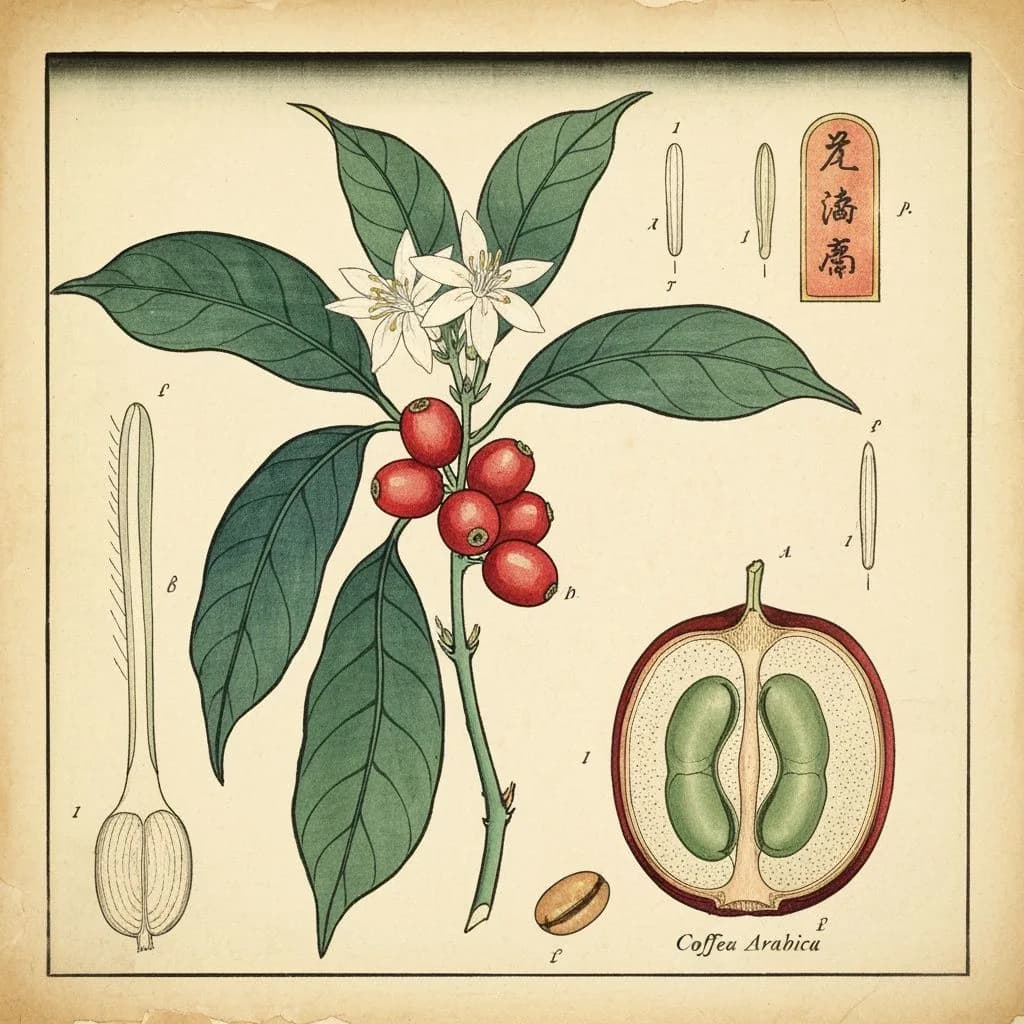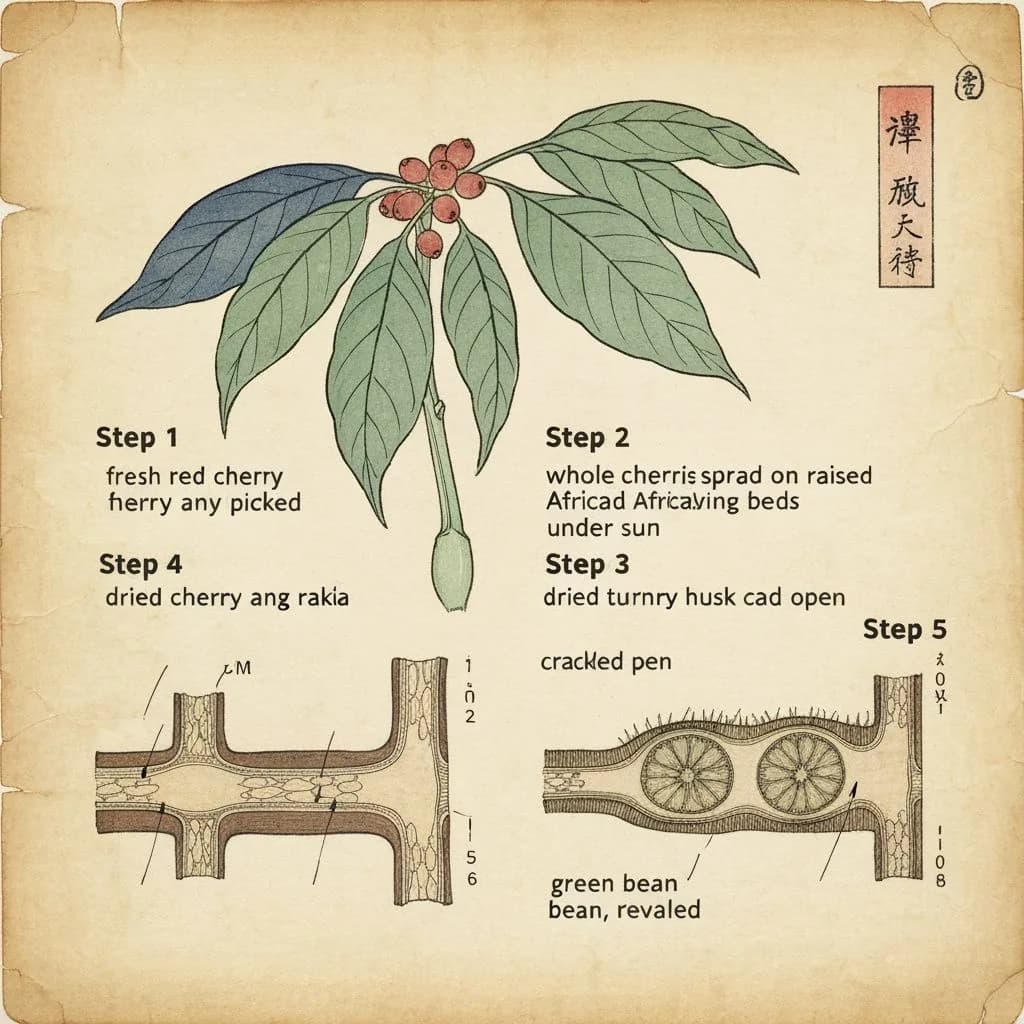
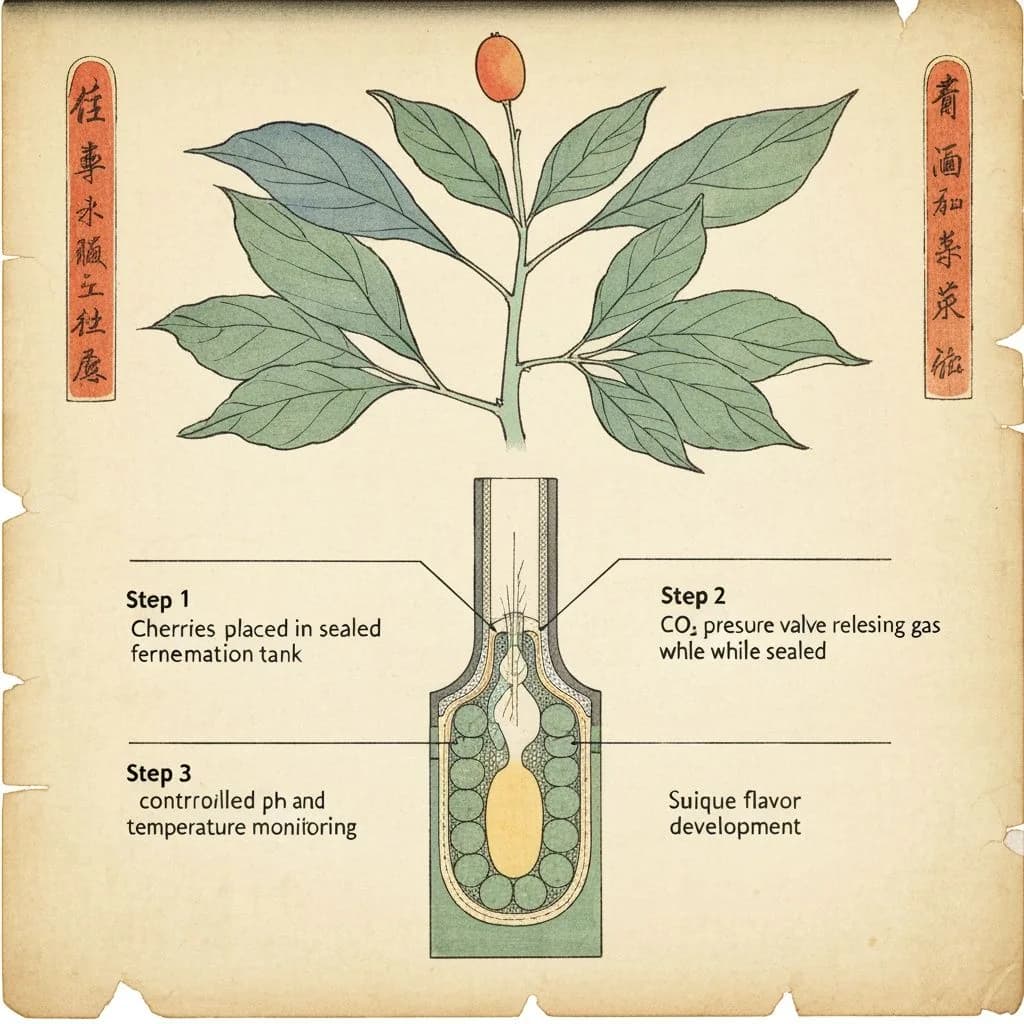
Natural (Dry Process) - botanical illustration showing processing stages

Natural (Dry Process)

ProcessingArabica

Natural processing is the oldest method - whole coffee cherries are dried in the sun on raised beds or patios. The fruit ferments around the bean during drying, imparting fruity and wine-like flavors. When done well, natural coffees are intensely flavorful.

How Natural Processing Works

1

Harvesting

Only fully ripe, red cherries are hand-picked from the trees. Cherry selection is critical because under-ripe or overripe fruit will create off-flavors during drying.

2

Sorting

Harvested cherries are floated in water tanks to remove defects and debris. Floaters (damaged or hollow cherries) are discarded.

3

Drying

Whole cherries are spread in thin layers on raised African drying beds or concrete patios under the sun. The fruit remains intact around the bean.

4

Turning

Workers rake and turn the cherries every 30-45 minutes during the day to ensure even drying and prevent mold or fermentation defects. This continues for 2-4 weeks.

5

Fermentation

As the cherry dries, the fruit sugars and acids ferment around the bean, infusing it with fruity, wine-like, and sweet characteristics. This is what gives natural coffees their distinctive flavor.

6

Hulling

Once moisture content reaches 10-12%, the dried cherry husk is mechanically removed, revealing the green bean inside.

7

Grading & Sorting

Green beans are sorted by size, density, and defect count before export.

Flavor Profile

Natural processed coffees are known for heavy body, low acidity, and intense fruit-forward flavors. Common tasting notes include blueberry, strawberry, tropical fruit, wine, and chocolate. The best naturals have a clean sweetness without fermentation defects.

Best Origins for Natural Coffee

  • Ethiopia (Sidamo, Guji) - The birthplace of natural processing, producing jasmine-scented, berry-laden cups
  • Brazil (Cerrado, Mogiana) - The world's largest producer of naturals, known for chocolate and nut notes
  • Yemen - Ancient tradition of sun-drying on rooftops, producing wild, complex cups

When to Choose Natural

Natural coffees shine as espresso (intense fruit sweetness in milk drinks) and cold brew (the heavy body and sweetness translate perfectly over ice). They are generally less suited to light filter brewing where the heavy body can feel muddy.

Did you know?

Natural processing is the original method of coffee preparation, dating back centuries to Ethiopia and Yemen.

Related
Frequently Asked Questions

What does Natural (Dry Process) taste like?
Natural (Dry Process) is known for fruity, wine-like, heavy body, sweet flavor notes. It has a ## how natural processing works **step 1: harvesting** - only fully ripe, red cherries are hand-picked from the trees. cherry selection is critical because under-ripe or overripe fruit will create off-flavors during drying. **step 2: sorting** - harvested cherries are floated in water tanks to remove defects and debris. floaters (damaged or hollow cherries) are discarded. **step 3: drying** - whole cherries are spread in thin layers on raised african drying beds or concrete patios under the sun. the fruit remains intact around the bean. **step 4: turning** - workers rake and turn the cherries every 30-45 minutes during the day to ensure even drying and prevent mold or fermentation defects. this continues for 2-4 weeks. **step 5: fermentation** - as the cherry dries, the fruit sugars and acids ferment around the bean, infusing it with fruity, wine-like, and sweet characteristics. this is what gives natural coffees their distinctive flavor. **step 6: hulling** - once moisture content reaches 10-12%, the dried cherry husk is mechanically removed, revealing the green bean inside. **step 7: grading & sorting** - green beans are sorted by size, density, and defect count before export. ## flavor profile natural processed coffees are known for heavy body, low acidity, and intense fruit-forward flavors. common tasting notes include blueberry, strawberry, tropical fruit, wine, and chocolate. the best naturals have a clean sweetness without fermentation defects. ## best origins for natural coffee - **ethiopia (sidamo, guji)** - the birthplace of natural processing, producing jasmine-scented, berry-laden cups - **brazil (cerrado, mogiana)** - the world's largest producer of naturals, known for chocolate and nut notes - **yemen** - ancient tradition of sun-drying on rooftops, producing wild, complex cups ## when to choose natural natural coffees shine as espresso (intense fruit sweetness in milk drinks) and cold brew (the heavy body and sweetness translate perfectly over ice). they are generally less suited to light filter brewing where the heavy body can feel muddy. body.
What is the best way to brew Natural (Dry Process)?
Natural (Dry Process) performs best with espresso, cold brew. These methods complement the bean's natural characteristics and extract the most balanced flavor. Experiment with grind size and water temperature to dial in your preferred taste.
Where is Natural (Dry Process) coffee grown?
Natural (Dry Process) is primarily grown in Ethiopia, Brazil, Yemen. The terroir of these regions -- altitude, soil composition, rainfall, and microclimate -- directly shapes the bean's flavor profile and determines which tasting notes develop during growth and processing.

Researched and compiled by CoffeeTrove. Last updated March 2026.