Washed (Wet Process)
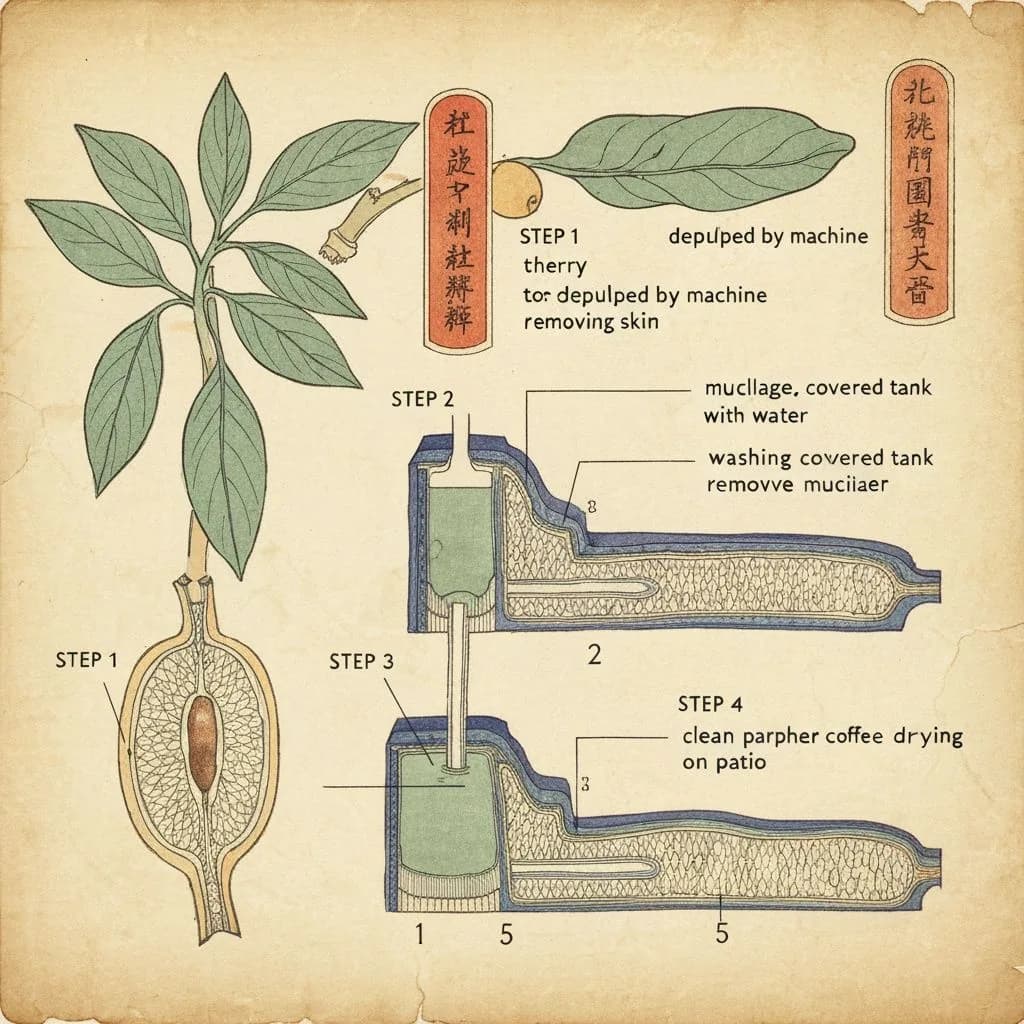
In washed processing, the coffee cherry's fruit is fully removed before drying. The beans are fermented in water tanks to break down the remaining mucilage, then washed clean. This produces the cleanest-tasting coffee with bright acidity and clear origin character.
Tasting Notes
Origin Regions
How Washed Processing Works
Depulping
Within hours of harvest, a mechanical depulper removes the outer cherry skin and most of the fruit flesh, exposing the mucilage-covered parchment.
Fermentation
Depulped beans are placed in fermentation tanks (with or without water) for 12-72 hours. Naturally occurring microbes break down the sticky mucilage layer.
Washing
Beans are agitated in clean water channels. Workers scrub the remaining mucilage off. Multiple rinses ensure the parchment is completely clean.
Drying
Clean parchment coffee is spread on raised beds or patios and dried to 10-12% moisture over 7-14 days with regular turning.
Resting
Dried parchment coffee rests in warehouses for 30-60 days to allow moisture to equalize throughout the bean.
Dry Milling
The parchment layer is mechanically removed, and beans are sorted by size, density, and color.
Flavor Profile
Washed coffees are prized for clarity, brightness, and clean acidity. The removal of all fruit before drying means the cup reflects the bean's inherent terroir - the soil, altitude, and climate of where it was grown. Common notes include citrus, floral, stone fruit, and tea-like qualities.
Best Origins for Washed Coffee
- Colombia - The gold standard for washed processing, producing balanced, sweet, citrusy cups
- Kenya - Intense double-fermentation produces blackcurrant and tomato acidity
- Guatemala - Volcanic soil combined with washed processing creates chocolate and orange profiles
- Ethiopia (Yirgacheffe) - Washed Ethiopian coffees are among the most floral and delicate in the world
When to Choose Washed
Washed coffees are ideal for pour-over and filter brewing where their clarity and nuanced acidity can shine. They are the choice for anyone who wants to taste origin character rather than processing influence.
Did you know?
Washed processing uses significantly more water than other methods - about 40 liters per kilogram of coffee.
Related
Frequently Asked Questions
What does Washed (Wet Process) taste like?▼
What is the best way to brew Washed (Wet Process)?▼
Where is Washed (Wet Process) coffee grown?▼
Researched and compiled by CoffeeTrove. Last updated March 2026.