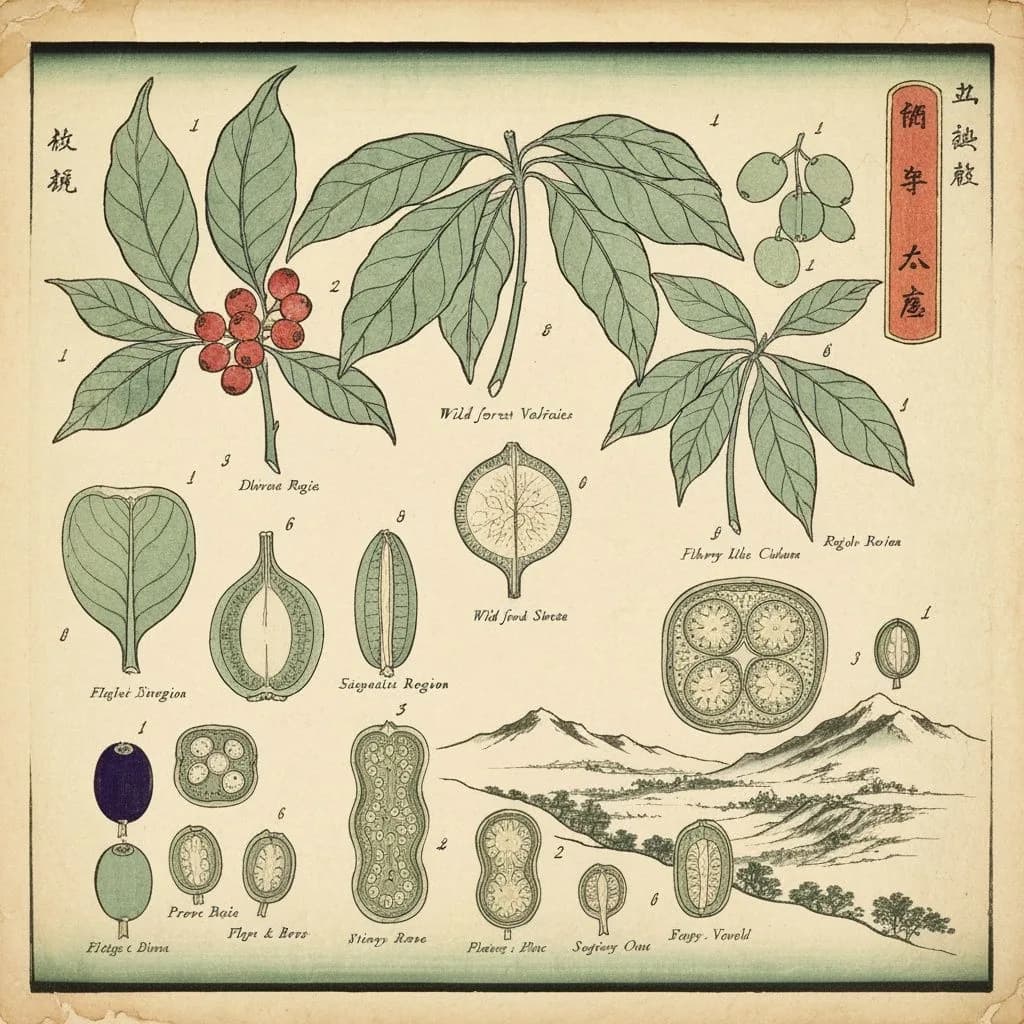
Ethiopian Heirloom
Ethiopian Heirloom is a collective term for the thousands of wild and semi-wild arabica varieties native to Ethiopia. These genetically diverse plants produce some of the most complex and distinctive coffee flavors in the world.
Tasting Notes
Origin Regions
Growing Altitude
1400-2200m
The Birthplace of Coffee
Ethiopian Heirloom is not a single variety but a collective term for the thousands of genetically distinct coffee plants growing in Ethiopia. The country is the evolutionary origin of Coffea arabica, and its forests harbor more genetic diversity than all other coffee-growing countries combined. When a bag is labeled Ethiopian Heirloom, it may contain dozens of unnamed wild varieties.
Genetic Diversity
The Jimma Agricultural Research Center (JARC) has cataloged over 6,000 accessions from wild forests, but many remain uncharacterized. Unlike the narrow genetic base of Bourbon and Typica descendants, Ethiopian varieties represent the full spectrum of Arabica genetics. This diversity is not just academically interesting; it is critical for the future of coffee, providing potential resistance genes for climate adaptation and disease.
Flavor Profile
Ethiopian coffees are among the most distinctive and varied in the world:
- Explosive floral aromatics, often jasmine and honeysuckle
- Bright, wine-like acidity
- Berry and stone fruit notes, from blueberry to peach
- Tea-like body in washed lots, fuller body in naturals
- Complex sweetness with honey and tropical fruit
The flavor varies dramatically by region. Yirgacheffe coffees lean floral and citrus, Sidamo lots show berry and wine notes, Guji brings tropical fruit, and Harrar is known for wild blueberry and chocolate.
Growing Regions
Ethiopian coffee grows primarily in four major zones: Sidamo (including Yirgacheffe and Guji), Harrar, Limu, and Jimma. Most is grown by smallholders on plots under 2 hectares, often in garden coffee or semi-forest systems where coffee grows under native shade trees.
Cultural Significance
Coffee is deeply woven into Ethiopian culture through the traditional coffee ceremony, a daily ritual of roasting, grinding, and brewing that can last over an hour. Ethiopia consumes nearly half of its own production, unusual for a coffee-producing country.
Best Brewing Methods
Ethiopian Heirloom varieties are the crown jewels of pour-over coffee. Light roasts with V60 or Chemex brewing reveal the full floral and fruit complexity. Natural processed lots also make exceptional cold brew with intense berry sweetness.
Did you know?
Ethiopia has over 6,000 identified coffee varieties in its forests, most of which remain unstudied and unnamed.
Related
Frequently Asked Questions
What does Ethiopian Heirloom taste like?▼
What is the best way to brew Ethiopian Heirloom?▼
Where is Ethiopian Heirloom coffee grown?▼
How much caffeine does Ethiopian Heirloom have?▼
Researched and compiled by CoffeeTrove. Last updated March 2026.