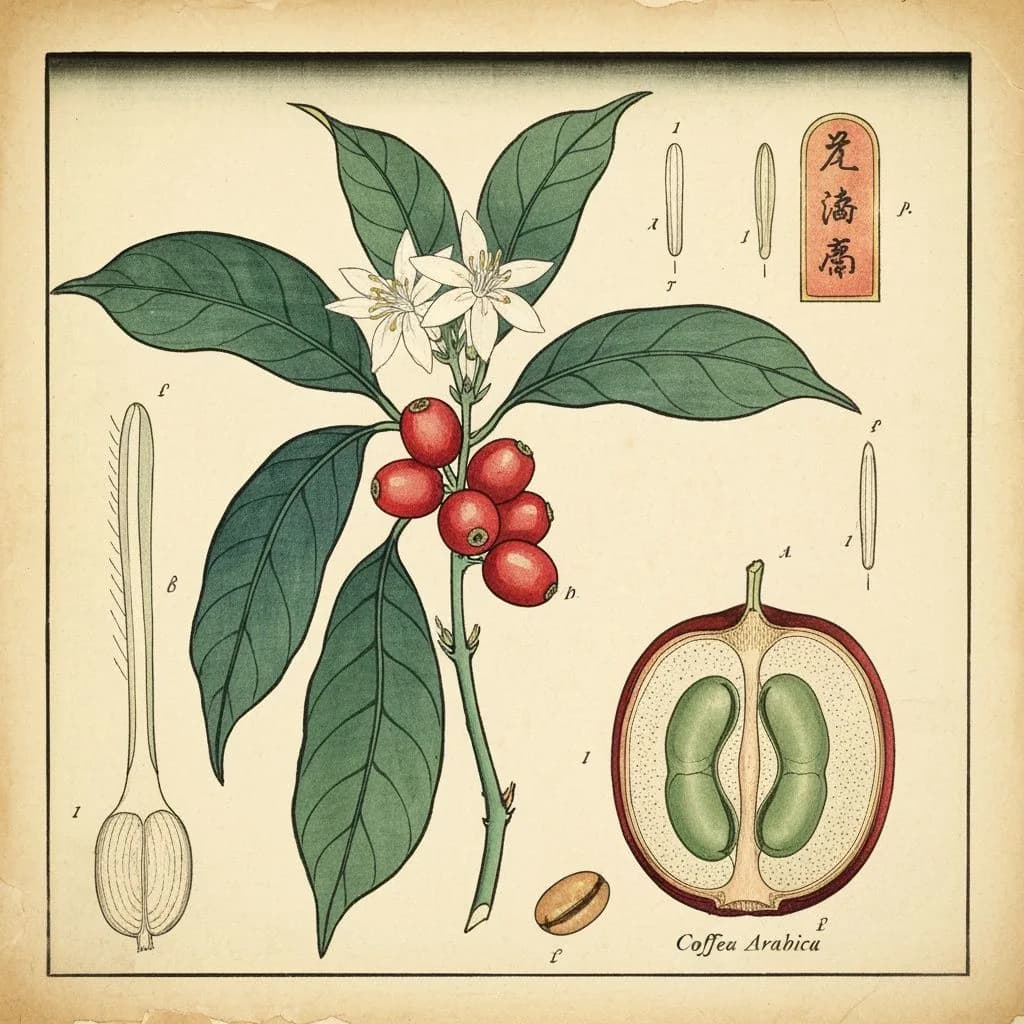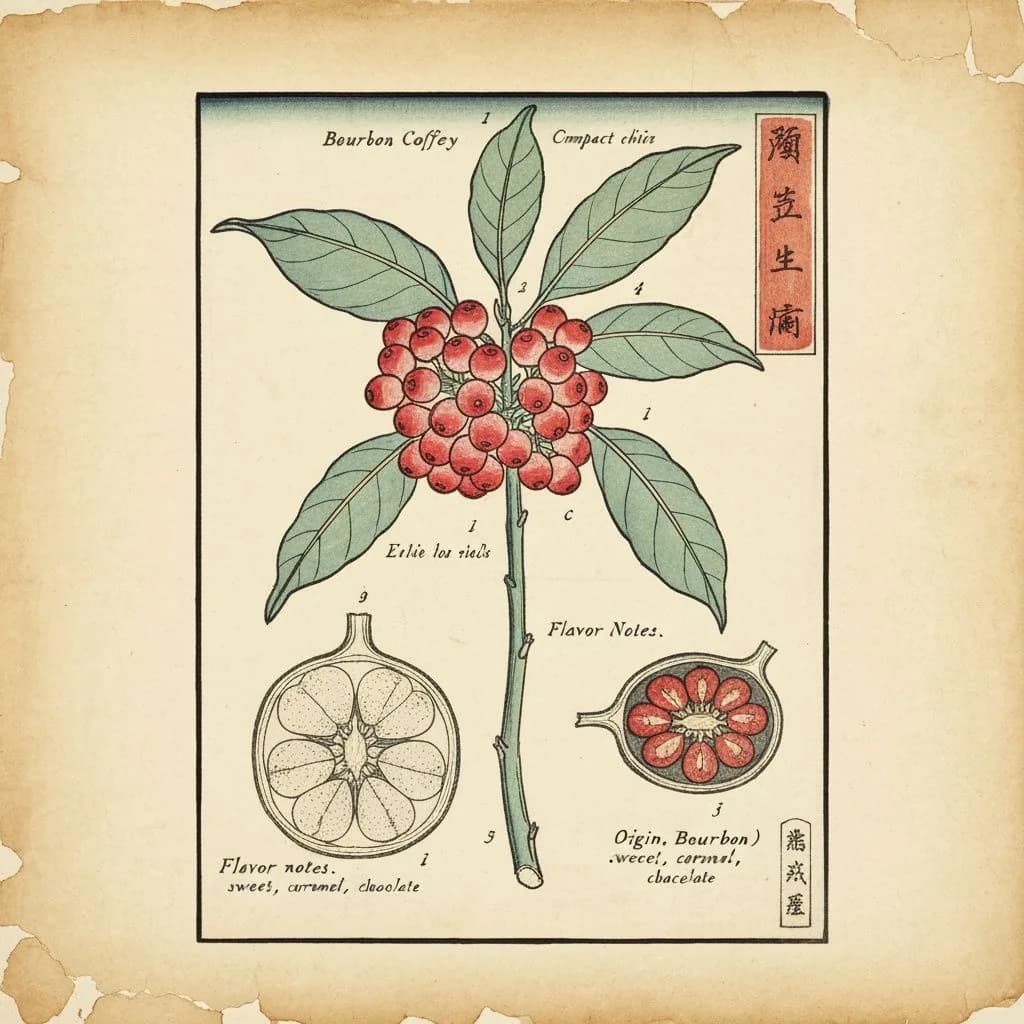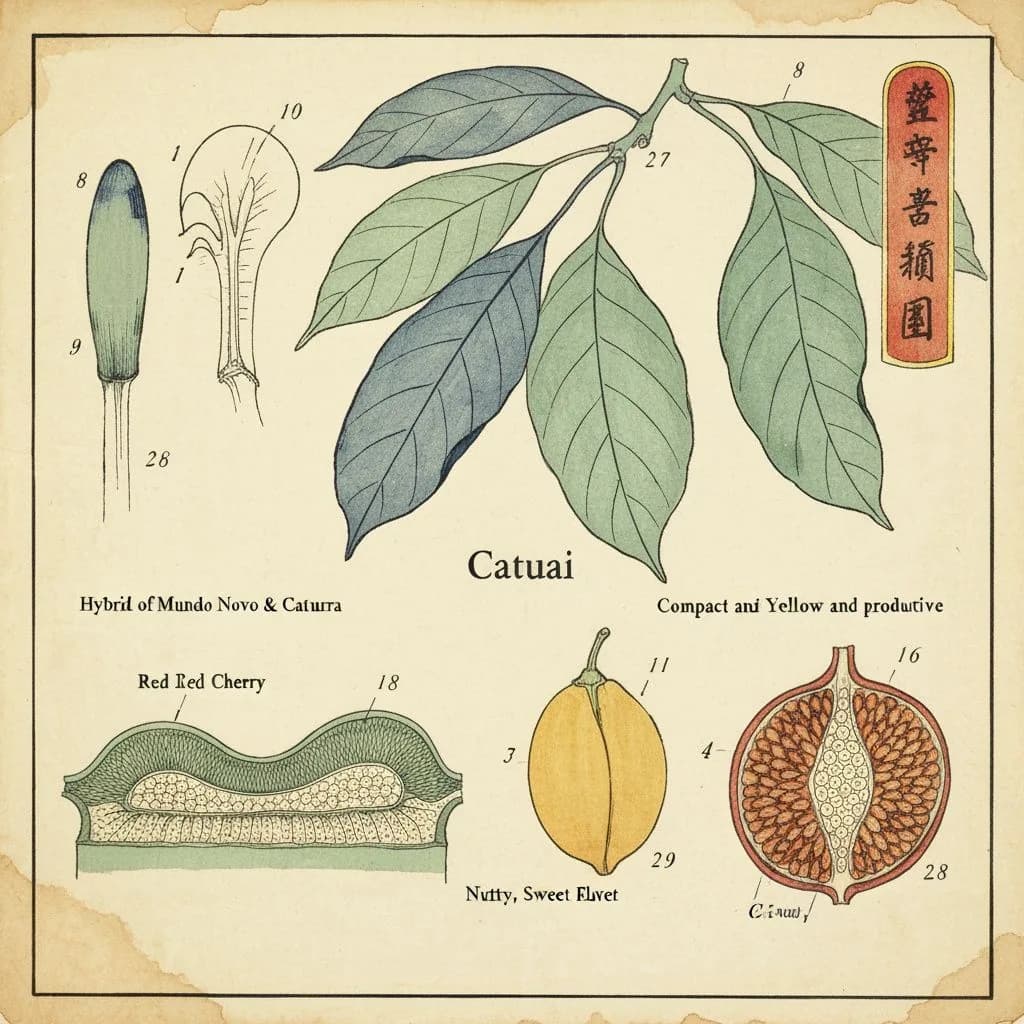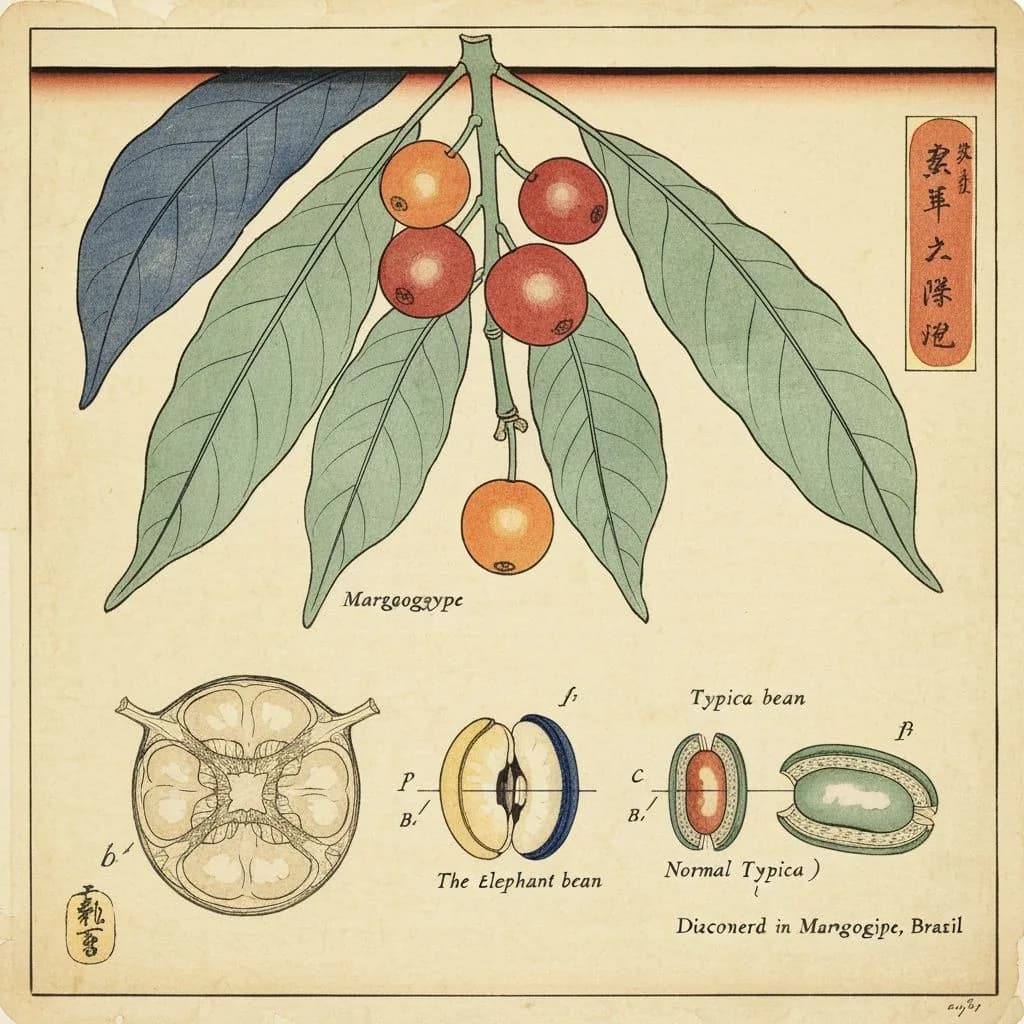
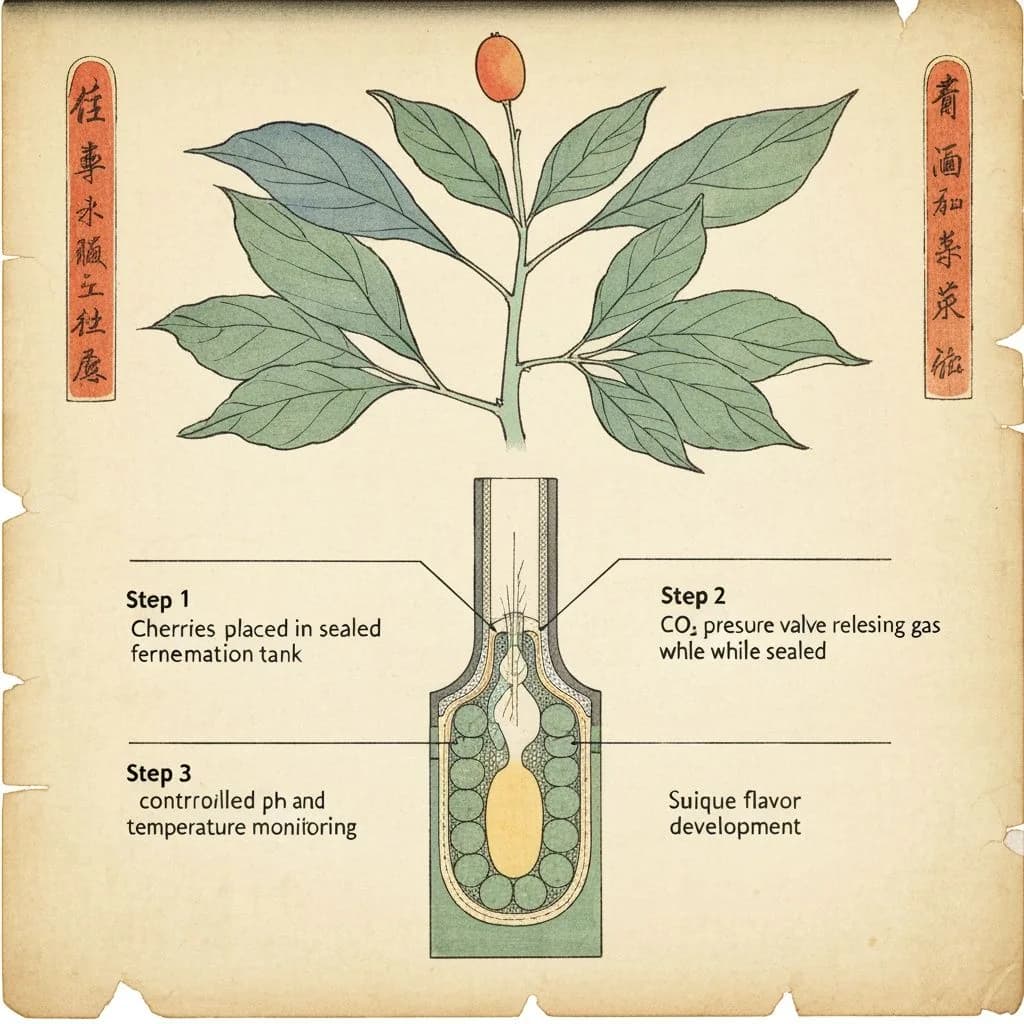
Maragogype - botanical illustration showing plant characteristics and bean cross-section

Maragogype

VarietyArabicaMedium Caffeine

Maragogype (also called Elephant Bean) is a Typica mutation discovered in Maragogipe, Brazil. Known for its exceptionally large beans, it produces a smooth, mild cup with low acidity. Yields are low but beans command premium prices.

Growing Altitude

600-1200m

The Elephant Bean

Maragogype (pronounced mar-ah-go-ZHEE-pay) was discovered around 1870 near the town of Maragogipe in Bahia, Brazil. It is a natural mutation of Typica that produces dramatically oversized beans, roughly 30-40% larger than standard Arabica. These giant beans earned it the nickname Elephant Bean and make it one of the most visually distinctive coffee varieties.

Characteristics

Maragogype plants are tall and vigorous with large leaves and enormous cherries. The beans inside are correspondingly huge, with a screen size of 20+ (most specialty coffee grades at screen 16-18). The large bean size means slower, more even roasting and a different extraction dynamic during brewing.

Flavor Profile

The cup character of Maragogype is distinctive and valued:

  • Exceptionally smooth and clean body
  • Low acidity, making it gentle on the palate
  • Mild sweetness with cocoa and nut notes
  • Delicate floral aromatics
  • Creamy, almost buttery mouthfeel
  • Less complex than smaller-beaned varieties but supremely smooth

The large bean size contributes to the gentle character, as the lower surface-area-to-volume ratio affects extraction and roast development differently.

Growing Conditions

Maragogype requires careful cultivation at elevations between 900-1,500 meters. The trees produce low yields due to the energy required to develop such large cherries. This low productivity makes it economically challenging for farmers, which is why pure Maragogype lots remain relatively rare.

Availability

Mexico (Chiapas), Guatemala, Colombia, Nicaragua, and Brazil are the primary sources for Maragogype. Some farms maintain small plots specifically for specialty buyers who seek the novelty and quality of elephant beans. The visual impact of these giant beans makes them popular for gift coffees and specialty showcases.

Best Brewing Methods

Maragogypes smooth, low-acid profile makes it ideal for French press and cold brew, where its buttery body shines. As espresso, it produces a mild, creamy shot. Adjust grind slightly coarser than normal to account for the larger bean size during extraction.

Did you know?

The beans are so large they are sometimes called "elephant beans" and are easily spotted in a mix of regular beans.

Related
Frequently Asked Questions

What does Maragogype taste like?
Maragogype is known for mild, smooth, low acidity, buttery flavor notes. It has a ## the elephant bean maragogype (pronounced mar-ah-go-zhee-pay) was discovered around 1870 near the town of maragogipe in bahia, brazil. it is a natural mutation of typica that produces dramatically oversized beans, roughly 30-40% larger than standard arabica. these giant beans earned it the nickname elephant bean and make it one of the most visually distinctive coffee varieties. ## characteristics maragogype plants are tall and vigorous with large leaves and enormous cherries. the beans inside are correspondingly huge, with a screen size of 20+ (most specialty coffee grades at screen 16-18). the large bean size means slower, more even roasting and a different extraction dynamic during brewing. ## flavor profile the cup character of maragogype is distinctive and valued: - exceptionally smooth and clean body - low acidity, making it gentle on the palate - mild sweetness with cocoa and nut notes - delicate floral aromatics - creamy, almost buttery mouthfeel - less complex than smaller-beaned varieties but supremely smooth the large bean size contributes to the gentle character, as the lower surface-area-to-volume ratio affects extraction and roast development differently. ## growing conditions maragogype requires careful cultivation at elevations between 900-1,500 meters. the trees produce low yields due to the energy required to develop such large cherries. this low productivity makes it economically challenging for farmers, which is why pure maragogype lots remain relatively rare. ## availability mexico (chiapas), guatemala, colombia, nicaragua, and brazil are the primary sources for maragogype. some farms maintain small plots specifically for specialty buyers who seek the novelty and quality of elephant beans. the visual impact of these giant beans makes them popular for gift coffees and specialty showcases. ## best brewing methods maragogypes smooth, low-acid profile makes it ideal for french press and cold brew, where its buttery body shines. as espresso, it produces a mild, creamy shot. adjust grind slightly coarser than normal to account for the larger bean size during extraction. body and medium caffeine content.
What is the best way to brew Maragogype?
Maragogype performs best with pour over, french press. These methods complement the bean's natural characteristics and extract the most balanced flavor. Experiment with grind size and water temperature to dial in your preferred taste.
Where is Maragogype coffee grown?
Maragogype is primarily grown in Brazil, Mexico, Nicaragua, Guatemala. The terroir of these regions -- altitude, soil composition, rainfall, and microclimate -- directly shapes the bean's flavor profile and determines which tasting notes develop during growth and processing.
How much caffeine does Maragogype have?
Maragogype has moderate caffeine content, typical of most Arabica varieties and suitable for all-day drinking. Actual caffeine in your cup depends on brewing method, dose, and water temperature more than the bean variety itself.

Researched and compiled by CoffeeTrove. Last updated March 2026.