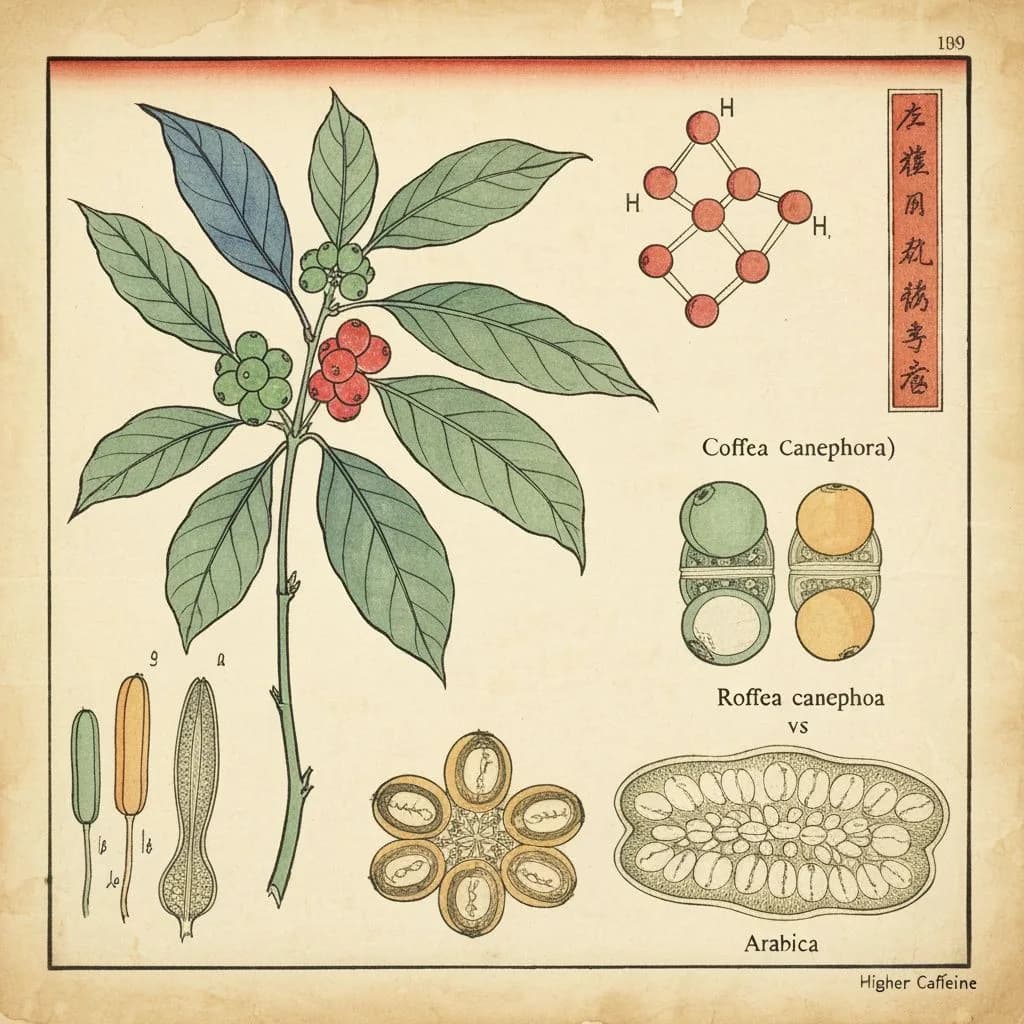
Robusta - botanical illustration showing plant characteristics and bean cross-section

Robusta

SpeciesHigh Caffeine

Coffea canephora, commonly called Robusta, is the second most popular coffee species. It has nearly double the caffeine of Arabica, a stronger and harsher taste, and is more resistant to pests and diseases. Often used in espresso blends for body and crema.

Growing Altitude

0-800m

About Coffea Canephora (Robusta)

Robusta is the second most important commercial coffee species, accounting for roughly 30-40% of global production. Native to central and western sub-Saharan Africa, it was identified as a separate species in the late 19th century.

Characteristics

  • Growing altitude: Sea level to 800 meters
  • Temperature: 24-30°C (75-86°F), heat tolerant
  • Caffeine content: 2.2-2.7% (nearly double Arabica)
  • Chromosomes: 22 (diploid)
  • Flavor profile: Strong, bold, earthy, bitter, nutty
  • Yield: Higher than Arabica, disease resistant

Role in Coffee

Robusta has traditionally been used in instant coffee, commercial blends, and Italian-style espresso (where it adds crema and body). However, a "fine Robusta" movement is emerging, with carefully grown and processed Robusta from India and Uganda showing surprisingly clean, chocolatey profiles.

Key Producers

Vietnam is the world's largest Robusta producer, followed by Brazil, Indonesia, and India. Robusta thrives in lowland tropical climates where Arabica cannot survive.

Did you know?

Vietnam is the world's largest Robusta producer, accounting for over 40% of global Robusta output.

Frequently Asked Questions

What does Robusta taste like?
Robusta is known for bitter, earthy, nutty, chocolatey flavor notes. It has a ## about coffea canephora (robusta) robusta is the second most important commercial coffee species, accounting for roughly 30-40% of global production. native to central and western sub-saharan africa, it was identified as a separate species in the late 19th century. ## characteristics - **growing altitude**: sea level to 800 meters - **temperature**: 24-30°c (75-86°f), heat tolerant - **caffeine content**: 2.2-2.7% (nearly double arabica) - **chromosomes**: 22 (diploid) - **flavor profile**: strong, bold, earthy, bitter, nutty - **yield**: higher than arabica, disease resistant ## role in coffee robusta has traditionally been used in instant coffee, commercial blends, and italian-style espresso (where it adds crema and body). however, a "fine robusta" movement is emerging, with carefully grown and processed robusta from india and uganda showing surprisingly clean, chocolatey profiles. ## key producers vietnam is the world's largest robusta producer, followed by brazil, indonesia, and india. robusta thrives in lowland tropical climates where arabica cannot survive. body and high caffeine content.
What is the best way to brew Robusta?
Robusta performs best with espresso, instant coffee. These methods complement the bean's natural characteristics and extract the most balanced flavor. Experiment with grind size and water temperature to dial in your preferred taste.
Where is Robusta coffee grown?
Robusta is primarily grown in Vietnam, Brazil, Indonesia, India. The terroir of these regions -- altitude, soil composition, rainfall, and microclimate -- directly shapes the bean's flavor profile and determines which tasting notes develop during growth and processing.
How much caffeine does Robusta have?
Robusta has higher caffeine content than average. If you are sensitive to caffeine, limit intake to morning hours. Actual caffeine in your cup depends on brewing method, dose, and water temperature more than the bean variety itself.

Researched and compiled by CoffeeTrove. Last updated March 2026.