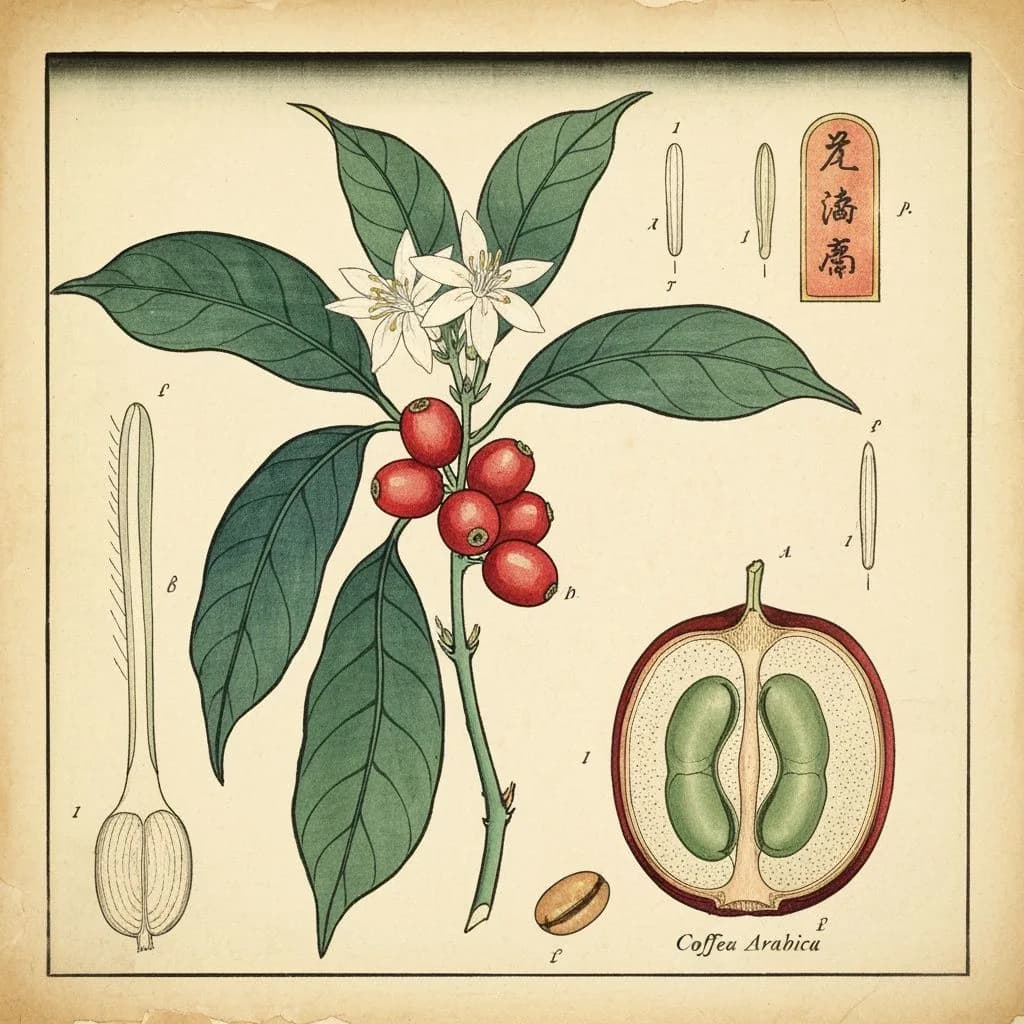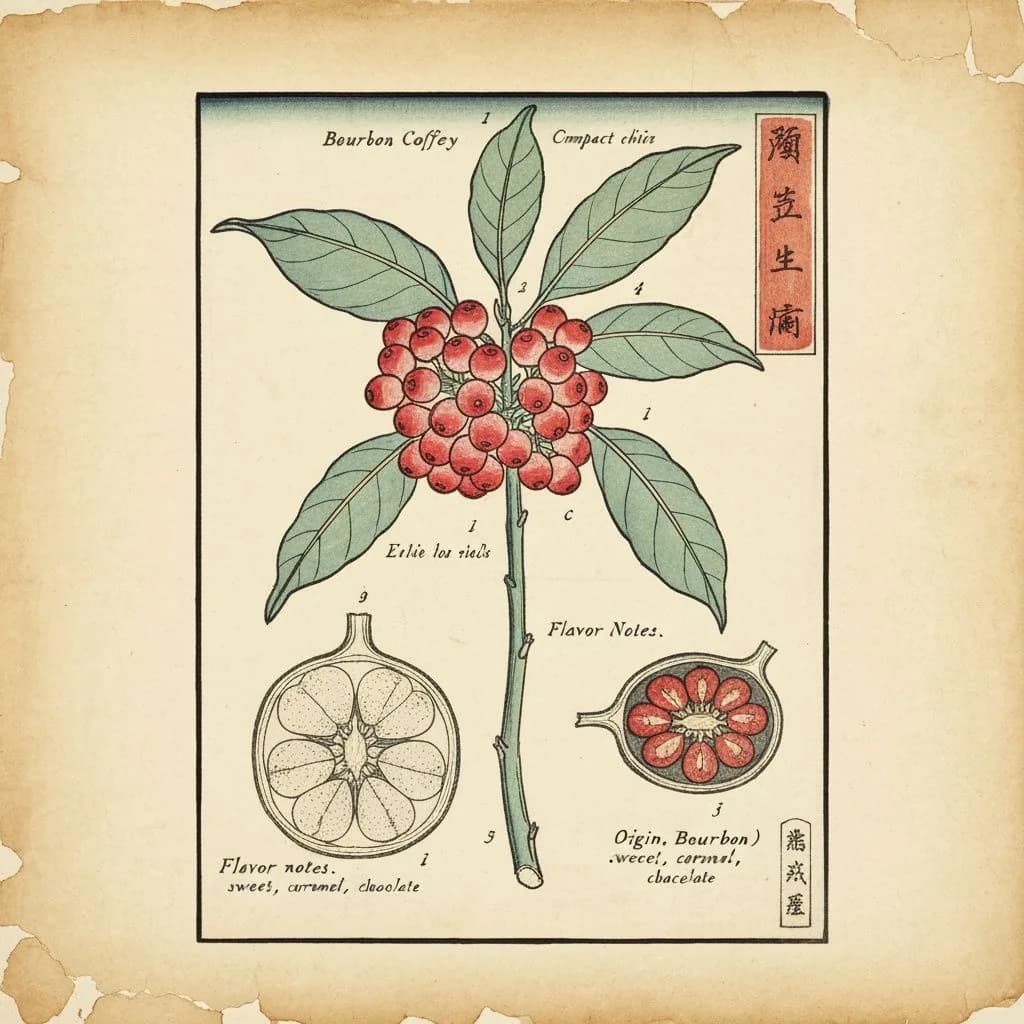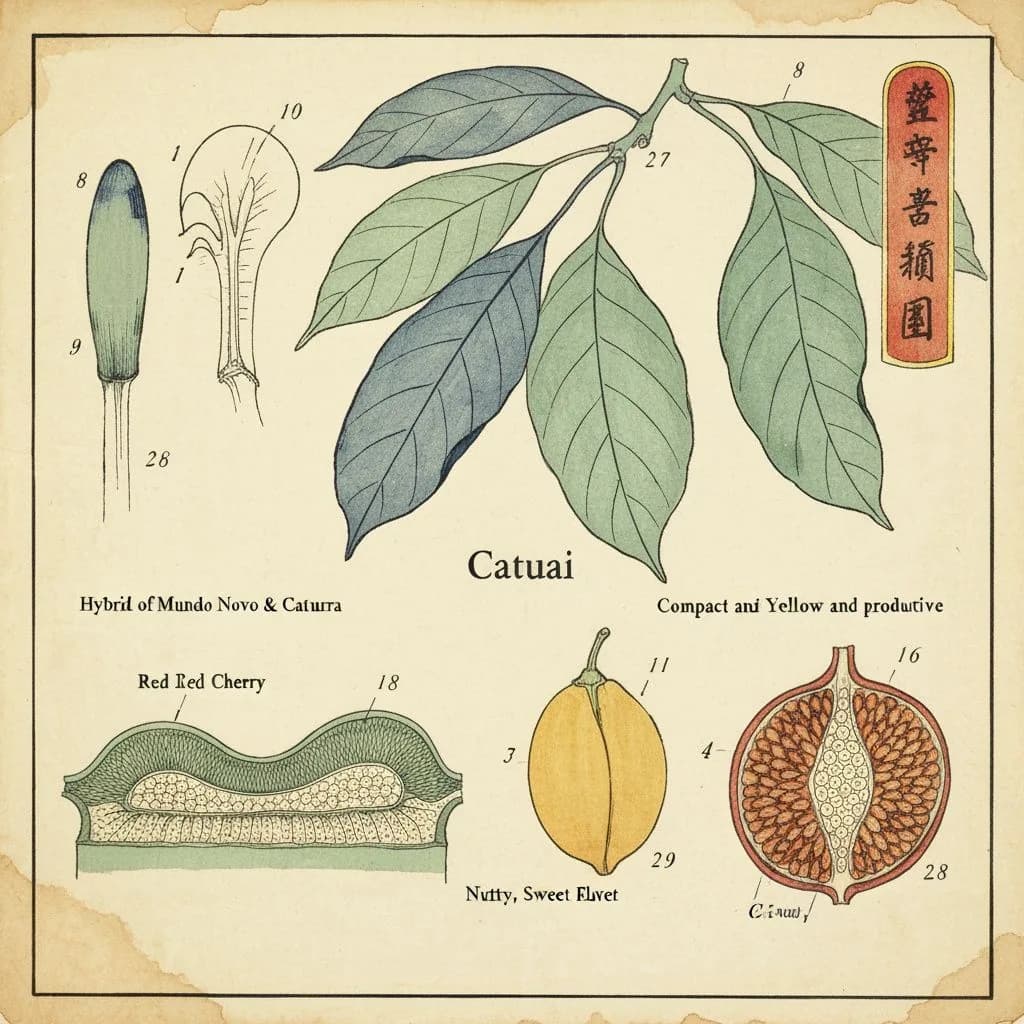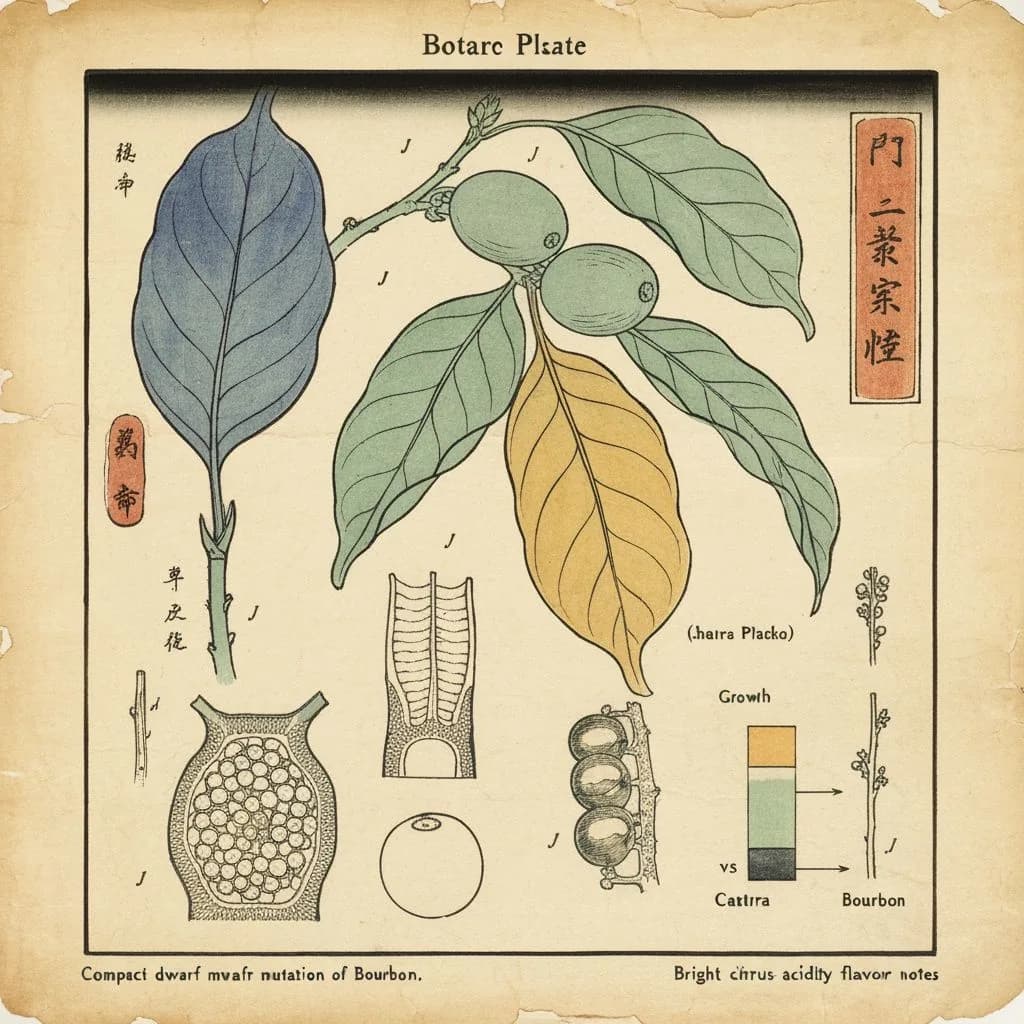
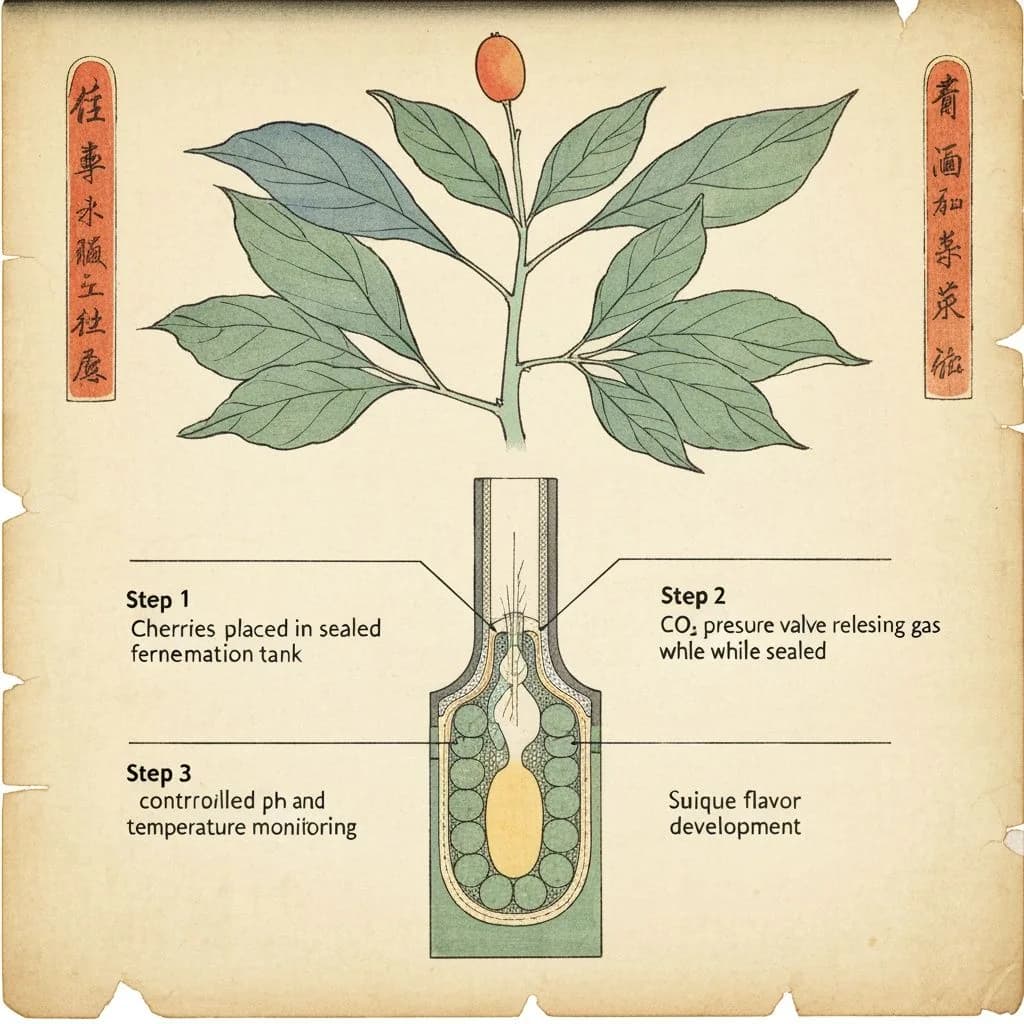
Caturra - botanical illustration showing plant characteristics and bean cross-section

Caturra

VarietyArabicaMedium Caffeine

Caturra is a natural mutation of Bourbon discovered in Brazil in the 1930s. It is a compact, high-yielding plant that produces bright, lemony cups with light body. Popular in Central and South America.

Growing Altitude

1200-1800m

A Natural Dwarf Mutation

Caturra was discovered in 1937 near the town of Caturra in Minas Gerais, Brazil. It is a natural single-gene mutation of Bourbon that results in a compact, dwarf plant with significantly shorter internodes. This mutation revolutionized coffee farming by enabling much higher planting densities.

Characteristics

Unlike its parent Bourbon, Caturra is a short, bushy plant that can be planted at densities of 5,000-10,000 plants per hectare versus 1,000-2,000 for tall varieties. It matures faster and produces more cherries per plant relative to its size. The leaves are broad and dark green, and the cherries ripen to a bright red.

Flavor Profile

Caturra is known for its bright, vibrant cup character:

  • High, citric acidity with lemon and grapefruit notes
  • Medium body with a crisp, clean finish
  • Bright fruit notes including citrus and stone fruit
  • Less sweetness than Bourbon but more vibrancy
  • Excellent complexity at higher elevations

Growing Conditions

Caturra performs best at elevations between 1,200-2,000 meters. At higher altitudes, the cherry maturation slows, concentrating sugars and developing more complex acids. It requires more fertilization and care than Bourbon but rewards attentive farmers with consistent yields and quality.

Impact on Coffee Farming

Caturra transformed Latin American coffee production in the mid-20th century. Its compact size made it the backbone of Colombian coffee for decades and is still widely planted across Central and South America. It serves as a parent for many important hybrid varieties including Catuai.

Best Brewing Methods

Caturras bright acidity shines in pour-over and filter methods. Try it as a light roast to experience the full citrus character, or medium roast for a more balanced, approachable cup.

Did you know?

Caturra is a dwarf mutation - the plants are significantly shorter than their Bourbon parents, making harvesting easier.

Related
Frequently Asked Questions

What does Caturra taste like?
Caturra is known for bright, citrus, clean, light body flavor notes. It has a ## a natural dwarf mutation caturra was discovered in 1937 near the town of caturra in minas gerais, brazil. it is a natural single-gene mutation of bourbon that results in a compact, dwarf plant with significantly shorter internodes. this mutation revolutionized coffee farming by enabling much higher planting densities. ## characteristics unlike its parent bourbon, caturra is a short, bushy plant that can be planted at densities of 5,000-10,000 plants per hectare versus 1,000-2,000 for tall varieties. it matures faster and produces more cherries per plant relative to its size. the leaves are broad and dark green, and the cherries ripen to a bright red. ## flavor profile caturra is known for its bright, vibrant cup character: - high, citric acidity with lemon and grapefruit notes - medium body with a crisp, clean finish - bright fruit notes including citrus and stone fruit - less sweetness than bourbon but more vibrancy - excellent complexity at higher elevations ## growing conditions caturra performs best at elevations between 1,200-2,000 meters. at higher altitudes, the cherry maturation slows, concentrating sugars and developing more complex acids. it requires more fertilization and care than bourbon but rewards attentive farmers with consistent yields and quality. ## impact on coffee farming caturra transformed latin american coffee production in the mid-20th century. its compact size made it the backbone of colombian coffee for decades and is still widely planted across central and south america. it serves as a parent for many important hybrid varieties including catuai. ## best brewing methods caturras bright acidity shines in pour-over and filter methods. try it as a light roast to experience the full citrus character, or medium roast for a more balanced, approachable cup. body and medium caffeine content.
What is the best way to brew Caturra?
Caturra performs best with pour over, drip. These methods complement the bean's natural characteristics and extract the most balanced flavor. Experiment with grind size and water temperature to dial in your preferred taste.
Where is Caturra coffee grown?
Caturra is primarily grown in Colombia, Costa Rica, Brazil, Nicaragua. The terroir of these regions -- altitude, soil composition, rainfall, and microclimate -- directly shapes the bean's flavor profile and determines which tasting notes develop during growth and processing.
How much caffeine does Caturra have?
Caturra has moderate caffeine content, typical of most Arabica varieties and suitable for all-day drinking. Actual caffeine in your cup depends on brewing method, dose, and water temperature more than the bean variety itself.

Researched and compiled by CoffeeTrove. Last updated March 2026.