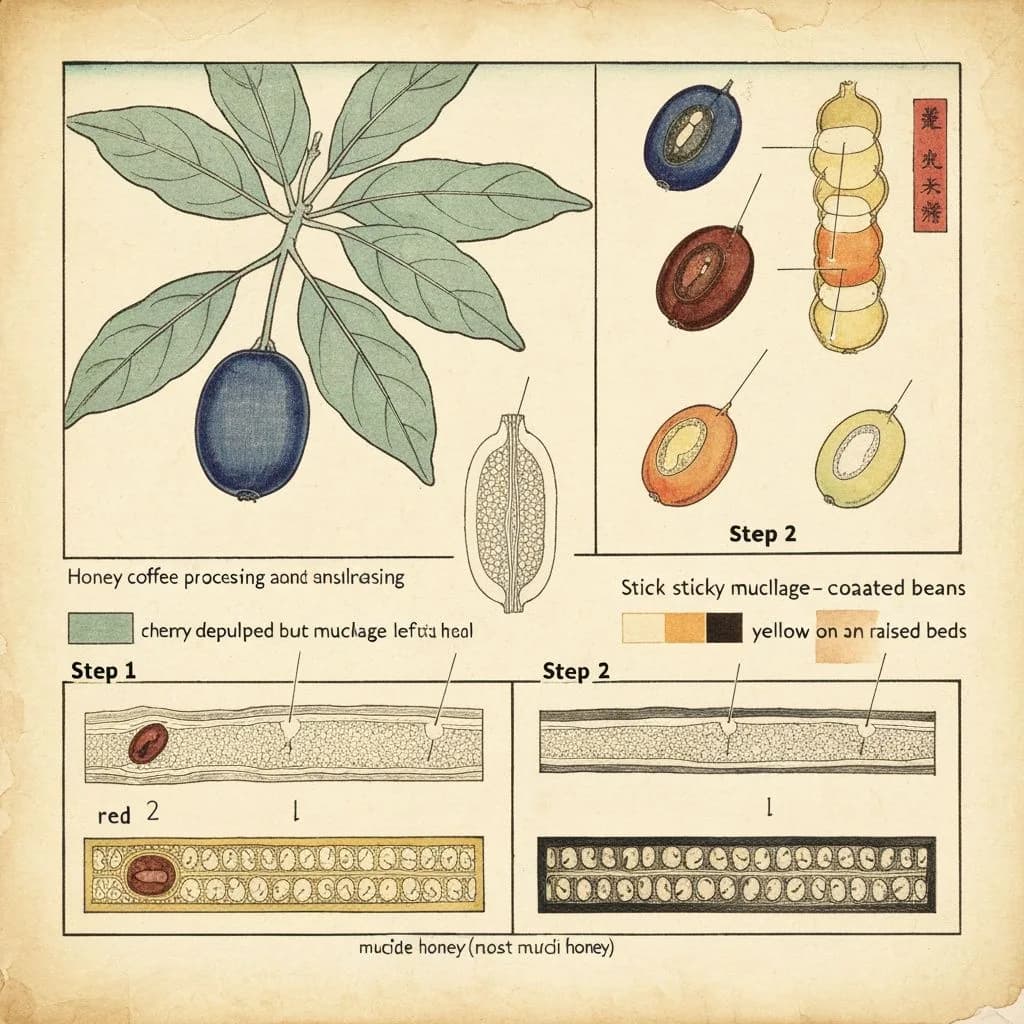
Honey Process
Honey processing is a hybrid method where some or all of the mucilage (honey-like sticky layer) is left on the bean during drying. The amount left determines the color classification: white, yellow, red, or black honey. This produces sweet, complex cups.
Tasting Notes
Origin Regions
How Honey Processing Works
Depulping
Cherries are mechanically depulped to remove the skin, but a controlled amount of the sticky mucilage (the "honey") is left on the bean.
Mucilage Control
The amount of mucilage left determines the honey type:
- White Honey - ~10-20% mucilage remaining (closest to washed)
- Yellow Honey - ~25-50% remaining
- Red Honey - ~50-75% remaining
- Black Honey - ~80-100% remaining (closest to natural)
Drying
Sticky beans are carefully spread on raised beds. Because the mucilage is still present, they must be turned frequently (every hour initially) to prevent clumping and mold.
Oxidation
As the mucilage dries, it darkens through oxidation - this is what determines the final color classification. More mucilage and slower drying produces darker honey types.
Resting & Milling
Once dried to 10-12% moisture, beans rest before the parchment is removed.
Flavor Profile
Honey processing creates a bridge between washed clarity and natural fruitiness. White and yellow honeys tend toward sweet, clean, and lightly fruity. Red and black honeys are heavier, more syrupy, with stone fruit and brown sugar notes. The best honey coffees have a rounded sweetness without the heaviness of a full natural.
Best Origins for Honey Coffee
- Costa Rica - Pioneers of the honey process, producing exceptional yellow and red honeys
- El Salvador - Pacamara variety honey-processed coffees are world-renowned
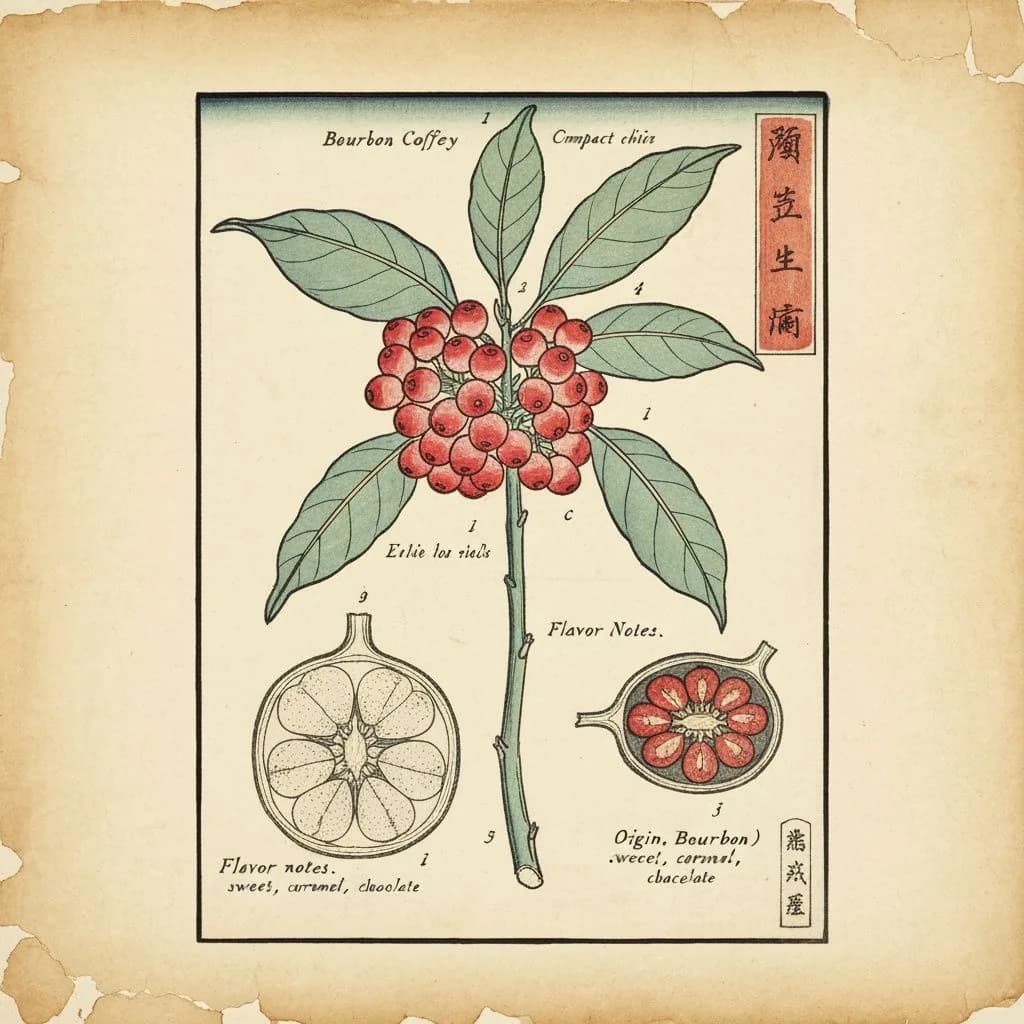
- Brazil - Yellow honey Bourbon varieties with caramel and chocolate notes
When to Choose Honey
Honey coffees work beautifully across all brew methods. They have enough body for espresso, enough clarity for pour-over, and enough sweetness for cold brew.
Did you know?
The name "honey" comes from the sticky, honey-like mucilage left on the beans - not from any honey flavor or ingredient.
Related
Frequently Asked Questions
What does Honey Process taste like?▼
What is the best way to brew Honey Process?▼
Where is Honey Process coffee grown?▼
Researched and compiled by CoffeeTrove. Last updated March 2026.