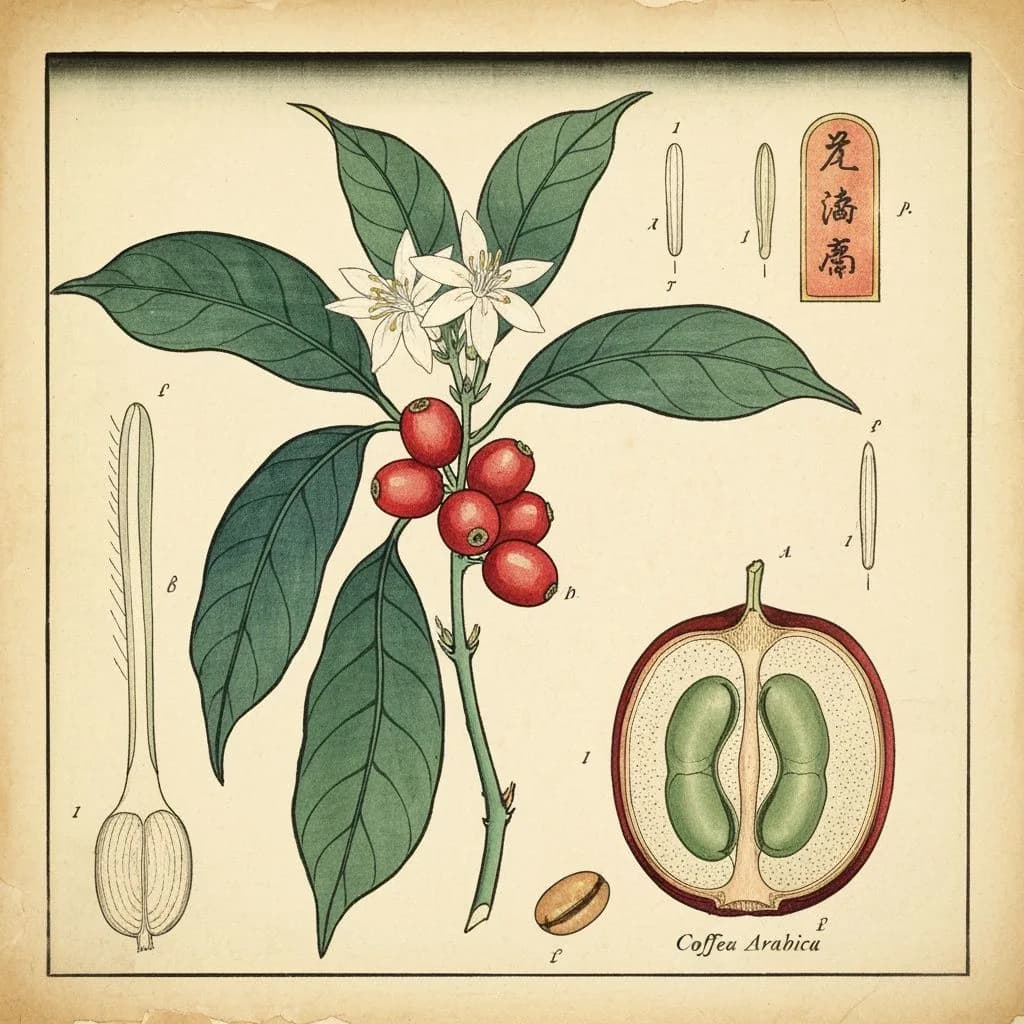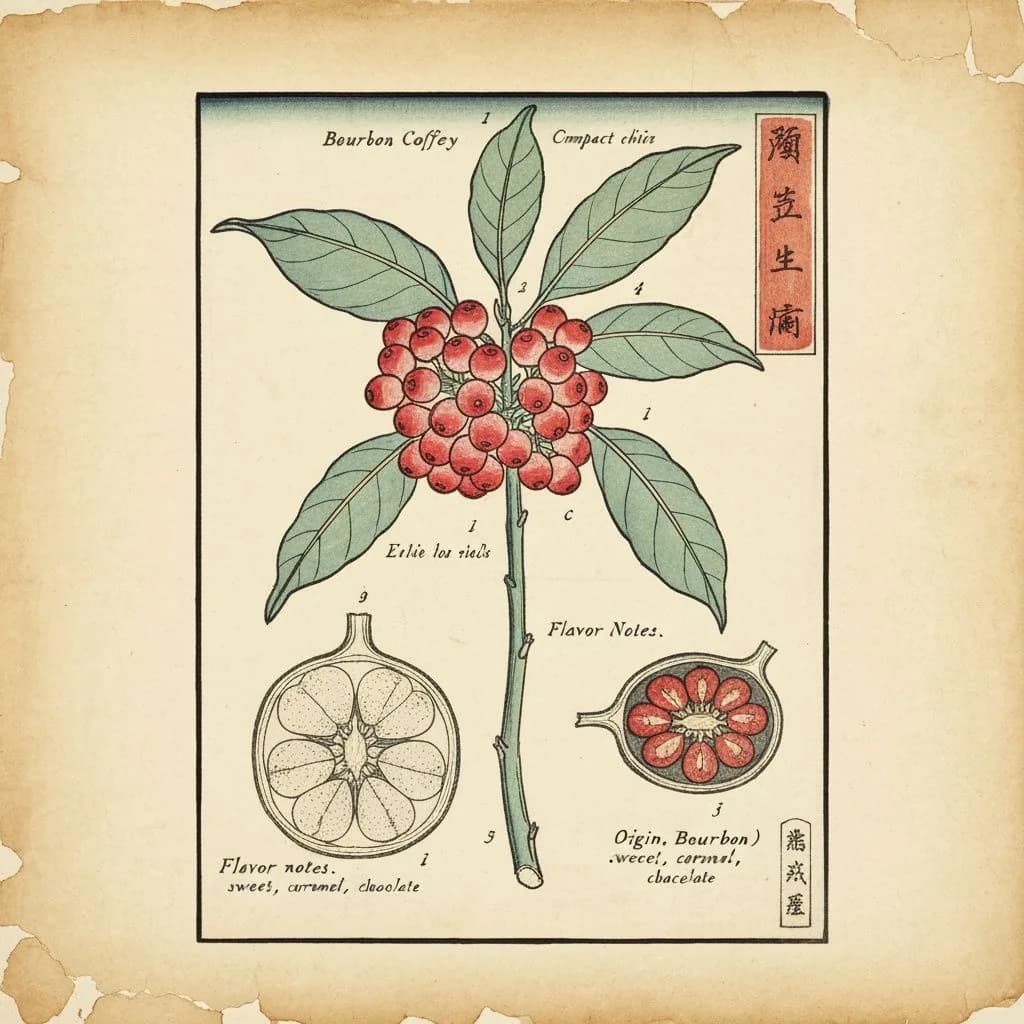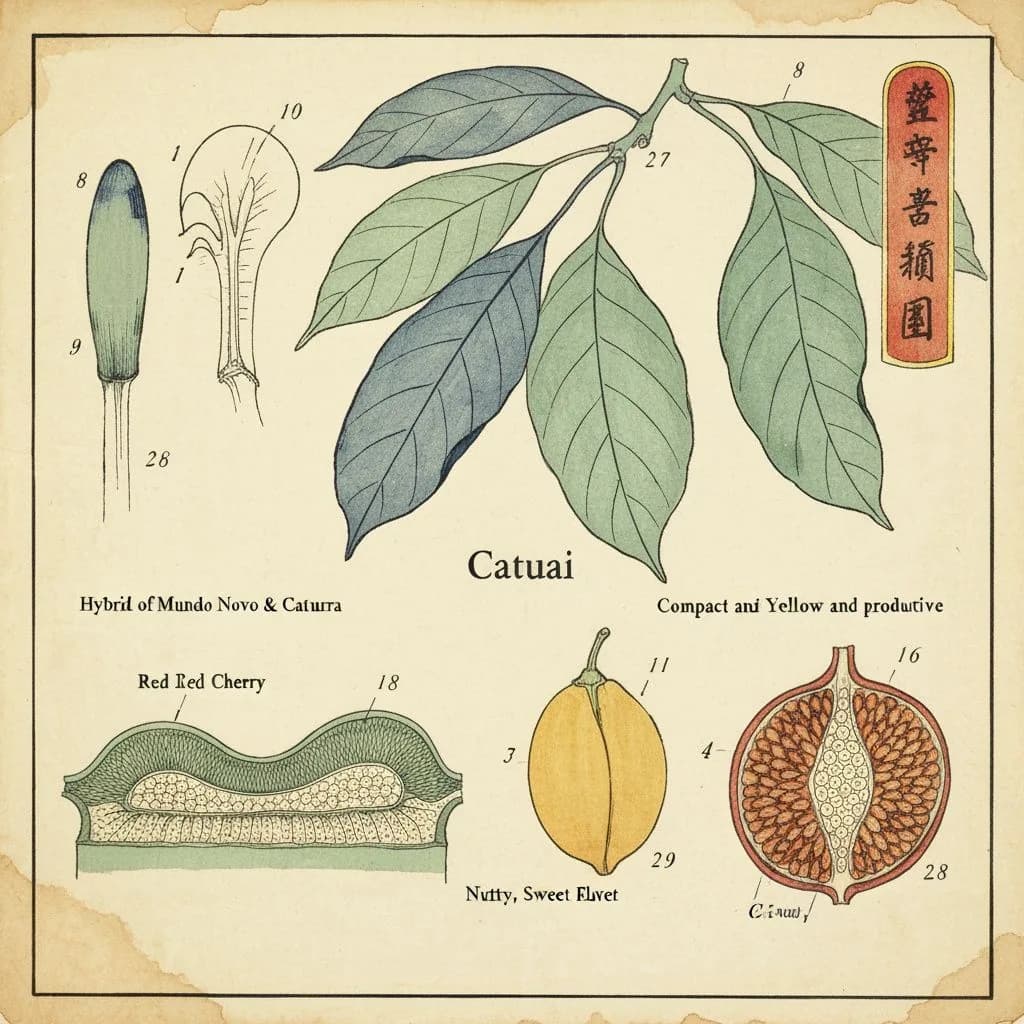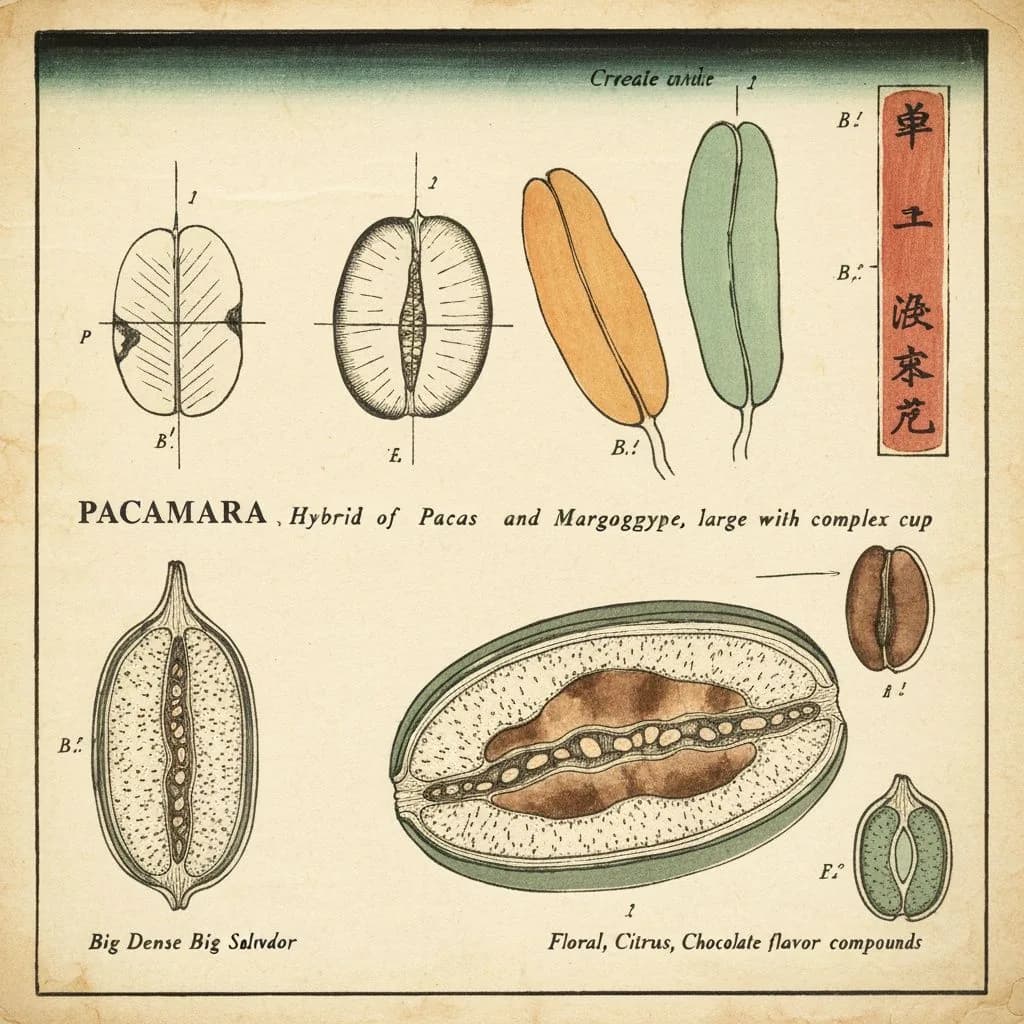
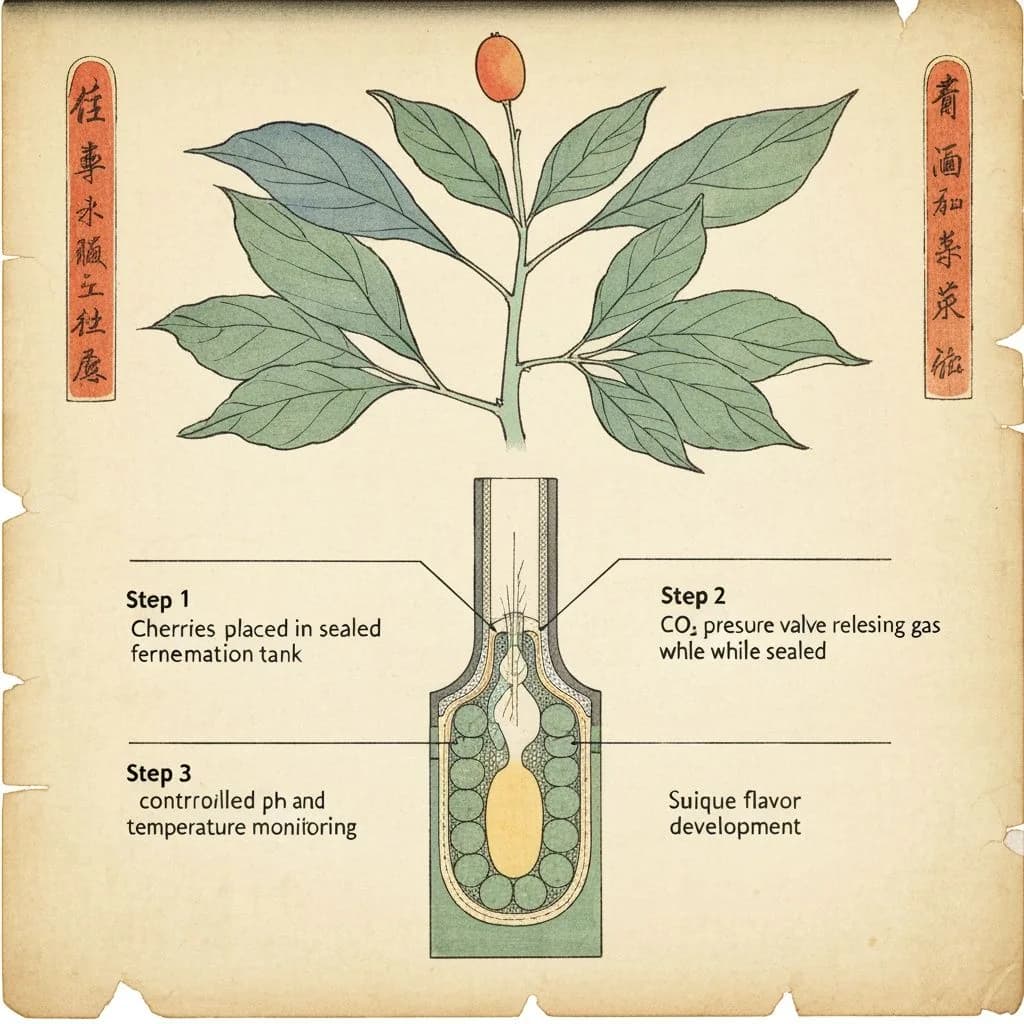
Pacamara - botanical illustration showing plant characteristics and bean cross-section

Pacamara

VarietyArabicaMedium Caffeine

Pacamara is a hybrid of Pacas and Maragogype created in El Salvador in 1958. It has extremely large beans and produces complex cups with floral aromatics, creamy body, and citrus acidity. Considered a specialty variety.

Growing Altitude

1200-1800m

The Award-Winning Giant

Pacamara was created in 1958 by the Salvadoran Institute for Coffee Research (ISIC) by crossing Pacas (a natural Bourbon mutation found in El Salvador) with Maragogype. The goal was to combine Pacas compact size and productivity with Maragogypes large bean size and unique cup character. The result exceeded expectations, producing a variety that has become a competition darling.

Characteristics

Pacamara plants are medium-sized with large, broad leaves. The beans are notably large (though not quite as massive as pure Maragogype) with a distinctive flat shape. The variety is well-adapted to the volcanic soils and moderate altitudes of Central America, particularly El Salvador where it was born.

Flavor Profile

Pacamara is celebrated for its complex, competition-winning cup:

The combination of large bean size (smooth extraction) with complex Bourbon-derived genetics (flavor compounds) creates a uniquely layered cup experience.

Competition Success

Pacamara has won more Cup of Excellence auctions in El Salvador and other Central American countries than perhaps any other variety. Farms like Finca El Carmen, Finca Kilimanjaro, and others in El Salvador have built international reputations on the back of their Pacamara lots. Its combination of visual appeal (large beans), distinctive cup profile, and limited availability makes it a favorite among competition roasters and buyers.

Growing Conditions

Pacamara thrives at elevations between 1,200-1,800 meters, particularly in the volcanic highlands of El Salvador, Guatemala, Honduras, and Nicaragua. It produces moderate yields and requires attentive farming, but the premium prices it commands at auction make it economically rewarding for quality-focused producers.

Best Brewing Methods

Pacamara deserves your best brewing setup. Pour-over methods (V60, Chemex) at light to medium roast showcase the full aromatic complexity. Its also exceptional as a competition-style espresso, where the concentrated extraction reveals layers of flavor that unfold as the shot cools.

Did you know?

Pacamara beans are among the largest in the coffee world, nearly twice the size of a typical coffee bean.

Related
Frequently Asked Questions

What does Pacamara taste like?
Pacamara is known for floral, citrus, creamy, complex flavor notes. It has a ## the award-winning giant pacamara was created in 1958 by the salvadoran institute for coffee research (isic) by crossing pacas (a natural bourbon mutation found in el salvador) with maragogype. the goal was to combine pacas compact size and productivity with maragogypes large bean size and unique cup character. the result exceeded expectations, producing a variety that has become a competition darling. ## characteristics pacamara plants are medium-sized with large, broad leaves. the beans are notably large (though not quite as massive as pure maragogype) with a distinctive flat shape. the variety is well-adapted to the volcanic soils and moderate altitudes of central america, particularly el salvador where it was born. ## flavor profile pacamara is celebrated for its complex, competition-winning cup: - intense floral aromatics with jasmine and orange blossom - bright, juicy acidity with citrus and malic acid notes - complex sweetness ranging from chocolate to tropical fruit - full, creamy body inherited from maragogype - long, layered finish with spice and herb notes - outstanding clarity and cup cleanliness the combination of large bean size (smooth extraction) with complex bourbon-derived genetics (flavor compounds) creates a uniquely layered cup experience. ## competition success pacamara has won more cup of excellence auctions in el salvador and other central american countries than perhaps any other variety. farms like finca el carmen, finca kilimanjaro, and others in el salvador have built international reputations on the back of their pacamara lots. its combination of visual appeal (large beans), distinctive cup profile, and limited availability makes it a favorite among competition roasters and buyers. ## growing conditions pacamara thrives at elevations between 1,200-1,800 meters, particularly in the volcanic highlands of el salvador, guatemala, honduras, and nicaragua. it produces moderate yields and requires attentive farming, but the premium prices it commands at auction make it economically rewarding for quality-focused producers. ## best brewing methods pacamara deserves your best brewing setup. pour-over methods (v60, chemex) at light to medium roast showcase the full aromatic complexity. its also exceptional as a competition-style espresso, where the concentrated extraction reveals layers of flavor that unfold as the shot cools. body and medium caffeine content.
What is the best way to brew Pacamara?
Pacamara performs best with pour over, chemex. These methods complement the bean's natural characteristics and extract the most balanced flavor. Experiment with grind size and water temperature to dial in your preferred taste.
Where is Pacamara coffee grown?
Pacamara is primarily grown in El Salvador, Guatemala, Nicaragua. The terroir of these regions -- altitude, soil composition, rainfall, and microclimate -- directly shapes the bean's flavor profile and determines which tasting notes develop during growth and processing.
How much caffeine does Pacamara have?
Pacamara has moderate caffeine content, typical of most Arabica varieties and suitable for all-day drinking. Actual caffeine in your cup depends on brewing method, dose, and water temperature more than the bean variety itself.

Researched and compiled by CoffeeTrove. Last updated March 2026.