Yemen Mocha
The birthplace of commercial coffee cultivation. Yemeni coffee is still hand-picked from ancient terraced farms, sun-dried on rooftops. Wild, wine-like, with intense fruit and chocolate. The original "Mocha" - named after the port city of Al Mokha.
Flavor Notes
Processing Methods
Coffee Heritage
Yemen is where coffee cultivation began as a deliberate practice. Sufi monks in the 15th century brewed the drink to stay awake during nighttime prayers, and the port city of Al Mokha (Mocha) became the world's first commercial coffee hub. For over two centuries, Yemen held a near-monopoly on the global coffee trade. The word "mocha" -- now associated with chocolate-coffee drinks -- originally referred to Yemeni coffee shipped from that port. Today, Yemeni coffee is produced in tiny quantities by smallholder farmers using methods that have barely changed in 500 years.
Growing Conditions
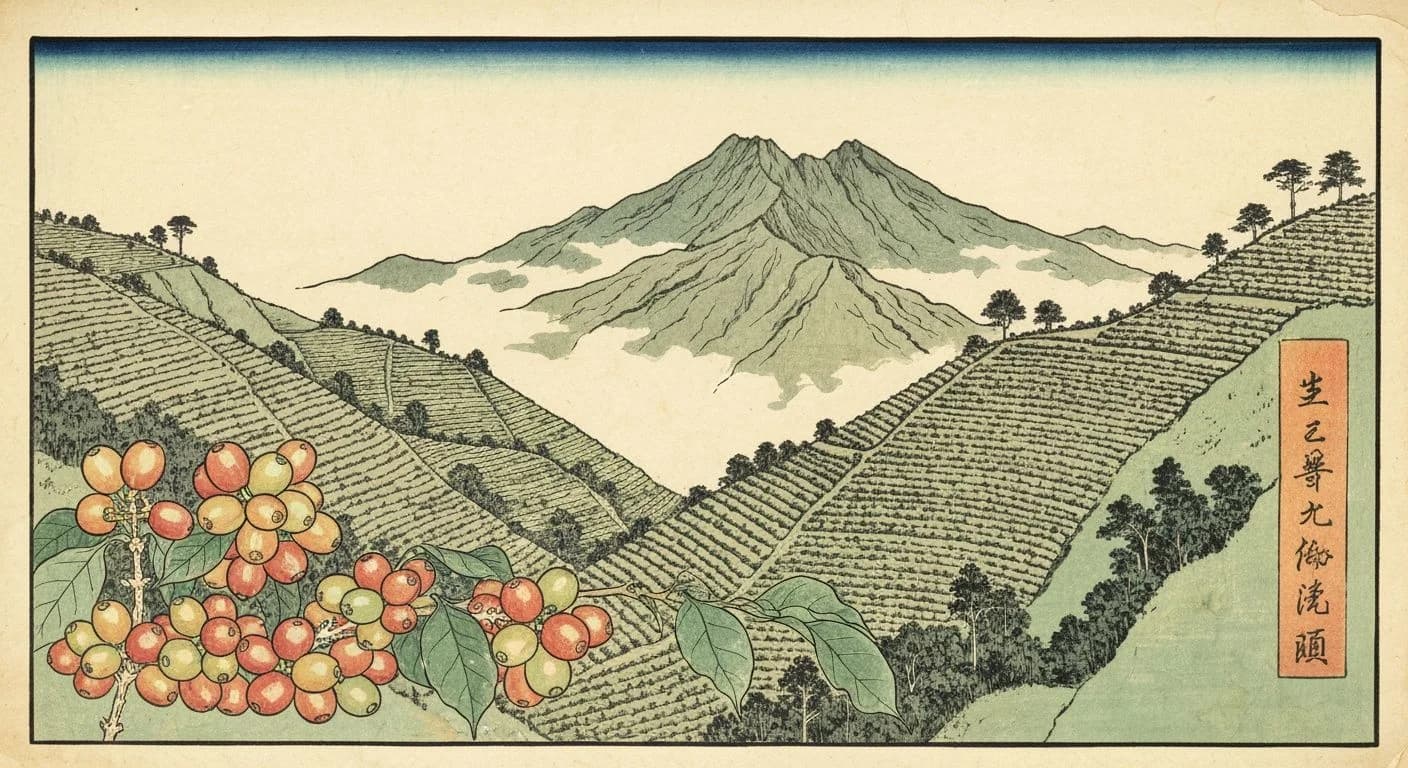
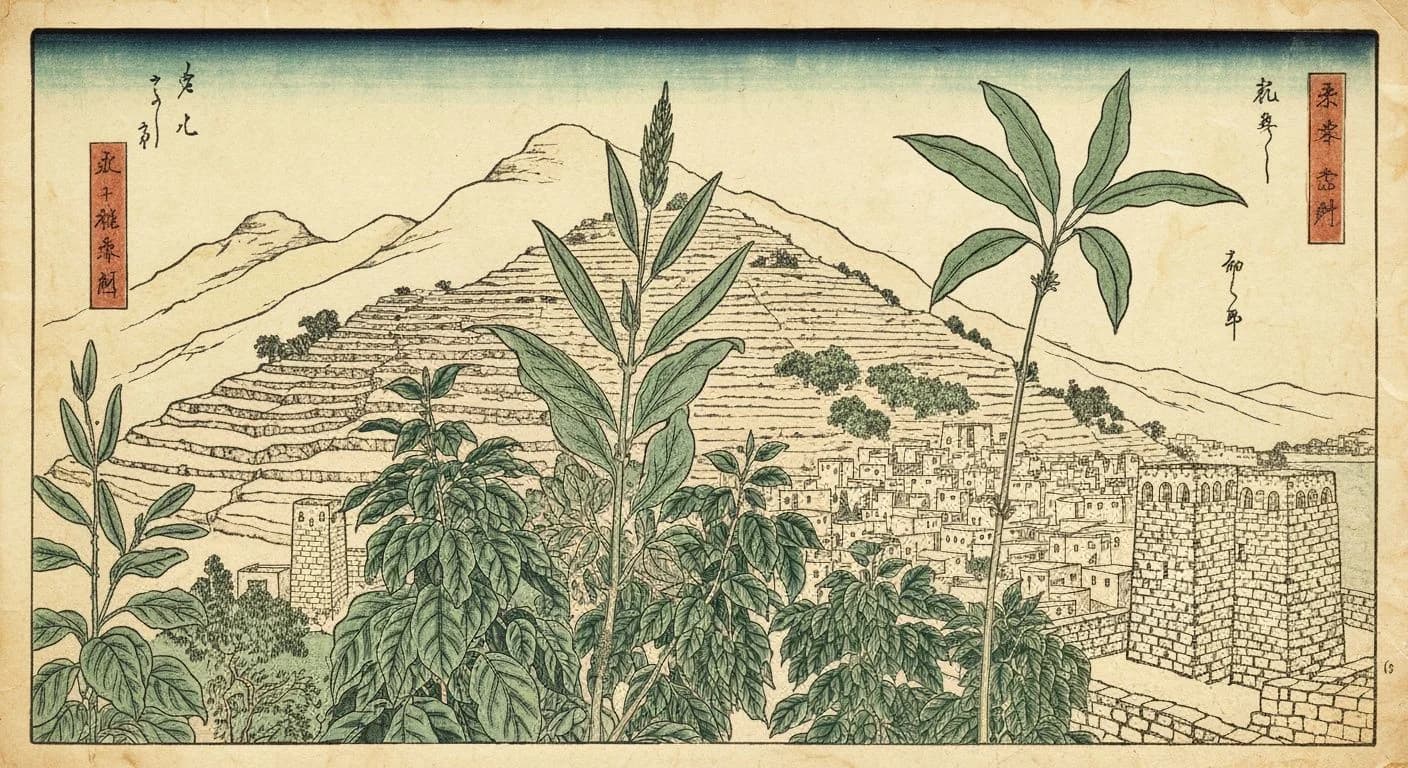
Yemen's coffee terraces cling to steep, arid mountain slopes at 1,500 to 2,500 meters -- some of the highest coffee-growing altitudes in the world. Water is extremely scarce, and most plants are irrigated by hand or rely on seasonal rainfall of less than 300 mm per year. The extreme water stress, combined with ancient heirloom varieties that have evolved in isolation for centuries, produces cherries with intense sugar concentration. Farmers often cultivate coffee alongside qat, the stimulant leaf that competes for water and farmland.
Processing Traditions
Sun-drying is the only method. Whole cherries are spread on rooftops, rock ledges, or raised mats and dried in the intense desert sun. There is no access to washing stations or mechanical processing in most growing areas. The dried cherry husks (called "qishr") are brewed into a spiced tea that is more commonly consumed in Yemen than the coffee bean itself. Each farmer's process is slightly different, adding a wild, artisanal character to every lot.
Flavor Character
- Complex wine-like acidity with dried fruit character
- Rich dark chocolate and cacao throughout
- Dried fig, raisin, and date sweetness
- Warm spice notes including cinnamon and cardamom
- Wild, slightly funky fermentation character
- Full body with a long, lingering finish
What Makes It Special
Yemeni coffee is the origin of origins -- the place where the global coffee trade began. The ancient heirloom varieties, extreme growing conditions, and unchanged processing methods produce a flavor that is genuinely unlike modern specialty coffee. Every cup of Yemen Mocha is a connection to 500 years of unbroken coffee history. Production is tiny, prices are high, and each lot is irreplaceable.
Did you know?
The word "mocha" in "mocha latte" originally had nothing to do with chocolate -- it referred to coffee from the Yemeni port city of Al Mokha, which happened to have a naturally chocolatey flavor.