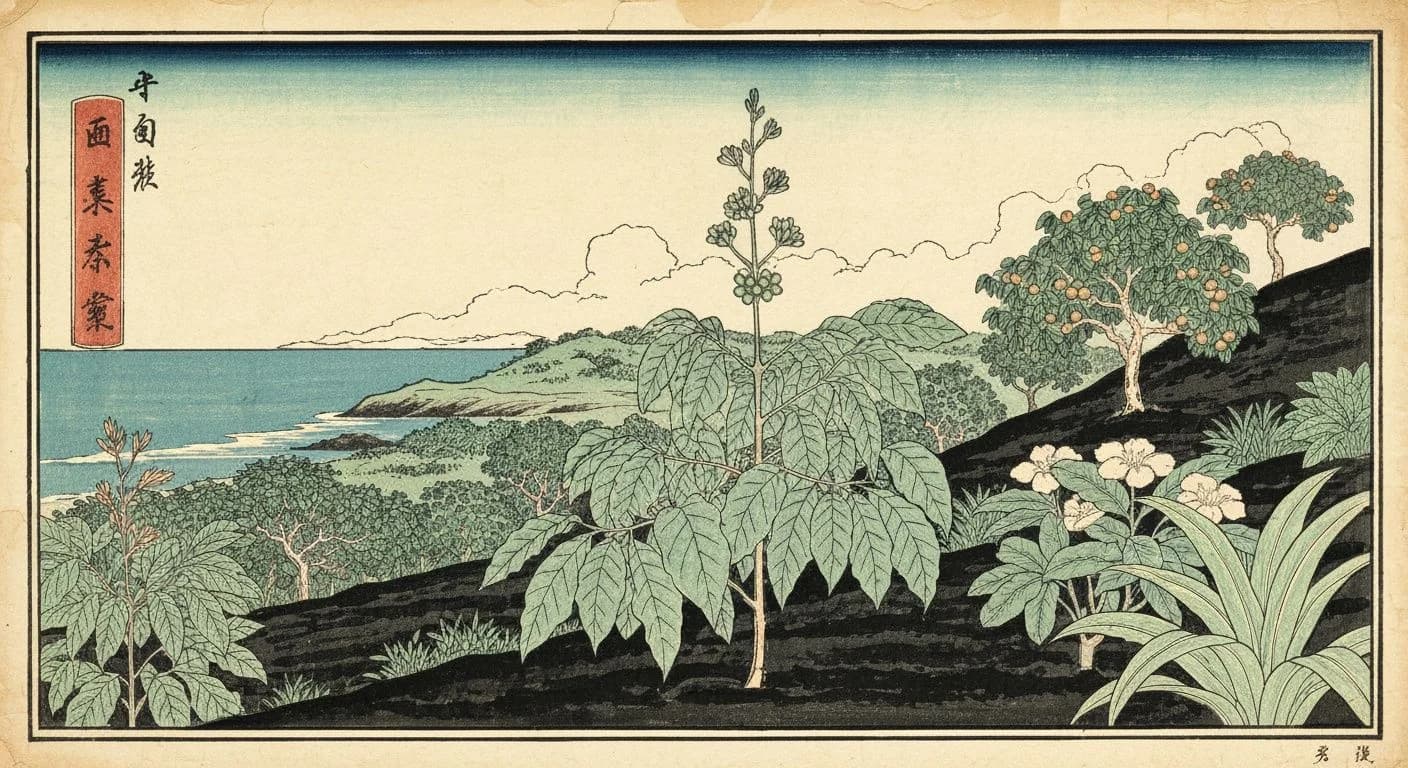
Hawaii Kona
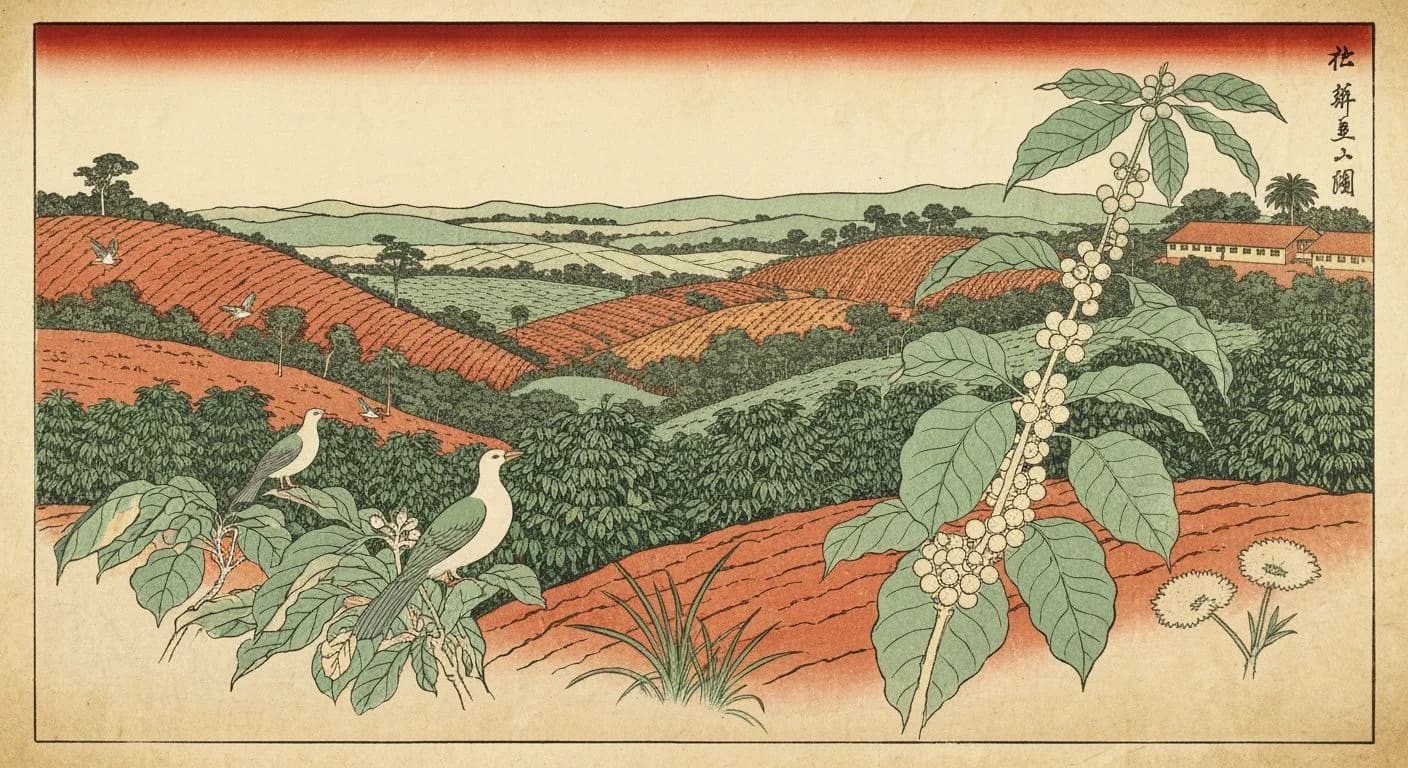
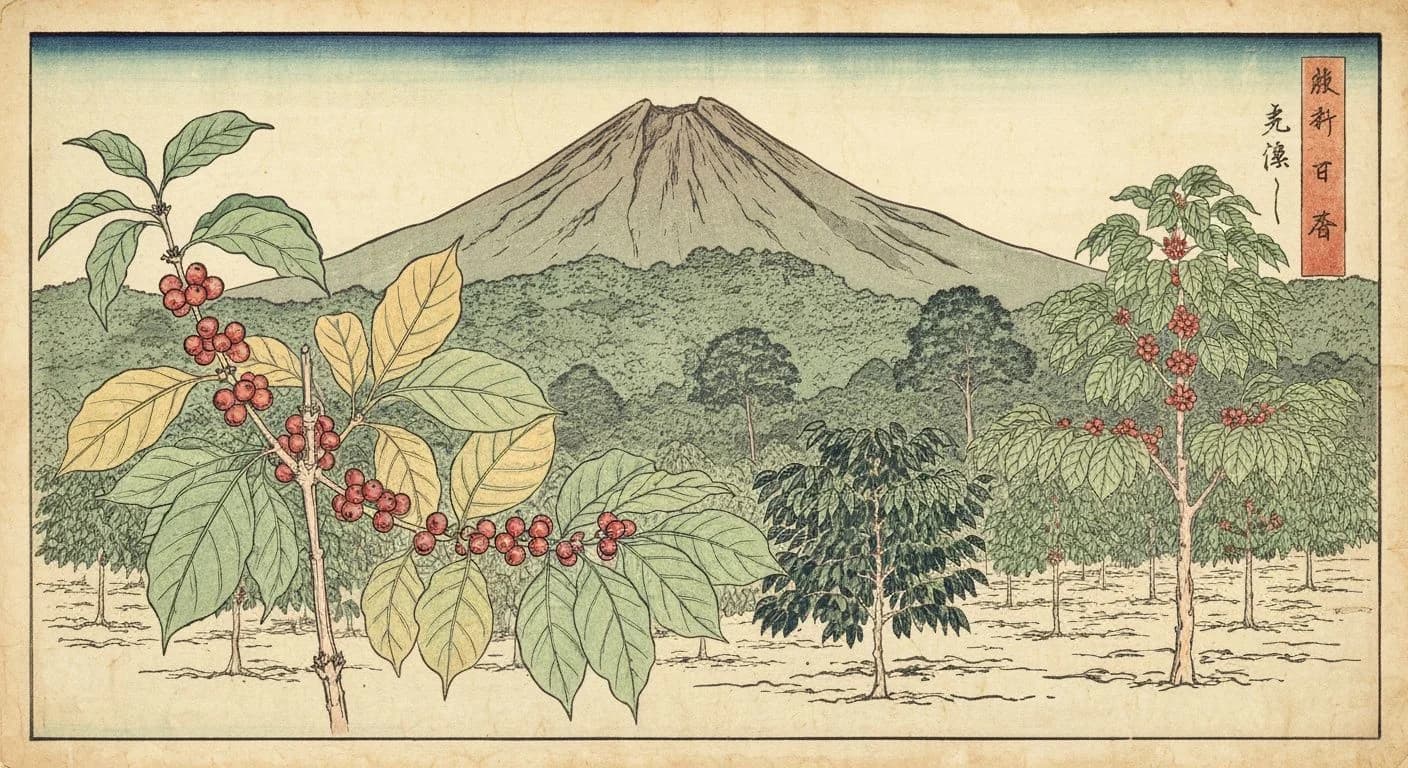
Grown on the slopes of Hualalai and Mauna Loa volcanoes on the Big Island. Volcanic soil and ideal microclimate produce a smooth, mild coffee with bright acidity. "Kona blend" legally requires only 10% Kona beans - look for 100% Kona.
Coffee Heritage
Coffee arrived in Hawaii in 1828, when Reverend Samuel Ruggles brought cuttings from Brazil to the Kona district on the Big Island. The Kona Coffee Belt, a narrow strip running about 30 miles along the western slopes of Hualalai and Mauna Loa volcanoes, has been producing coffee continuously ever since. Kona is the only commercially significant coffee grown in the United States. A legal battle over the term "Kona blend" led to regulations requiring that blends contain at least 10% Kona beans to use the name.
Growing Conditions
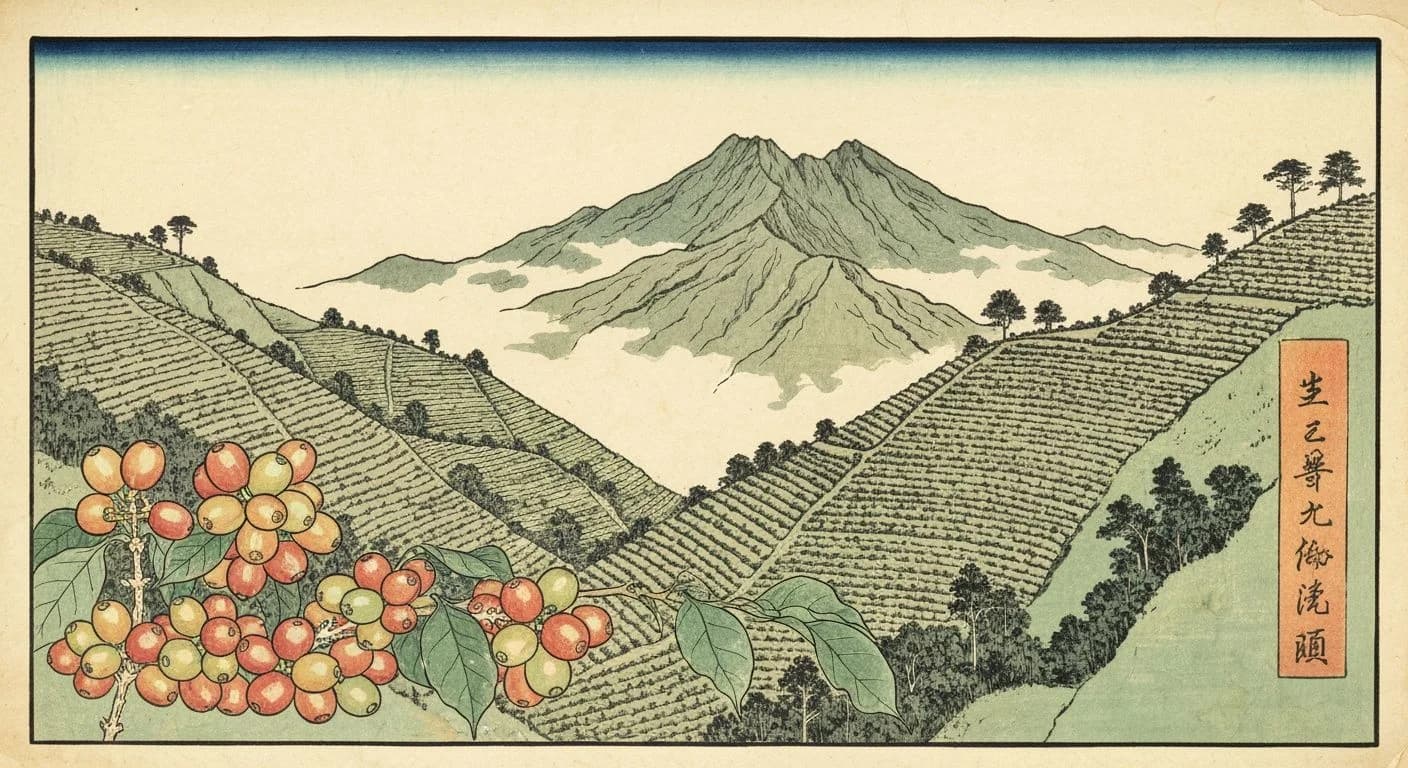
The Kona Coffee Belt sits unusually low, between 200 and 800 meters, but compensates with a unique microclimate. Morning sunshine gives way to afternoon cloud cover and rain, creating natural shade and consistent moisture. The volcanic soil on the slopes of Mauna Loa is mineral-rich and porous, providing excellent drainage. Temperatures remain mild year-round, never too hot or too cold, which allows slow, even cherry development.
Processing Traditions
Washed processing is the standard in Kona. Cherries are pulped and fermented overnight, then washed and dried on large wooden decks called "hoshidanas" -- a Japanese drying platform design reflecting the influence of early Japanese immigrant farm workers. Sun drying takes 7 to 14 days depending on weather. Some smaller farms experiment with natural and honey processing.
Flavor Character
- Bright, clean acidity with citrus and tropical fruit notes
- Nutty undertones with macadamia and almond character
- Caramel and light brown sugar sweetness
- Smooth, medium body with no harshness
- Finish is clean and gently sweet
- Light roasts reveal more fruit; medium roasts emphasize nuts and caramel
What Makes It Special
Kona's combination of volcanic soil, unique microclimate, and American labor standards makes it one of the most expensive coffees to produce. The farms are small -- most under five acres -- and many have been family-operated for generations. Authentic 100% Kona is rare and should not be confused with "Kona blend" products, which may contain as little as 10% Kona beans.
Did you know?
Kona coffee drying decks, called "hoshidanas," are a Japanese design brought by immigrant laborers in the late 1800s and are still used on most Kona farms today.