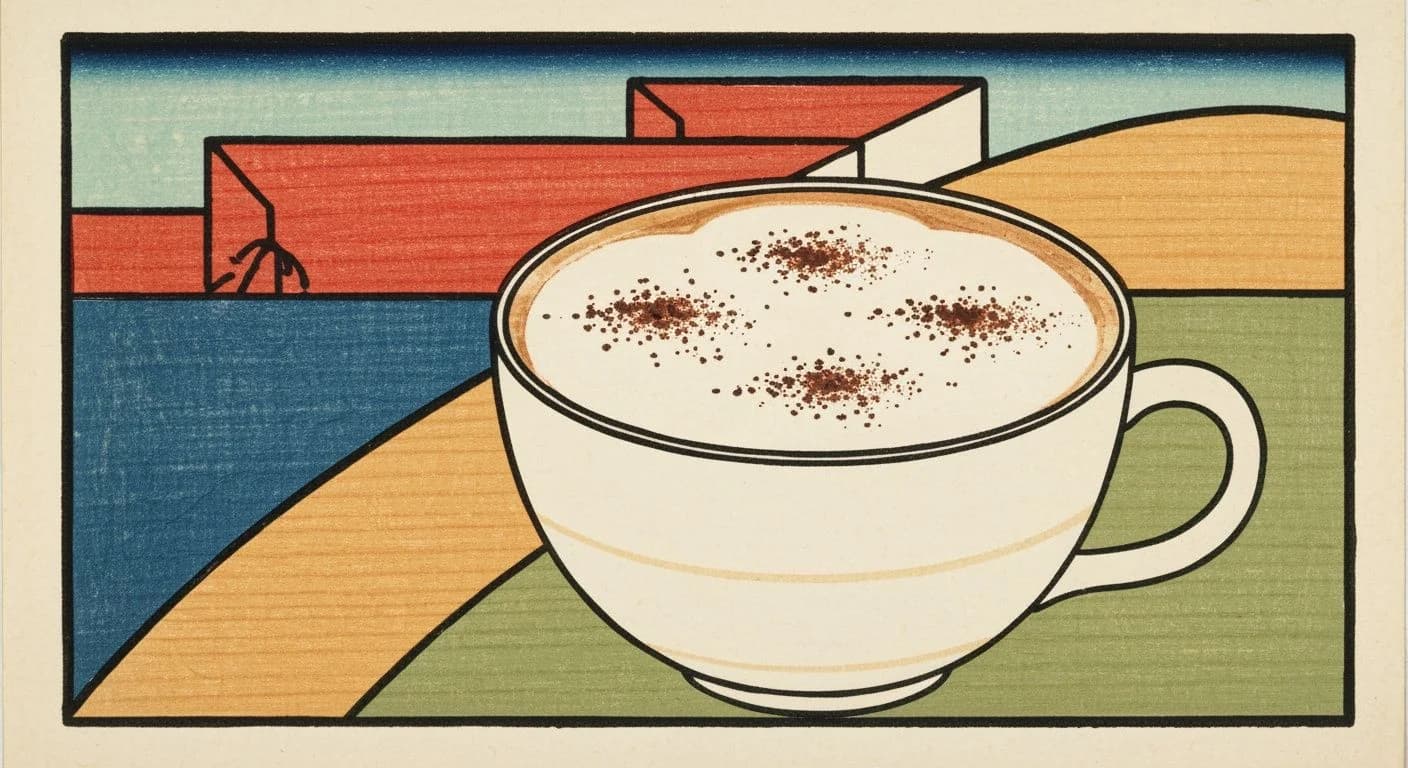
Cappuccino
The Italian classic: equal parts espresso, steamed milk, and milk foam. Traditionally a morning drink in Italy, enjoyed all day everywhere else.
Ingredients
Espresso, steamed milk, milk foam
Variations
History of the Cappuccino
The cappuccino takes its name from the Capuchin friars, whose brown hooded robes resembled the color of the drink. While coffee mixed with milk existed in 18th-century Viennese coffeehouses, the modern cappuccino as we know it -- espresso, steamed milk, and foam -- emerged in Italy after the popularization of espresso machines in the early 20th century. In Italy, cappuccino is strictly a morning drink, rarely ordered after 11 a.m.
How It Is Made
A traditional cappuccino follows the rule of thirds: one-third espresso, one-third steamed milk, and one-third milk foam. A single or double shot of espresso is pulled into a 150-180ml cup. Milk is steamed to create a thick, velvety microfoam, then poured to achieve distinct layers. The foam should be dense enough to hold latte art but airy enough to feel light.
Flavor Profile
The cappuccino strikes a balance between the boldness of espresso and the sweetness of milk. The thick foam layer insulates the drink, delivering a creamy first sip followed by the full espresso flavor beneath. Expect a rich, velvety mouthfeel with caramel sweetness and a clean espresso finish.
Variations and Customization
Best Coffee to Use
A medium to dark roast with strong body and chocolate or nutty notes cuts through the milk beautifully. Espresso blends with robusta content add extra crema and intensity. Single origin beans from Brazil, Guatemala, or Sumatra are excellent choices.
Did you know?
Ordering a cappuccino after noon in Italy will immediately identify you as a tourist -- Italians consider it a breakfast-only drink because the heavy milk is thought to interfere with digestion.
Related Drinks
Frequently Asked Questions
What is a Cappuccino?▼
What is the difference between a Cappuccino and a latte?▼
How do you order a Cappuccino at a cafe?▼
Can you make a Cappuccino at home?▼
Researched and compiled by CoffeeTrove. Last updated March 2026.