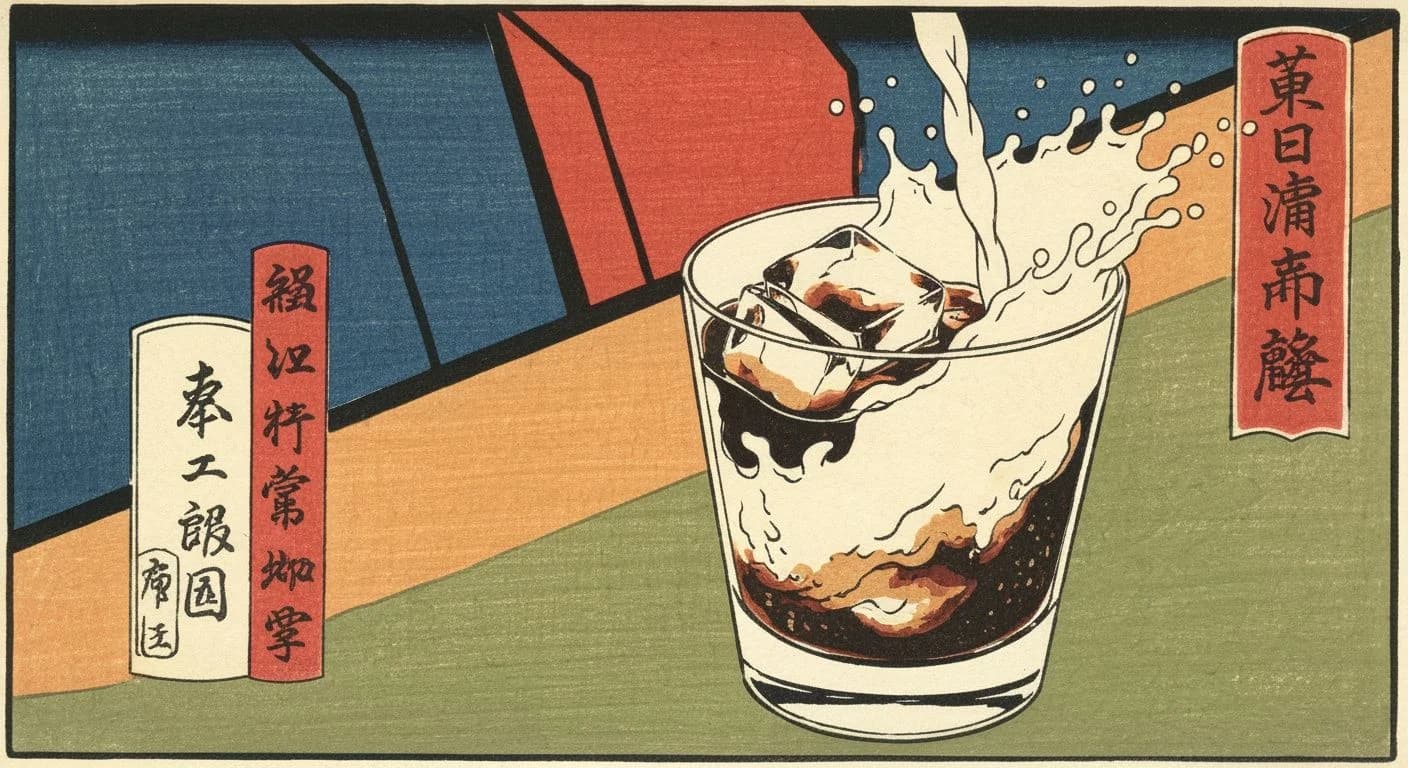
Iced Coffee
Hot-brewed coffee cooled and served over ice. Quick to make, bright, and straightforward. Lighter body than cold brew, with more acidity and a traditional coffee flavor profile.
Ingredients
Brewed coffee, ice
Variations
History of Iced Coffee
Cold coffee drinks date back centuries, but modern iced coffee culture took shape in different ways around the world. In Greece, the frappe (invented accidentally in 1957) became a national obsession. In Japan, flash-brewed iced coffee has been a standard offering since the 1920s. The American iced coffee boom began in the 1990s and accelerated through the 2000s, driven by chains like Dunkin and Starbucks turning it into a year-round habit.
How It Is Made
Traditional iced coffee is brewed hot at double strength and poured directly over ice, which rapidly chills and dilutes it to proper drinking strength. This flash-brewing method, perfected by the Japanese, preserves the aromatic complexity and bright acidity that cold brew lacks. Some methods brew at normal strength and chill in the refrigerator before serving over ice. The key is starting with a stronger brew to account for ice dilution.
Flavor Profile
Iced coffee retains the bright, complex flavor profile of hot-brewed coffee -- including its natural acidity and aromatic notes -- but served cold. It is crisper and more refreshing than cold brew, with more pronounced fruity and floral notes. The flavor evolves as ice melts, starting bold and gradually becoming lighter and more delicate.
Variations and Customization
- Japanese iced coffee: precision pour-over brewed directly over ice
- Vietnamese iced coffee: strong dark roast with sweetened condensed milk
- Greek frappe: instant coffee shaken with ice into a frothy drink
- Thai iced coffee: brewed with spices, served with sweetened condensed milk
- Flavored: vanilla, caramel, or hazelnut syrups
Best Coffee to Use
Light to medium roasts with bright acidity and fruity or floral notes are ideal for iced coffee. The flash-brewing method preserves delicate flavors that cold brew would flatten. Ethiopian, Kenyan, or Costa Rican beans with citrus or berry notes are outstanding when iced.
Did you know?
The Japanese have been perfecting flash-brewed iced coffee since the 1920s -- decades before most Western countries considered putting ice in coffee acceptable.
Related Drinks
Frequently Asked Questions
What is a Iced Coffee?▼
What is the difference between a Iced Coffee and a iced latte?▼
How do you order a Iced Coffee at a cafe?▼
Can you make a Iced Coffee at home?▼
Researched and compiled by CoffeeTrove. Last updated March 2026.