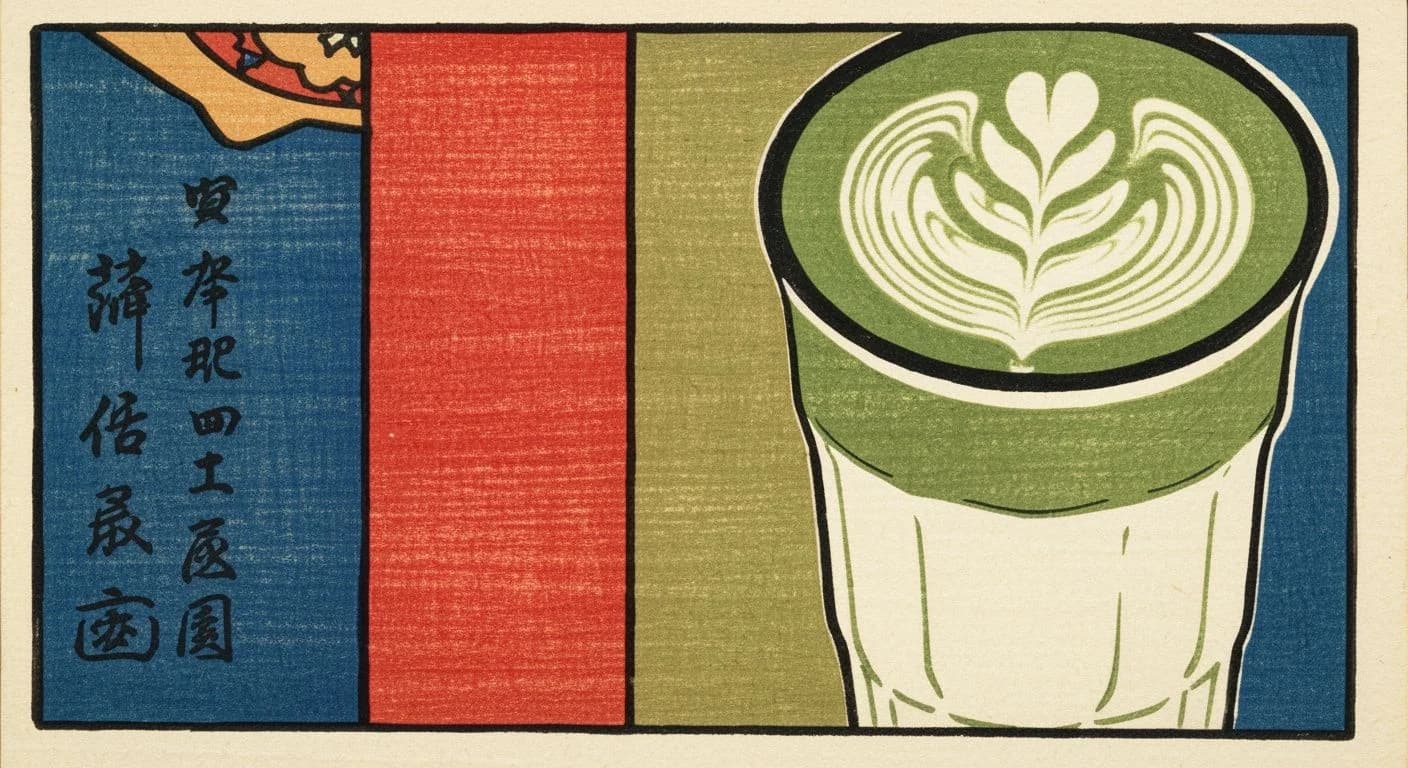
Matcha Latte
Whisked Japanese green tea powder with steamed milk. Not coffee, but found in most specialty cafes. Quality varies wildly based on matcha grade and preparation.
Ingredients
Matcha powder, steamed milk
Variations
History of Matcha
Matcha has been central to Japanese tea culture since the 12th century, when Zen Buddhist monks brought powdered tea preparation from China. The formal Japanese tea ceremony, or "chanoyu," elevated matcha into a meditative practice. The matcha latte as we know it is a modern invention, blending this ancient ingredient with Western cafe culture. It gained mainstream popularity in the 2010s as a coffee alternative prized for its sustained energy and health benefits.
How It Is Made
A matcha latte starts with sifting 1-2 teaspoons of ceremonial-grade matcha powder into a bowl or cup. A small amount of hot water (not boiling -- around 70-80 degrees Celsius) is added and whisked vigorously with a bamboo chasen or milk frother until smooth and frothy with no clumps. Steamed milk is then poured over the matcha, typically at a ratio of 1:3 matcha to milk. Sweetener is optional.
Flavor Profile
A quality matcha latte has a distinctive vegetal sweetness with umami depth, subtle bitterness, and a creamy, smooth body. The flavor is earthy and herbaceous -- nothing like coffee. Ceremonial-grade matcha delivers a vibrant green color and a delicate, sweet character. Lower-grade matcha tastes more bitter and dusty. The steamed milk rounds out the vegetal notes into something rich and comforting.
Variations and Customization
Best Matcha to Use
Always use ceremonial-grade matcha from Japan for lattes. Culinary-grade matcha is too bitter and astringent when featured prominently. Look for vibrant green color, fine texture, and a sweet aroma. Uji (Kyoto) and Nishio (Aichi) are renowned growing regions. Fresh matcha should be stored in an airtight container away from light and used within two months of opening.
Did you know?
Matcha contains L-theanine, an amino acid that promotes calm focus -- which is why monks used it to stay alert during long meditation sessions without the jittery feeling that coffee can produce.
Related Drinks
Frequently Asked Questions
What is a Matcha Latte?▼
How do you order a Matcha Latte at a cafe?▼
Can you make a Matcha Latte at home?▼
Researched and compiled by CoffeeTrove. Last updated March 2026.