You spent $22 on single-origin Ethiopian Yirgacheffe. You dialed in your grinder to a 17-click medium-fine. You weighed your dose to 18.0 grams. You timed your pour at 3 minutes and 42 seconds.
Then you brewed it with tap water and wondered why it tasted flat.
The 98% You Are Ignoring
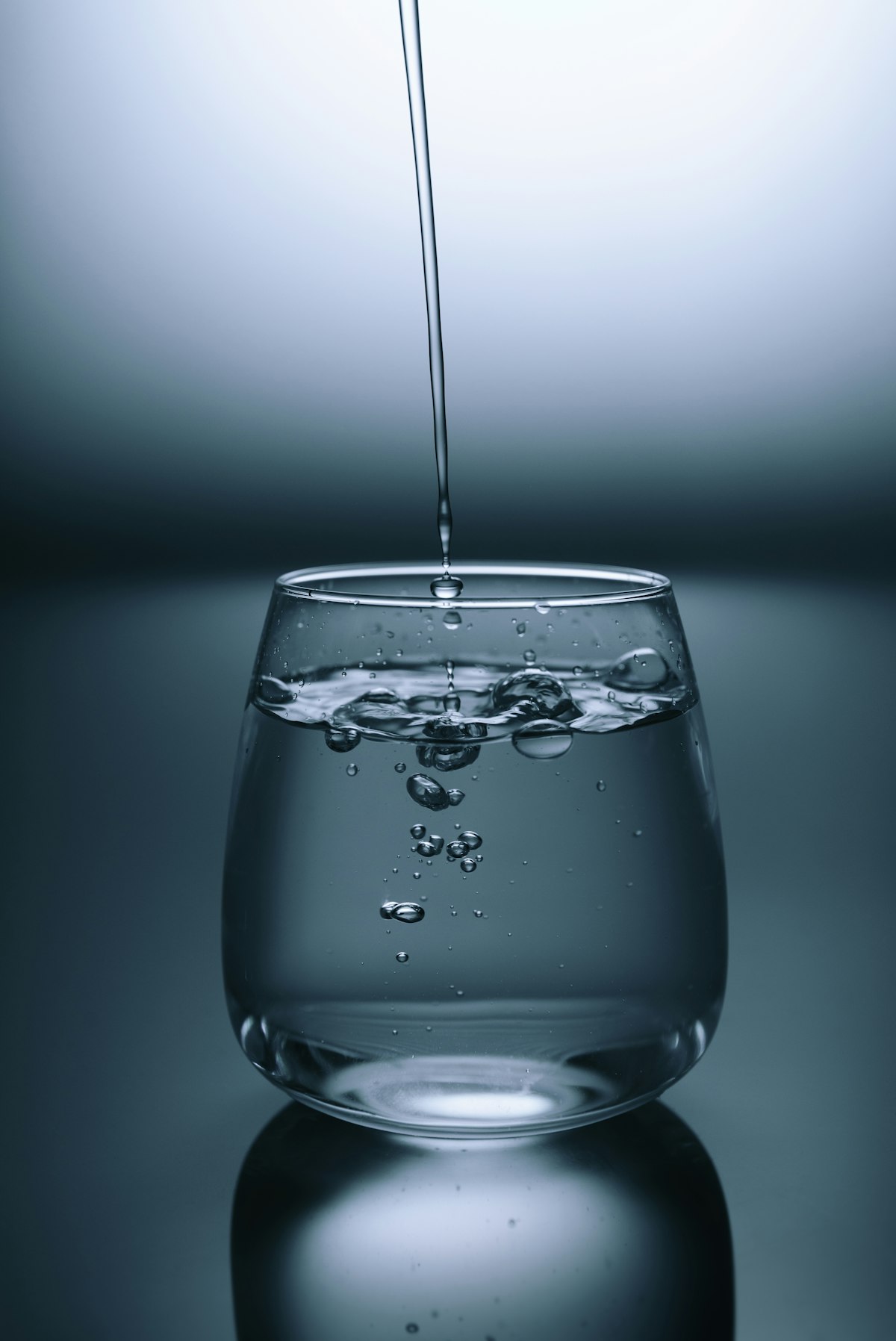
A cup of brewed coffee is, by weight, roughly 98.7% water and 1.3% dissolved coffee solids. Espresso shifts that ratio to about 90/10. Either way, water is the dominant ingredient by a wide margin.
The Specialty Coffee Association publishes a water quality standard. Most home brewers have never read it. Most specialty cafes follow it loosely at best. The standard exists because water chemistry is not a minor variable. It is the variable.
What Actually Matters in Water
Three things determine how water interacts with coffee during extraction:
Total Dissolved Solids (TDS). This is the total mineral content. The SCA target is 150 mg/L, with an acceptable range of 75-250 mg/L. Below 75 and the water is too "hungry" -- it over-extracts, pulling bitter compounds. Above 250 and the water is already full. It under-extracts, producing a flat, muted cup. Distilled water (TDS near 0) makes terrible coffee. So does heavily minerite well water.
Calcium and Magnesium. These are the two minerals that do the actual extraction work. Magnesium binds to fruity, bright acids. Calcium binds to heavier, creamier compounds. The ratio between them shapes the flavor profile more than most people realize. A magnesium-heavy water will emphasize brightness. A calcium-heavy water will emphasize body. This is not theory. A 2014 study published in the Journal of Agricultural and Food Chemistry demonstrated that magnesium-rich water extracted higher concentrations of flavor compounds from roasted coffee than calcium-rich water at the same TDS level.
Bicarbonate (alkalinity). This is the buffer. It neutralizes acids during extraction. Too much bicarbonate and your bright Kenyan roast tastes like cardboard. Too little and everything becomes sour. The SCA recommends 40 mg/L. Most tap water is significantly higher.
Why Your City Matters More Than Your Beans
Here is the part that bothers people: the same bag of coffee, brewed identically, will taste different in London than in San Francisco than in Melbourne.
London tap water averages 260-340 mg/L TDS with high calcium carbonate. It is hard water that buffers acidity aggressively. Light roasts brewed with London tap taste flat and chalky. This is why many London specialty shops run their water through remineralization systems.
San Francisco tap water averages 30-50 mg/L TDS. It is among the softest municipal water in the US. Coffee brewed with it tends toward bright and acidic, sometimes unpleasantly so. The low mineral content means less buffering and aggressive extraction of volatile acids.
Melbourne tap water sits around 40-50 mg/L TDS with a balanced mineral profile. It is, almost by accident, close to ideal for coffee extraction. Some coffee professionals have genuinely argued that Melbourne's water quality is a structural advantage in why the city developed one of the world's best cafe cultures.
The Hard Truth About Filters
A Brita filter does not fix your water for coffee. Brita-style activated carbon filters remove chlorine, sediment, and some organic compounds. They improve taste. But they do not meaningfully change TDS, calcium, magnesium, or bicarbonate. Your water's extraction chemistry is roughly the same going in and coming out.
What does work:
Third Wave Water. Mineral packets you add to distilled or reverse-osmosis water. You start from zero and add exactly the minerals you want. It is the most controlled approach and costs about $0.50 per gallon. This is what competition baristas use.
Reverse osmosis + remineralization. RO strips everything out. You add minerals back. This is what serious cafes install. Home RO systems cost $150-400. The remineralization cartridge is the key part.
Bottled water. Specifically, low-mineral spring water. Volvic (60 mg/L TDS, good magnesium ratio) is a common recommendation in coffee circles. Crystal Geyser works too. Evian (357 mg/L TDS) is too hard. Dasani is remineralized RO with inconsistent results.
A Simple Test
Before spending money on anything, try this: Brew the same coffee, the same way, twice. Once with your tap water. Once with a gallon of distilled water with a Third Wave Water packet mixed in. Taste them side by side.
If you notice a meaningful difference, your tap water is the problem. If they taste the same, your water is fine and you should focus on other variables.
Most people who run this test do not go back to tap.
What the Specialty Industry Gets Wrong
Walk into any specialty cafe. The barista can tell you the farm name, the processing method, the varietal, the altitude, and the roast date. Ask them about their water TDS and you will get a blank stare about half the time.
The specialty coffee industry has built an entire culture around the 1.3%. The beans, the roast, the grind, the brew method. These matter. But they matter after the water is right. Getting the beans perfect and the water wrong is like tuning a guitar and playing it in a concrete stairwell. The instrument is ready. The room ruins it.
The best cup of coffee you will ever make might not come from better beans. It might come from better water.
Sources: Specialty Coffee Association Water Quality Standards (2nd ed.). Hendon, C.H. et al., "The Role of Dissolved Cations in Coffee Extraction," Journal of Agricultural and Food Chemistry, 2014. Colonna-Dashwood, M. & Hendon, C.H., Water for Coffee, 2015. Municipal water quality reports: Thames Water (London), SFPUC (San Francisco), Melbourne Water.